Get Full Government Meeting Transcripts, Videos, & Alerts Forever!
Get email alerts on the Administrative Hearings Unemployment Timeliness topic
No spam. Unsubscribe anytime.
Oregon administrative hearings agency clears pandemic backlog but UI timeliness lag persists after digital migration
Summary
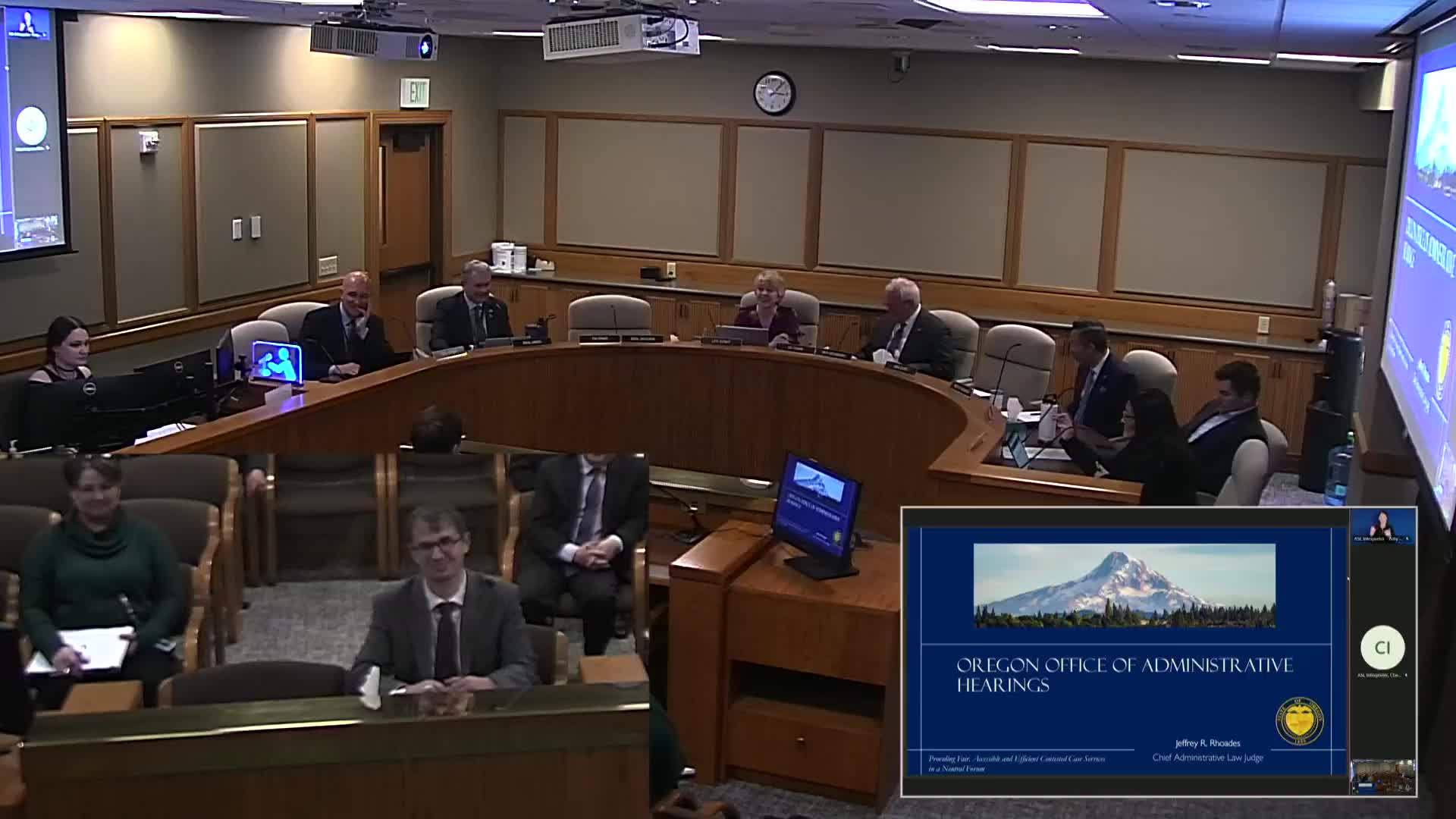
Co-chair Gomberg opened a public hearing on House Bill 5,007 on Feb. 12 and heard from the Office of Administrative Hearings (OAH) about recent progress and remaining challenges, especially in unemployment insurance (UI) caseload timeliness.
Co-chair Gomberg opened a public hearing on House Bill 5,007 on Feb. 12 and heard from the Office of Administrative Hearings (OAH) about recent progress and remaining challenges, especially in unemployment insurance (UI) caseload timeliness.
OAH Chief Administrative Law Judge Rhodes said the office cleared roughly 11,000 contested‑case hearings that built up during the COVID-19 pandemic, while continuing to handle a record volume of referrals from state agencies. "We serve the public by providing fair, accessible, and efficient contested case services in a neutral forum," Rhodes told the committee, and he credited judges and staff for clearing the backlog during the last biennium.
The agency remains the central panel for contested administrative hearings for most state agencies under Chapter 183 and handles a broad variety of casetypes. Rhodes said UI hearings account for about 75% of OAH’s volume by referral. He described three hearing modes— in person, virtual (WebEx), and telephonic— and said telephonic hearings remain the default for many UI matters.
Despite clearing the pandemic backlog, Rhodes said the OAH is missing its key performance measure for UI timeliness (KPM 7). The metric requires disposing of 60% of UI hearings within 30 days of a request; the office reported a recent value of about 33.6% as it works through a new cluster of aged cases created during the Oregon Employment Department’s migration to the Francis online system. "As Frances was coming online, a number of cases necessarily had to stay in the system and wait until the changeover to the new system happened," Rhodes said, and those referred to OAH were often already older than the 30‑day standard when transferred.
Rhodes told committee members the agency has increased permanent capacity in response: the OAH’s UI judge team grew from about 12 judges pre‑pandemic to roughly 20, and the office recently hired six additional judges. The agency also assigns judges from other dockets when capacity allows and uses retired judges to mentor new judges so training does not pull experienced judges off active dockets. Rhodes said these steps and other operational changes are already improving the timeliness trend.
Rhodes outlined other recent accomplishments: reopening in‑person DMV implied‑consent hearings without backlogs, standing up a Paid Leave Oregon contested‑case program (with seven new ALJs and a presiding ALJ), establishing wildfire‑hazard hearing procedures, and adding technology upgrades and a new internal case management team. He said OAH provides services statewide from primary offices in Tualatin, Salem and Eugene and secondary offices in Portland, Medford, Bend and Pendleton, and will travel to hold necessary in‑person hearings.
Director David Gerstenfeld of the Oregon Employment Department joined the hearing to answer committee questions about UI operations and the Secretary of State audit recommendation to explore an ombuds office. Gerstenfeld said the Employment Department considered ombuds models and recognized the potential value, but told the committee that, given limited resources, the department prioritized adding staff who can answer calls and resolve claims directly. "If we have one position that we can add, we think it is much more beneficial to have that person take more phone calls, resolve more claims rather than hear from people in the public telling us that they can't get through on the phone," Gerstenfeld said.
Two members of the public testified in support of the department’s budget request. Greg Astley of the Oregon Restaurant and Lodging Association said Employment Department staff have been "prompt in returning calls or emails, courteous and knowledgeable," and urged the committee to approve resources to meet rising demand if legislation increases UI and paid‑leave questions. Anthony Castaneda, representing SEIU 503, urged the committee to fund positions that retain experienced Employment Department workers, noting the agency’s business‑employment specialists and other staff help keep unemployment durations low and benefits flowing.
Committee members asked for follow‑up data on how often the department’s UI determinations are sustained or overturned on appeal; Rhodes agreed to provide that analysis back to the subcommittee. Members also asked for more detailed cost breakdowns underlying OAH’s proposed billable rates; Rhodes said the office would provide those numbers.
Rhodes and Gerstenfeld said OAH and the Employment Department expect ongoing referral growth and will continue to refine staffing, technology and service‑delivery models in the coming biennium. Rhodes said the OAH’s strategic plan emphasizes timely, high‑quality decisions, workplace respect, and adaptable technology investments to reduce future backlogs and provide meaningful participation for litigants across the state.
No formal votes were taken during the public hearing.