Get Full Government Meeting Transcripts, Videos, & Alerts Forever!
Get email alerts on the Depredation Compensation topic
No spam. Unsubscribe anytime.
Committee approves temporary depredation compensation rule to implement new law on wolf and grizzly losses
Summary
A temporary rule implementing House Bill 592's compensation framework for livestock losses to wolves and grizzly bears was approved; the department and partners will finalize claims submitted before Dec. 31 and pursue negotiated rulemaking next year.
The committee approved a temporary rule (docket 210820401) to implement a compensation program for livestock losses to wolves and grizzly bears following enactment of House Bill 592. Lloyd Knight said the temporary rule provides a framework to begin compensating producers while the agencies plan a negotiated rule-making process in the coming year.
Knight said the department coordinated with the Idaho Department of Fish and Game and the Office of Species Conservation (OSC) to implement the program and that a set of claims submitted before Dec. 31 will be reviewed and paid under the temporary framework. The rule outlines definitions and a claims-review process and follows common OSC practice for reimbursement timelines and rates.
Committee members asked about reimbursement percentages for veterinary care; Knight said the temporary framework follows OSC practice and that certain items, such as veterinary care, are compensated up to commonly used OSC percentages (the rule text example cited "up to 70% of the market rate" for veterinary care as consistent with other OSC reimbursements).
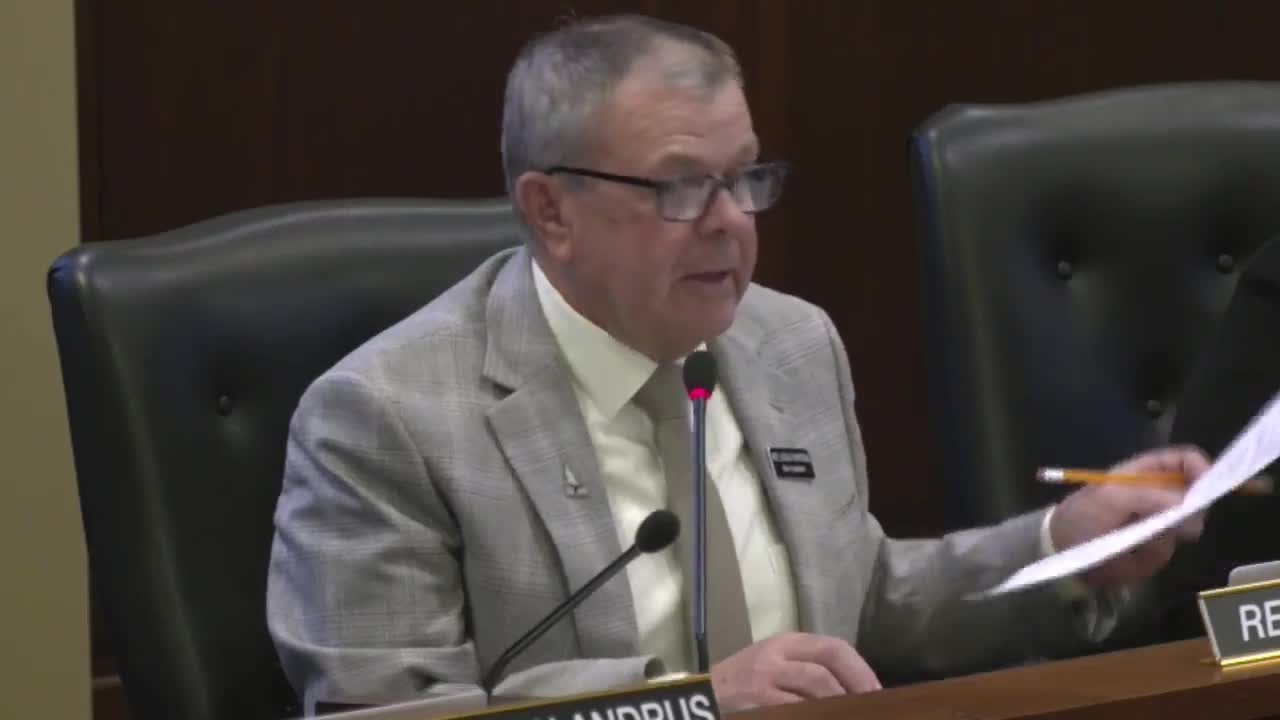
Representative Andrus moved approval and the committee adopted the temporary rule by voice vote with no recorded opposition. Knight and the director said agencies will return next year for more detailed negotiated rule making and to refine program procedures and interagency coordination.
Agency staff said some claims will be processed quickly under the temporary framework while a more deliberative process involving stakeholders will follow to finalize permanent rule provisions.