Get Full Government Meeting Transcripts, Videos, & Alerts Forever!
Get email alerts on the Chronic Wasting Disease topic
No spam. Unsubscribe anytime.
State clarifies chronic wasting disease rules after first two domestic herd detections; industry urged to be selective with imports
Summary
The department clarified domestic cervid (chronic wasting disease) rules to align with House Bill 591 and said the state has identified two confirmed CWD cases in domestic herds; the rulemaking clarifies sample types, surveillance timing and options for producers with multiple facilities.
The committee approved temporary updates to rules governing the domestic cervid (chronic wasting disease, CWD) survey to align with House Bill 591. The department also described ongoing investigations after confirming two CWD-positive domestic herds in eastern Idaho.
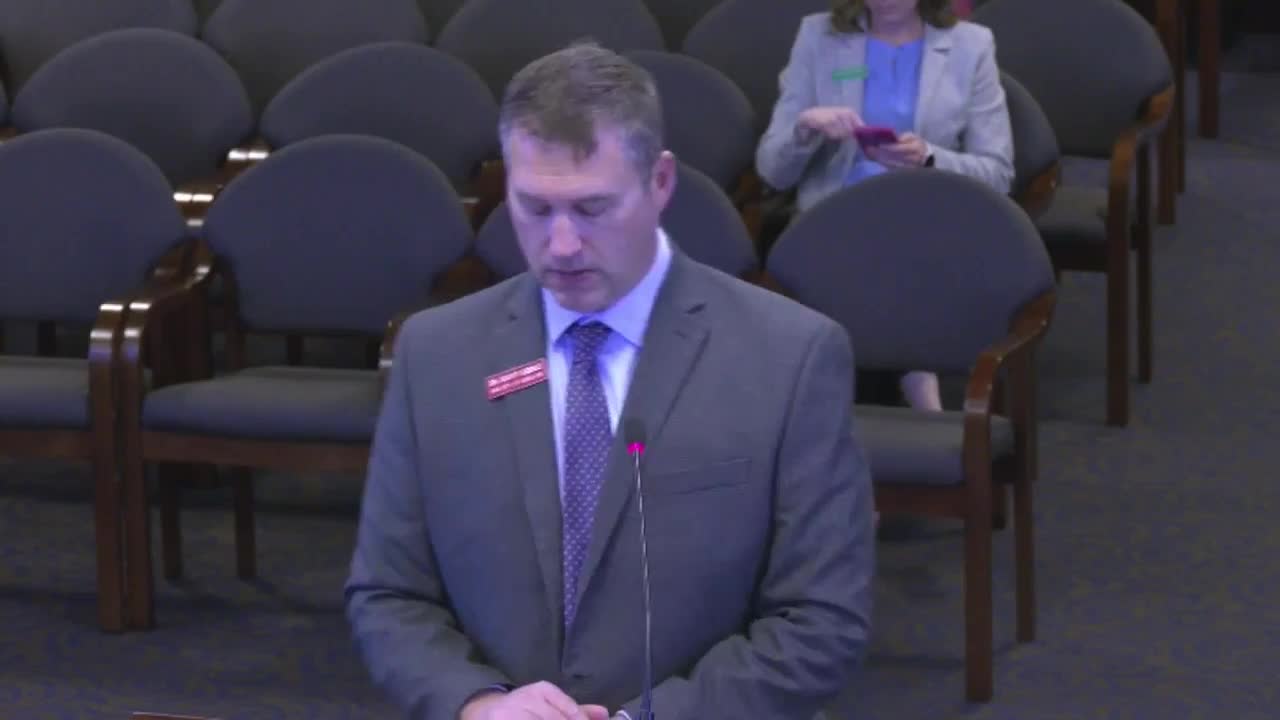
Dr. Scott Lively summarized the rule changes (docket 0204192401), saying the updates remove definitions duplicated in statute, align tissue-collection protocols with industry standards (requiring both brain stem and retropharyngeal lymph node samples for official CWD tests) and clarify reporting timelines for reportable versus notifiable diseases.
"We have identified our very first two cases of chronic wasting disease in domestic herds in Eastern Idaho," Dr. Lively told the committee. He said investigations suggest transmission to those domestic facilities likely originated from other domestic producers rather than wildlife, based on the traces the agency observed.
Dr. Lively described House Bill 591's primary effect as clarifying producer options after a positive detection, including allowing animals to move between multiple facilities under common ownership while under quarantine, and removing an earlier expectation that producers must construct a costly double perimeter fence.
Committee members pressed on testing expectations and import protocols. Dr. Lively said House Bill 591 did not set a statewide testing-percentage mandate after a positive; testing frequency and surveillance expectations will be addressed in individual herd management plans developed for affected facilities. He also described import protocols for cervical animals, noting a mandatory five-year herd history and tests for tuberculosis and brucellosis for animals brought into Idaho.
Representative Greger moved approval; the committee adopted the motion by voice vote with no recorded opposition.
Agency officials said the goal is to give domestic producers options to manage infected or exposed animals without making confirmation a business-ending event, and that the department will continue collaboration with the Department of Fish and Game on wild-herd surveillance.