Get Full Government Meeting Transcripts, Videos, & Alerts Forever!
Get email alerts on the Department Of Insurance Budget topic
No spam. Unsubscribe anytime.
Insurance director warns wildfire, reinsurance pressure are tightening Idaho market; seeks hires and mitigation pool
Summary
Department of Insurance presented FY2026 requests for an actuary, compliance specialist and fire marshal pay increases while describing wildfire losses, PBM complaint work and use of a Section 1332 waiver and high‑risk pool to hold down health premiums.
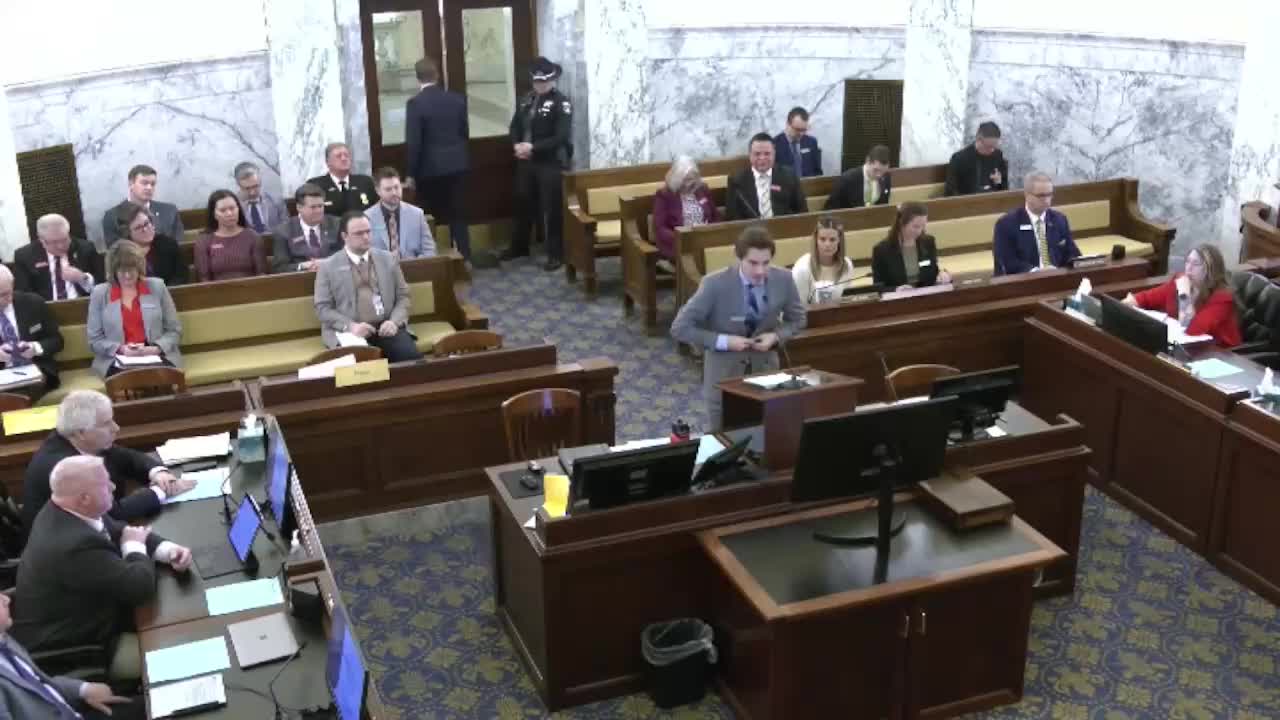
Dean Cameron, director of the Idaho Department of Insurance, told the Joint Finance Appropriations Committee on Jan. 21 that the agency’s FY2026 budget request includes staffing and equipment aimed at actuarial review, regulatory compliance and fire‑safety response while the department manages market stress from large wildfires and reinsurance cost increases.
Cameron said the department is seeking four enhancement items for FY2026, including an ongoing staff actuary position (one FTP, $201,900 total with $198,900 for personnel and a $3,000 one‑time equipment request), a regulatory compliance specialist budgeted at an equivalent of $41.03 per hour (80% of policy, pay grade O), a $48,100 ongoing compensation increase for the state fire marshal and deputies (including $38,100 for salaries and $10,000 for variable benefits), and $162,200 in one‑time capital outlays for the State Fire Marshal (including $10,000 for fire turnout gear, $16,200 for cameras and $136,000 for two medium‑duty pickup trucks equipped for fieldwork).
Why it matters: Cameron told the committee that recent catastrophic fires nationally and in Idaho, together with rising reinsurance and construction costs, have tightened the property insurance market. “We started seeing forest fires in California, Oregon, Colorado and it started a tightening of the property insurance market,” Cameron said. He told lawmakers Idaho has experienced nearly one million acres burned this year and that the state lost over 140 structures, including about 40 residences. Those patterns, Cameron said, have increased use of the surplus‑lines market and triggered nonrenewals in some areas.
Premium tax and prior appropriations: Noah Peterson, budget analyst, described the department’s funding: the agency administers two dedicated funds, the Arson, Fire and Fraud Prevention Fund and the Insurance Administrative Fund. He said premium tax revenue is redistributed statutorily among multiple recipients — including fire pension pools, a high‑risk reinsurance pool and the general fund — and that more detailed distributions appear on LBB page 5‑41. Peterson reported FY2024 reversions of about $2.2 million (roughly $917,000 in personnel and $1,277,000 in operating expenditures).
PBM implementation and complaints: Cameron described implementation work following last year’s PBM (pharmacy benefit manager) reform legislation, which took effect Jan. 1. The department received a trailer appropriation to implement House Bill 596 and was appropriated one FTP and $132,400 for that purpose. Cameron said the department has hired a staffer to handle PBM complaints and to collect required data submissions from PBMs; “Most have complied and have submitted their data,” he said, but “there are a few that have not.” He said complaints range from disputed dispensing fees to contract disputes and nonresponsiveness; he told the committee the department will provide a fuller report as data collection continues.
High‑risk pool and Section 1332 waiver: Cameron credited the department’s high‑risk pool and a Section 1332 federal waiver with helping stabilize individual market premiums and expand carrier participation on the state’s exchange. He said Idaho’s 1332 waiver and reinsurance approach reduced individual premiums year over year and “doubled the number of carriers participating on the health insurance exchange.” Cameron described the high‑risk pool as a reinsurance mechanism that identifies high‑cost risks by CPT code and pays a share of claims to help spread costs.
Market pressures and proposed responses: Cameron said several carriers that sell heavily in California and other fire‑prone states have seen reinsurance costs rise and, in some cases, solvency stress; he told the committee he handled three carrier insolvencies in the past year. To respond, the department plans legislation this session proposing a pool that would (1) help homeowners harden properties against wildfire risk (removing flammable vegetation and installing fire‑resistant measures) and (2) act as a mechanism to help carriers remain viable in the Idaho market.
State Fire Marshal activity: Cameron said the State Fire Marshal division — one of the department’s two budget programs — provides fire prevention, arson investigation and public education, and supports other agencies. The department has 75.5 approved full‑time positions (63.5 in insurance regulation and 12 in the State Fire Marshal). Cameron said his office has been on the ground assisting families affected by fires and helping consumers understand how to file claims and complaints.
Closing and follow up: Cameron told the committee the department will provide more detail on PBM complaints and data collection as it becomes available, and he thanked the committee for prior support. The committee did not take a formal vote on the department’s FY2026 requests during this session.