Get Full Government Meeting Transcripts, Videos, & Alerts Forever!
Get email alerts on the Unemployment Insurance topic
No spam. Unsubscribe anytime.
Department of Labor details UI operations, trust fund and a $7.33M FY26 request
Summary
The Idaho Department of Labor described a request for $7.33 million in dedicated‑fund spending authority for unemployment insurance operations, explained the trust fund mechanics and pledged follow‑up on staffing and expenditure detail.
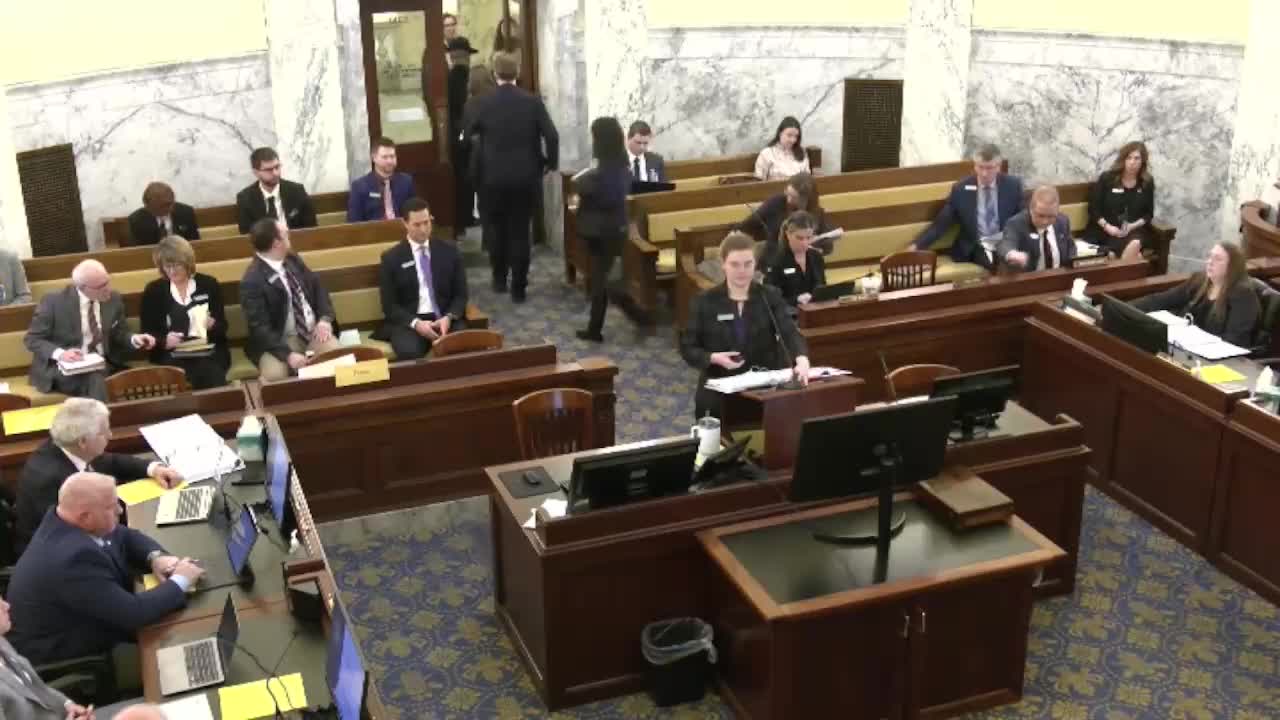
The Joint Finance‑Appropriations Committee on Wednesday heard the Idaho Department of Labor describe a FY2026 spending‑authority request tied to unemployment insurance (UI) operations and asked for additional data about staffing levels, spending and fund balances.
Brooke Dupree, budget analyst with the Legislative Services Office, summarized the department’s budget and told the committee the Department of Labor typically receives a mix of federal grants and dedicated funds to operate UI. Dupree showed a requested cash transfer of $4,868,600 from the unemployment penalty and interest fund into a continuously appropriated employment security fund and said the department forecasts an ending combined fund balance decline of roughly $4 million under the request.
Janie Rivera, director of the Idaho Department of Labor, told the committee that federal grant support that surged during the COVID pandemic has declined and that the department seeks additional dedicated‑fund authority — not general fund — to sustain baseline operations while federal program funding fluctuates. Rivera described a department with a historically high authorized FTP level designed to allow rapid hiring in a downturn and said the $7.33 million request is intended to keep UI operations fully resourced as federal grant levels decline.
“We have about a billion dollar trust fund,” Rivera told the committee when asked how the UI benefit payments are financed. She explained that the tax and trust‑fund mechanics are set in code, that the state calculates reserve needs based on historical high‑draw years and that if Idaho exhausted its fund the state could borrow from the federal government or issue bonds as in previous downturns.
Committee members sought clarifying numbers. Senators asked the department to provide: baseline and peak staffing figures (the department added roughly 100 staff during the pandemic), the portion of salary savings being reallocated versus reverted, and a clearer explanation of how the federal grant amount is calculated and varies year to year. Rivera said she would provide follow‑up figures and a fact sheet summarizing benefit duration, employer tax calculations and average weekly benefit amounts.
The department also described a separate request of $161,000 for Office of Information Technology Services hardware and a $450,000 one‑time archival/move request tied to records, as well as past appropriations for Job Corps and Social Security backlog adjudication that affected prior FTP counts.
No formal funding decisions were made during the hearing. Members directed the department to supply the committee with detailed staffing figures, historical trust‑fund levels, the formula work papers used for tax rate calculations and a breakdown of how dedicated funds have been spent in recent years.