Get Full Government Meeting Transcripts, Videos, & Alerts Forever!
Get email alerts on the Civil Rights Enforcement topic
No spam. Unsubscribe anytime.
Human Rights Commission seeks steady funding while handling more housing and disability complaints
Summary
The Tennessee Human Rights Commission presented a $3.7 million budget request, described staffing and recent outreach work, and told lawmakers that disability-related housing complaints were the most common category in the past year.
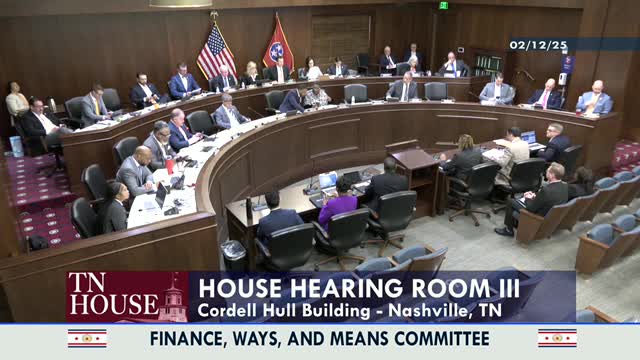
Muriel Nolan, executive director of the Tennessee Human Rights Commission, and board member Mark Kelly briefed the Finance committee on the commission's mission, staffing and the governor's recommended FY2026 budget.
Nolan said the commission has 33 staff across four offices (Nashville, Knoxville, Chattanooga and Memphis) and that the governor's recommendation is $3,714,000 for FY2026, comprised of $2,744,200 in state appropriations and $969,800 in federal funding. The recommendation includes a 1% reduction ($27,100) taken primarily from education and outreach funds.
Nolan highlighted accomplishments and outreach: the commission developed a Title VI interactive training available on the statewide Edison learning platform and has completed a four-year strategic plan. Nolan said the commission continues public education and complaint-investigation work and will use outreach to help people understand their rights and available remedies.
William Wade, general counsel, told members that in housing complaints the most commonly cited protected characteristic last fiscal year was disability (about 39% of housing cases). He said retaliation allegations have also been frequent. Nolan and Wade emphasized referring callers to the appropriate agency when a reported problem is outside the commission's jurisdiction.
Why it matters: the commission enforces the Tennessee Human Rights Act and Tennessee Disability Act and investigates complaints alleging discrimination in employment, housing and public accommodations. Committee members asked whether the commission is sufficiently staffed for potential surges in intake and how the commission coordinates with community groups after disasters; Nolan said the office focuses on partnerships and referrals and that it does not itself administer disaster relief funds but will coordinate with other state and local entities where housing and accessibility issues arise.
Nolan and the board thanked committee members for the appropriation level and noted that outreach and education are central to ensuring Tennesseans know how to file complaints and what protections exist under state law.