Get Full Government Meeting Transcripts, Videos, & Alerts Forever!
Get email alerts on the Fish And Game Budget topic
No spam. Unsubscribe anytime.
Fish and Game presents one‑time capital needs, fire rehabilitation and software upgrades; explains license fund balance variance
Summary
Department officials told the committee their FY2026 requests are dominated by one‑time items including hatchery and office repairs, website redesign and rehabilitation after the Valley Fire. Officials said a FY2024 dip in fund balances resulted from delayed federal grant billing rather than an unexpected revenue loss.
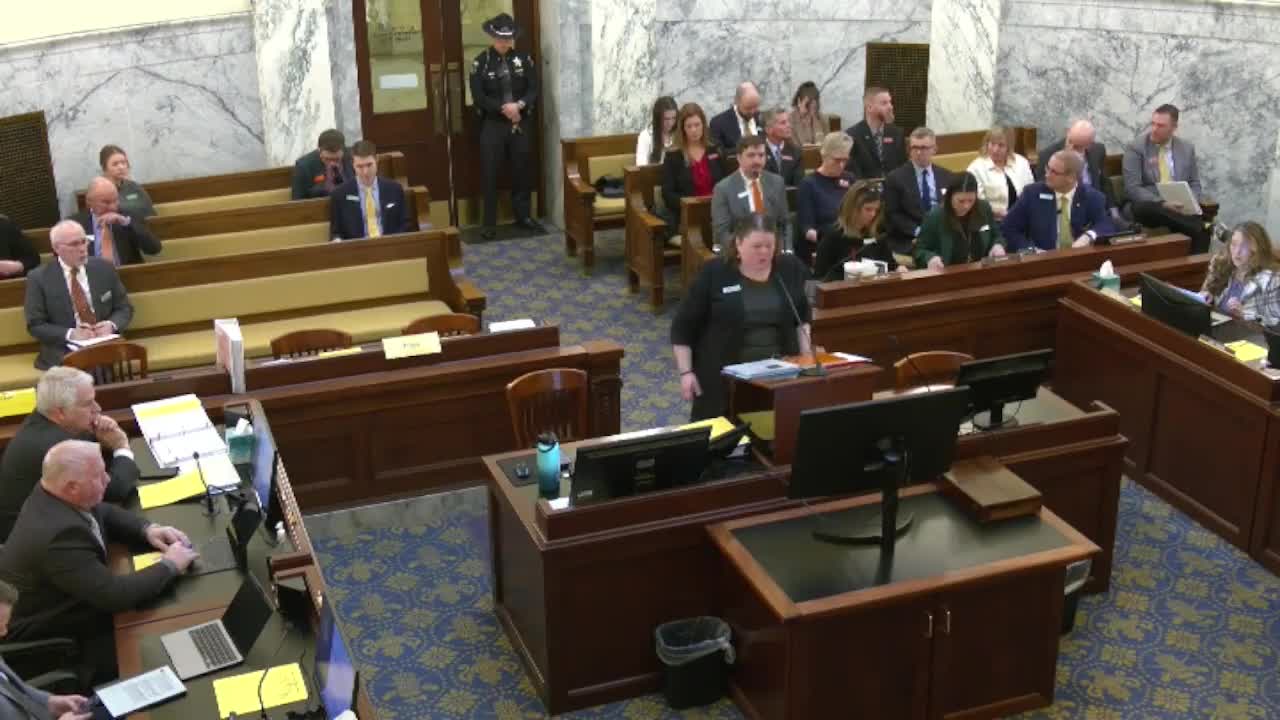
Janet Jessup, budget and policy analyst with legislative services, told the Joint Finance‑Appropriations Committee that the Idaho Department of Fish and Game (IDFG) is funded entirely from dedicated and federal sources and that most FY2026 enhancement requests are one‑time expenditures.
Director Jim Fredericks and chief financial staff briefed the committee on the department’s funding structure, which relies on the Fish and Game Fund generated by hunting, fishing and trapping licenses and numerous dedicated set‑aside accounts prescribed by Idaho code. Jessup said the department does not receive general fund support and that dedicated funds are often statutorily restricted for specific purposes.
Committee members asked why consolidated fund balances for license fees appeared erratic between FY2023 and FY2024. Chief John Oswald said the FY2024 dip was partially attributable to a lag in federal grant billing and that the department had caught up in FY2025; the FY2026 balance reflects deliberate use of reserves for one‑time projects. “The dip in FY '24 was in part due to ... we fell behind several months and we have caught up in fiscal year 25,” Oswald said.
The agency requested $18,184,900 in FY2026 enhancements, and staff told the committee roughly 88% of that request is one‑time. Noted requests and explanations included:
- Valley Fire rehabilitation: The department purchased seed and applied herbicide following a fall fire that burned approximately 9,900 acres, including part of the Boise River Wildlife Management Area. Fredericks said the immediate cost “in the immediate term, we expect to be about 3 quarters of a million dollars,” and cautioned that restoration will be an ongoing, multi‑year undertaking.
- Website overhaul, phase 2: The department spent a portion of an initial $750,000 phase for discovery and audit. Fredericks said the agency now expects total redesign costs closer to $1.3 million, based on comparable work in Colorado and the results of the discovery phase. He told the committee the agency expects to begin work in March following procurement.
- Remote connectivity: The department proposed $65,000 for improved remote connectivity at several hatcheries and wildlife management areas. John Oswald said ITS (state Information Technology Services) provided a hardware and point‑to‑point solution that raised costs beyond a simple consumer terminal in locations that require larger coverage and reliable links between distant buildings.
- Salmon‑region office and other capital leases: The agency seeks $500,000 ongoing to support a 25‑year capital lease to secure land and construct a sub‑regional office near McCall, and other one‑time requests for hatchery and field equipment replacement.
Fredericks and staff attributed much of the department’s operating expenditures to the costs of 19 state‑operated hatcheries and associated utilities, repair, professional services and supplies. The department reported it expended about 46% of its FY2024 budget on personnel and roughly 44% on operating costs; historically it has expended an average of about 85% of its appropriations.
On depredation and disease monitoring, Jessup noted prior year augmentations that included $3 million for depredation claims and $2.5 million ongoing for fish restoration projects. The governor’s recommendation, Jessup said, “recommended all of those enhancements that were requested by the agency.”
Why it matters: IDFG’s requests and the committee’s questions concern fish and wildlife habitat restoration, post‑fire rehabilitation, and investments in infrastructure and digital services that support license sales and field operations. Several enhancement requests are one‑time uses of license or federal grant cash and will affect the department’s capital planning and reserve levels.