Get Full Government Meeting Transcripts, Videos, & Alerts Forever!
Get email alerts on the Treasury Budget topic
No spam. Unsubscribe anytime.
Treasurer outlines large Education Freedom Act transfer, ARPA technology projects and rising unclaimed property workload
Summary
Treasurer David Lillard told the Finance committee that an Education Freedom Act transfer and ARPA-funded modernization work have raised the Treasury Department's recommended budget while unclaimed-property receipts and claims have surged and prompted a staffing request.
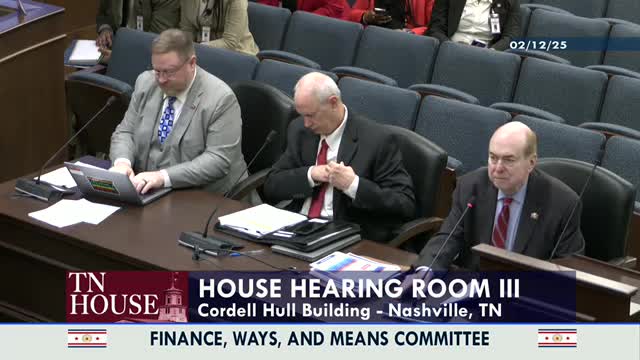
Treasurer David Lillard told the Finance, Ways and Means Committee that the Tennessee Treasury Department's operating budget reflects a large, one-time infusion tied to the Education Freedom Act and that the department is managing rising workloads in unclaimed property and other programs.
Lillard said the department's base budget before cost increases is about $77,131,000. With the governor's recommended additions and a transfer of approximately $77,200,000 tied to the Education Freedom Act, the recommended budget summed to about $161,000,000. He described the Education Freedom Act transfer as the primary driver of that jump.
Lillard also described ongoing technology and modernization work. The department has $58,750,000 in ARPA funds allocated to three major technology initiatives, including a planned replacement of the retirement benefits processing and administration system (the Project Risk replacement). The governor's recommended budget included about $6,825,000 in department cost increases and ten positions for the coming fiscal year, the treasurer said.
On unclaimed property, Lillard said receipts from holders increased more than 31% from FY2023 to FY2024 and 76% since FY2021. In FY2024 the division processed roughly 78,305 claims and returned about $62,600,000 to citizens. To handle rising volume the department requested $350,000 recurring funded from unclaimed-property revenue to add three service counselor positions for claims processing and outreach; that request was not included in the governor's recommendation.
Lillard also noted two other requests not funded in the governor's recommendation: a $2,000,000 recurring state appropriation for an electronic monitoring assistance program and a $2,000,000 base revenue funding shift for the criminal injuries compensation fund to address revenue exhaustion in fines-and-fees revenue that support the program.
Why it matters: Treasury manages retirement funds, unclaimed property, state cash and numerous trusts; changes in receipts, technology and fund accounting can affect returned property, benefits administration and other services. Lawmakers asked about the size of assets under management (roughly $120 billion daily in the state's pooled investments) and TCRS funding status; Lillard said the Tennessee Consolidated Retirement System is well funded and is generally recognized among the best-funded public pension systems in the nation.
Questions from members touched on pension funding and OPEB, how treasurer's earnings are treated in the budget process, and outreach to return unclaimed property. Lillard said the treasury is third among states on funded status for pensions and that the department is continuing outreach to locate property owners.