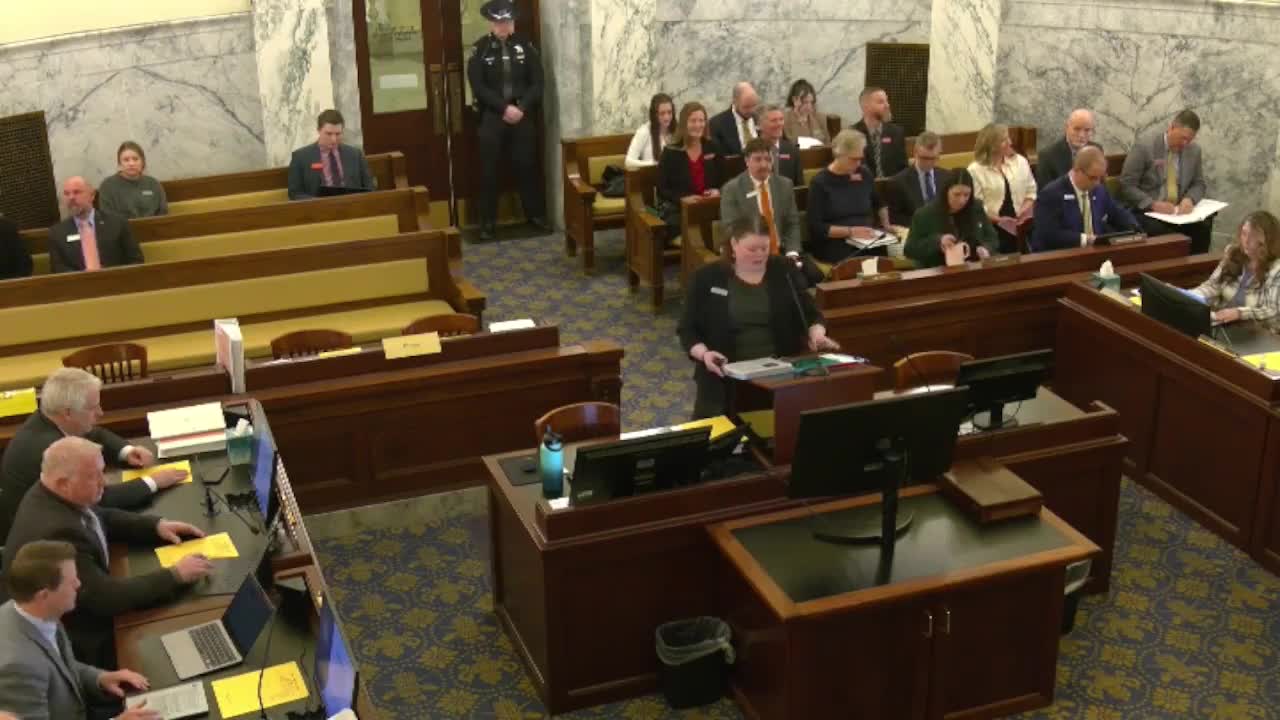
Idaho Parks and Recreation seeks consolidation, seasonal pay increases and repairs to Heyburn marinas

3452993 · February 13, 2025

Loading...

AI-Generated Content: All content on this page was generated by AI to highlight key points from the meeting. For complete details and context, we recommend watching the full video. so we can fix them.

Summary

Agency officials told the Joint Finance-Appropriations Committee they plan to merge management and operations budgets, raise many seasonal wages to compete in a tight labor market, and use recent federal and dedicated funds to replace two aging marinas at Heyburn State Park and cover deferred maintenance and capital requests.

Janet Jessup, a budget and policy analyst for the legislative services office, told the Joint Finance-Appropriations Committee that the Idaho Department of Parks and Recreation is seeking program consolidation, staff pay adjustments and capital outlay for park repairs and replacements as part of its fiscal 2026 request.

The proposal would merge the department’s management services and park operations programs into a single budgeted program, a change Jessup described as largely ministerial that “nets to 0” but would make it “a lot easier for us to manage across the system,” Director Susan Buxton said.

The request includes two targeted compensation changes: raising seasonal employee base pay from $12 an hour to $15 an hour using dedicated funds, and a tiered ranger pay structure to address compression among long‑tenured rangers and managers. Buxton said the department’s intent is to use “dedicated funds” to create step differences so later CEC (compensation) increases still yield meaningful increments for long‑standing employees. “When you have a pay scale, you want to bring everybody in at 80% of the pay scale,” Buxton said when explaining compression concerns.

The department listed several sizable capital requests; Jessup highlighted Bear Lake Fish Haven improvements and Lake Cascade projects and noted the governor’s recommendation included the agency’s full capital request. Buxton said the agency will use a mix of appropriated one‑time funds and available federal grants for maintenance and replacement projects.

Buxton described plans to replace two aging marinas at Heyburn State Park — the long‑standing facilities at Rocky Point and, as stated in the department presentation, “Chocolat” — and said the Coeur d’Alene Tribe has contributed design work and indicated financial support. Heyburn State Park, on the south shore of Lake Coeur d’Alene near Plummer, was deeded to the state in 1909 and is managed for public recreation, Buxton said. She told the committee the replacement work will add slips and address deferred maintenance at the two marinas.

Committee members questioned the department’s seasonal wage figures and implementation. Representative Tanner tracked the department’s prior increases and noted the department had funded step increases in multiple years; he asked whether the $12-to‑$15 figure still reflected market conditions. Buxton and Jennifer Quindell Miller, the department’s human resources officer, said the department requires local discretion because labor markets differ across resort and remote communities. “Fifteen is probably gonna be more the floor anymore,” Buxton said, adding that in some resort locations the department sometimes must recruit at $17 or higher.

On equipment, Troy Elmore, operations administrator, said the department plans to buy a compact wheel loader for snowmobile‑program parking‑lot maintenance. The purchase is paid from the snowmobile sticker fund; counties operate the equipment, the department owns grooming machines, and “there’s about 27 county programs across the state,” Elmore said. The department said this loader would address roughly a third of snowmobile‑grooming program parking‑lot needs.

Jessup and Buxton both emphasized deferred maintenance carried over from multi‑year projects as a major driver of past appropriations and the appearance of large fund balances. Jessup told the committee that large 2023 appropriations, including general fund transfers for deferred maintenance, took more than one fiscal year to be expended and therefore produced a downward trend in available appropriation in subsequent years as projects were completed.

Buxton said the agency has used a mix of federal, dedicated and one‑time state funds to address maintenance backlogs and that many recent enhancements were one‑time in nature. She offered to provide committee members the department’s deferred‑maintenance document already included in their packet.

The department reported it employs roughly 190.8 full‑time‑equivalent positions in FY2024, with operations staff concentrated at parks across the state. Buxton told the committee the agency hires about 300 seasonal employees each year and uses more than 500 volunteers. She also said many park management roles — “bureau chiefs” — rank among the lower paid comparable positions across state agencies, which contributes to perceived compression.

Buxton closed by thanking the committee for prior appropriations and offering to provide any additional detail. Committee co‑chair Heather Hurst (Co‑Chair Harmon in the transcript) requested a written summary of deferred maintenance projects; Buxton and Jessup agreed that a detailed list and status of projects would be provided to members.

Why it matters: The department’s consolidation request, compensation adjustments and capital requests affect operations at 30 state parks, seasonal hiring in rural resort economies and distribution of dedicated user‑fee revenues across counties and facilities. The committee will consider agency budget language and one‑time capital appropriations during its deliberations.