Get Full Government Meeting Transcripts, Videos, & Alerts Forever!
Get email alerts on the Water Management And Recharge topic
No spam. Unsubscribe anytime.
Idaho water managers outline projects, ask for staff and $30 million ongoing for statewide water work
Summary
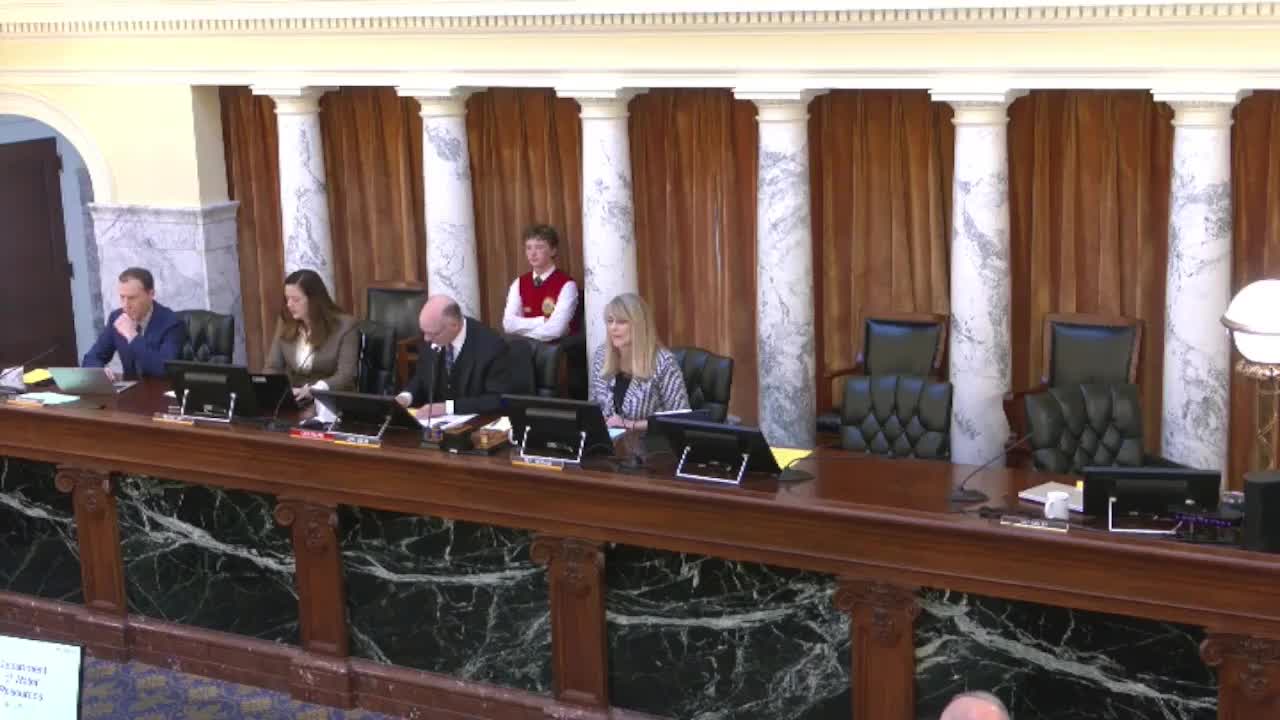
The Idaho Department of Water Resources told the Joint Finance-Appropriations Committee on March 1 that the agency has dozens of water projects under way, substantial balances in the water management fund that are largely already committed, and a request for additional staff and ongoing funding to support water administration and recharge work.
The Idaho Department of Water Resources told the Joint Finance-Appropriations Committee on March 1 that the agency has dozens of water projects under way, substantial balances in the water management fund that are largely already committed, and a request for additional staff and ongoing funding to support water administration and recharge work.
Budget analyst Janet Jessup told the committee the Department of Water Resources administers water rights under Title 42, Idaho Code, and that the separate Idaho Water Resource Board, created by Article 14 of the state constitution, can construct and operate water projects and issue project bonds. She said the department received large infusions of state fiscal recovery (ARPA) funds in recent years, including a $50 million one-time appropriation and an additional $50 million made ongoing to the agency’s base.
Why it matters: Committee members pressed agency leaders on how quickly projects can be advanced, how much cash remains to fund new work, and whether the agency has the staff to administer expanding water districts and real‑time measurement obligations in the Eastern Snake Plain.
What agency leaders told the committee
Director Matt Weaver said the department is not meeting current demand to create and support water districts across the state and asked for five new positions to form a Water Administration Bureau. "This proposal would add 5 positions that would get paired with those 11 existing positions, and we would create a water administration bureau," Weaver said, adding the new hires would include a bureau chief, resource agency liaisons and a technical records specialist to support water district creation and administration.
Chairman Jeff Raybould of the Idaho Water Resource Board described where the board’s water-management dollars are being used: "It's going in lots of different places," he said, and listed a sampling of funded projects — a Mountain Home Air Force Base pipeline and pump station, the Anderson Ranch dam raise planning and costs the board is supporting, a pipeline to deliver water to fish hatcheries, Bear Lake storage work, the Priest Lake water-management project, canal efficiency conversions, groundwater-to-surface-water conversion grants, and loans and grants for local drinking‑water and irrigation projects.
On funding levels and balances
Weaver and Raybould told the committee the water management account balance appears large on paper because much of it has already been committed by board resolution. Weaver summarized the account as follows (figures provided by the department during the hearing): an ending fiscal‑year 2024 balance of about $293,000,000, revenue into the account through Dec. 31 of roughly $38,000,000, and expenditures of about $11,200,000; committed funds total roughly $290,000,000, leaving an uncommitted balance of about $29,000,000. Raybould said portions of the balance are held for loans that have been authorized but not yet disbursed.
On ARPA and project timing, Jessup, Weaver and Raybould emphasized that large projects include multi‑year engineering and construction steps and that funds are sent to project sponsors incrementally as work progresses. Raybould said some appropriations have been used for reallocated ARPA work such as projects in the Treasure Valley, recharge and the Eastern Snake Plain aquifer (ESPA) improvement projects.
Recharge and the Eastern Snake Plain
Weaver described the department’s work on ESPA recharge and the role of state and private actions. He said state-sponsored recharge averaged about 268,000 acre‑feet per year from 2016–2024, private recharge by groundwater districts and others averaged about 116,000 acre‑feet per year, and pump reductions averaged about 212,000 acre‑feet per year. "On average, over that period of time, about 600,000 acre feet of aquifer management activities occurred," Weaver said, adding the mixed results have improved declining aquifer trends but that continued activity and monitoring will be required.
Committee concerns and staff needs
Several committee members asked whether hiring five additional water administration positions was appropriate, noting the requested increase represents a substantial percentage rise in staff for that program. Weaver said the figure reflected an effort to be "as lean as possible" while still meeting settlement and real‑time reporting obligations tied to the settlement on the Eastern Snake Plain. He said fulfilling one settlement requirement — measuring and reporting wellheads in real time — could require many more positions if the department were to carry the full burden itself, so the agency expects a shared approach with groundwater districts and water districts.
Project examples and funding approaches
Raybould and Weaver described grant and loan practices: the board uses a mix of loans and grants depending on project benefits and applicant capacity. The board’s aging‑infrastructure grant, for example, pays up to one‑third of a project’s cost with a $2,000,000 cap. The board has used loans, grants and reappropriated ARPA funds to cover projects that range from small canal-efficiency upgrades to multi‑million‑dollar dam work and regional pipeline and recharge projects.
What the agency asked from the legislature
Jessup told lawmakers the agency requested five FTE for the proposed Water Administration Bureau, ongoing funds to support GIS licensing ($58,500 noted in the packet) and funding for the second year of a Laserfiche form‑conversion project (described in materials as a one‑time request). The governor’s recommendation included $30,000,000 ongoing from general funds to be transferred annually into the water management fund for water projects; Weaver and Raybould described that as funding intended to support ongoing recharge, sustainability and infrastructure work statewide.
Outlook
Committee members pressed for more project‑level detail and timelines before approving significant ongoing transfers. Agency leaders said they would follow up with the committee to share the statewide project lists, committed‑fund detail and timelines that are available in the department’s SharePoint packet.
Ending
Weaver closed by reiterating the department’s priorities — water administration, water supply enhancements (including recharge) and continued project support — and by thanking the committee for considering the budget requests.