Get Full Government Meeting Transcripts, Videos, & Alerts Forever!
Get email alerts on the Capital Projects topic
No spam. Unsubscribe anytime.
JFAC reviews $122.9 million in permanent building fund recommendations, public works reports $1.9 billion in active projects
Summary
Legislative analysts and the Division of Public Works told JFAC the permanent building fund supports multi-year capital and maintenance projects. Analysts described a $122.9 million fiscal 2026 recommendation and told members the state currently has roughly $1.9 billion in active public works projects.
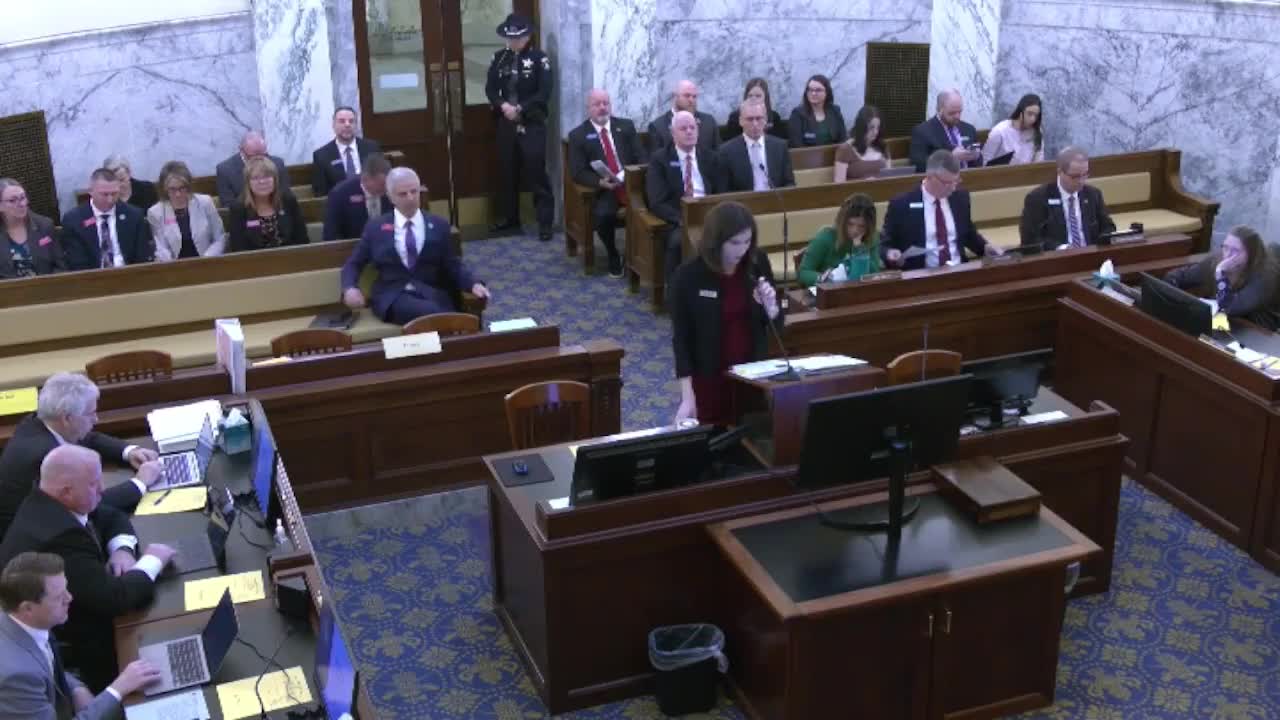
The Joint Finance-Appropriations Committee reviewed the permanent building fund and Division of Public Works project portfolio, hearing agency and division staff describe a multiyear capital pipeline and the fiscal 2026 recommendation totaling $122,861,900.
Frances Lippett, legislative budget analyst, told the committee the permanent building fund is structured to handle multi‑year projects and that unexpended balances become continuously appropriated pursuant to Section 57‑1105, Idaho Code. Lippett said the division reported roughly $1.9 billion in active public works projects statewide, including about $1.4 billion in capital projects, and that 42% of the funding for capital projects has been committed.
The committee reviewed the division’s fiscal 2026 recommendations, which include six capital projects and restored appropriations repurposed in fiscal 2025. Notable requests presented to committee members included:
- $6,500,000 to expand the Department of Lands’ Ponderosa office, add restrooms and shower facilities, and improve security in the reception area. - $5,560,000 for utility connections to support an Idaho National Guard future readiness center in Bonneville County; the readiness center is expected to support up to 350 military personnel at peak occupancy. - $5,525,000 for the Idaho State Police District 2 (Lewiston) facility. The legislature previously authorized funds to purchase and retrofit an existing building; after a purchase attempt failed because the owner raised the price, the agency requested funding to purchase land and construct a new facility. - $2,500,000 to expand laboratory space in the Micron Center for Materials Research at Boise State University to add one to three additional labs. - $14,000,000 for a life sciences complex at Idaho State University; the agency plans a financing package that includes $35,770,000 in agency funds and $78,000,000 in bonding for an estimated total project cost of $127,770,000. - $8,000,000 for a joint military science and veterans assistance center at the University of Idaho.
The fiscal 2026 recommendation also restores a repurposed $12,500,000 appropriation (previously used for a minimum‑security dorm at Orofino Prison and other needs) and includes $68,208,800 in alteration, repair and maintenance projects, accessibility improvements, and facilities maintenance for the Capitol Mall and Chinden Campus.
Dale Reynolds, administrator for the Division of Public Works, and his staff answered committee questions about project timelines, procurement and staffing for public works. Reynolds said the division typically expends 50 to 70 million of an appropriation in the first year of a project and noted the total portfolio includes many projects at different stages. He said project delivery timelines vary by procurement and delivery method; for example, large facilities under construction can take about two and a half years from the start of construction to completion.
Reynolds and Director Steve Bailey described the Chinden Campus work: about $70 million in projects have been completed, roughly $30 million are in progress, and an additional $145 million to $160 million is estimated for ongoing maintenance and deferred repairs, such as roofing and HVAC replacements. They said the campus is largely occupied (about 7% of rentable square feet currently vacant, representing roughly 2,100 square feet of the southern portion of Building 4) but that Building 3 remains vacant and subject to continued agency interest.
Committee members asked about deferred maintenance, which Lippett described as end‑of‑life replacement costs for building equipment (new roofs, HVAC systems, large mechanical replacements). She noted the $544,000,000 appropriation for statewide deferred maintenance is being managed by an external contractor and that many deferred maintenance projects are accounted for across multiple fiscal years.
On the Idaho State Police District 2 (Lewiston) request, Reynolds said ISP occupied space in an Idaho Transportation Department (ITD) facility and was “crammed” into basement and constrained space. After attempts to purchase an existing facility failed when the owner raised the price, the agency sought funding to buy land and build a new facility to meet operational needs, Reynolds said.
Reynolds and deputy administrators said the construction industry’s cost escalations and workforce constraints have complicated project delivery and that some projects might need to be paused if costs escalate further; projects already under contract must be completed under current contracts, they said.
Ending
Committee staff made available the division’s capital project report on SharePoint. Members asked for a listing of projects that had not advanced within legislative time limits so the committee could consider language requiring reappropriation of funds for inactive projects. The committee did not take final appropriation action during the hearing.