Get Full Government Meeting Transcripts, Videos, & Alerts Forever!
Get email alerts on the Healthcare Licensing topic
No spam. Unsubscribe anytime.
Senate approves bill to streamline hospital licensing, reduce duplicative state rules
Summary
Senate Bill 10‑15 passed the Idaho Senate after brief floor debate; sponsors and backers say it consolidates licensure authority, repeals multiple statutory sections and eliminates duplicative state rules that overlap with federal CMS requirements.
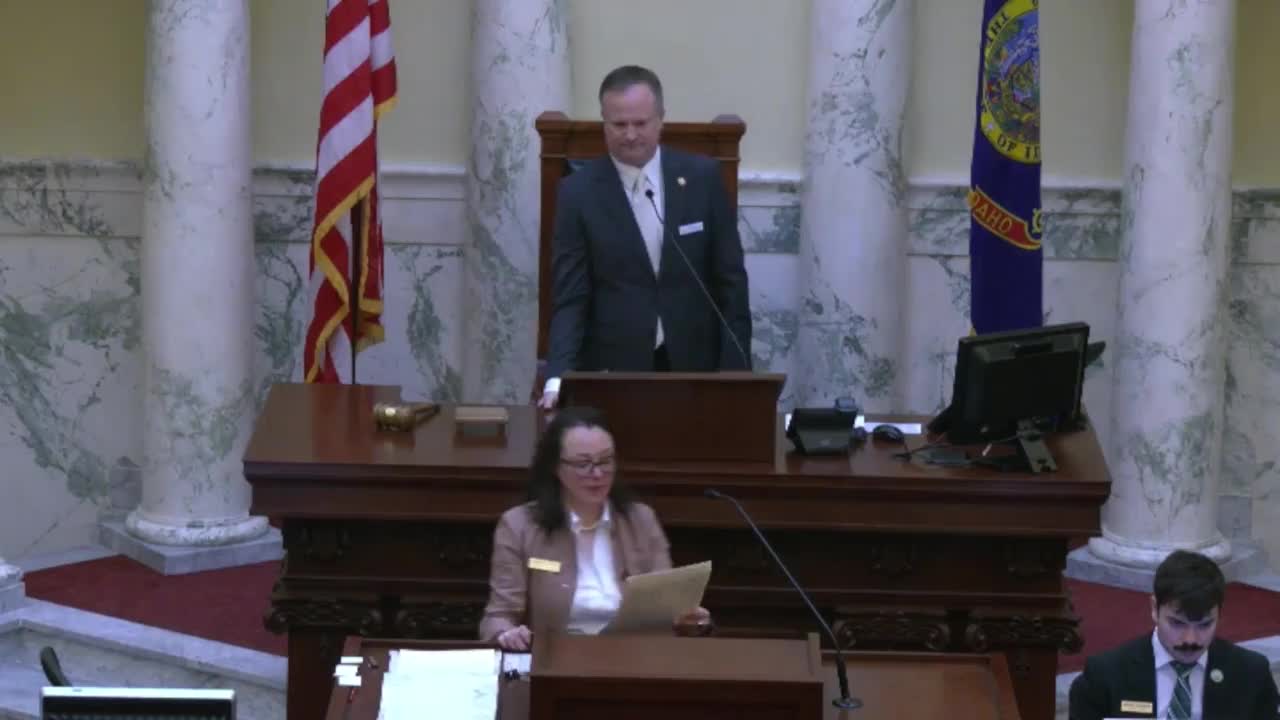
The Idaho Senate on Feb. 4 passed Senate Bill 10‑15, a measure described by sponsor Sen. Blaylock as the “streamlined licensing and inspection act” for hospitals and certain medical providers. The bill was placed before the Senate for third reading and approved; the secretary announced the bill had passed and would be transmitted to the House.
Sen. Blaylock said SB 10‑15 repeals 19 sections of Idaho Code governing licensure and oversight of hospitals, nursing homes and certified family homes and replaces them with a consolidated licensing process. On the floor he said the intent is to remove state requirements that duplicate federal Centers for Medicare and Medicaid Services (CMS) rules, cutting administrative burden for providers that bill Medicaid and Medicare.
According to the sponsor’s floor remarks, the bill would eliminate roughly 23 pages of state agency rules that the sponsor described as redundant with CMS oversight and that impose duplicative reporting and administrative requirements. The sponsor said the Department of Health and Welfare, the Idaho Hospital Association and the Idaho Healthcare Association support the measure. No floor amendments or substantive objections were recorded during third reading.
The transcript records the secretary announcing the passage of SB 10‑15; the roll count as recorded on the floor was read as "5 ayes, 0 nays, 0 absent excused." The journal later showed the bill as passed and scheduled for transmittal to the House.
Supporters on the floor framed the bill as a regulatory simplification for providers subject to overlapping state and federal requirements; opponents did not register substantive objections during the third‑reading debate. The bill’s sponsor closed debate and asked colleagues for a yes vote.