Get Full Government Meeting Transcripts, Videos, & Alerts Forever!
Get email alerts on the Utilities Small Modular Reactors topic
No spam. Unsubscribe anytime.
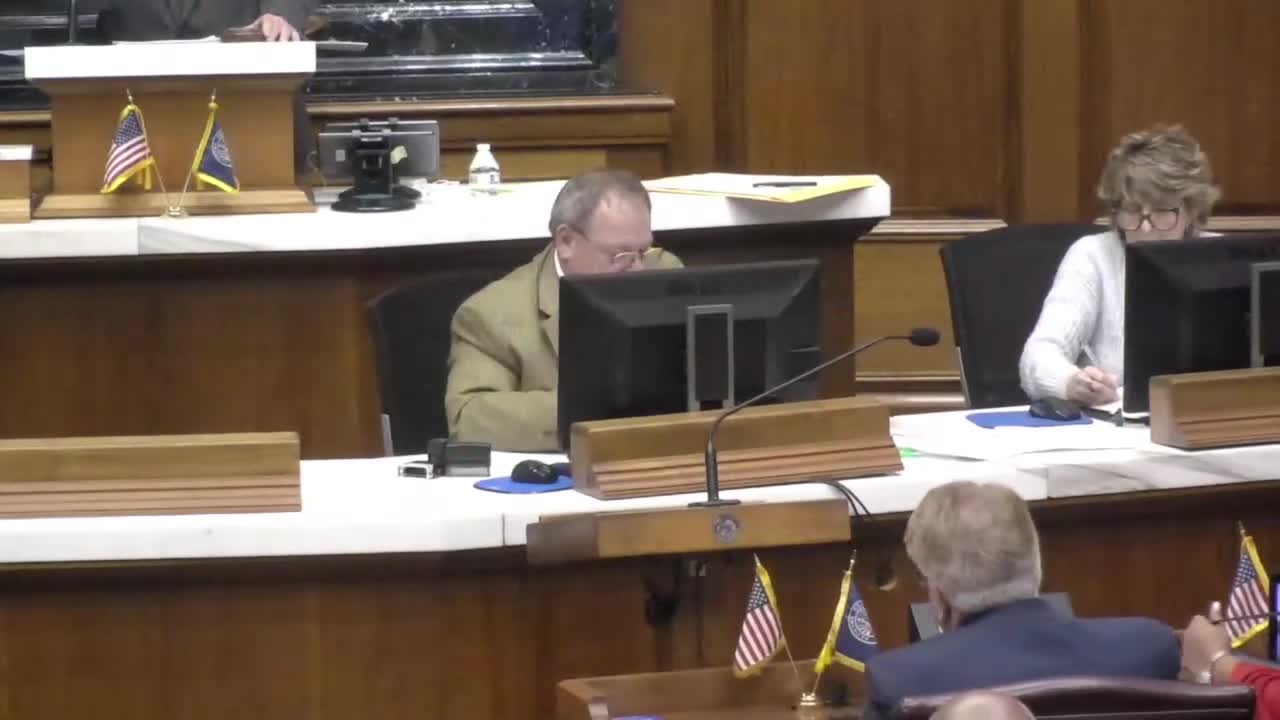
House debate over utility bill centers on small modular reactors, ratepayer protections
Summary
Lawmakers debated amendments to House Bill 1007 that would limit when utilities can recover planning and construction costs for unproven small modular reactor projects and set cost-sharing standards for large data-center customers. Representative Pierce led three amendments; two failed and one—raising data-center cost-share—passed.
Representative Pierce offered three amendments to House Bill 1007, a utilities measure that creates new pathways for expedited approval of generation to serve large loads such as data centers and includes provisions affecting small modular reactors (SMRs) and cost recovery by utilities.
Pierce framed his first amendment as a ratepayer-protection measure, saying the bill as written would allow utilities to recover “the cost of all that planning” from customers even if an SMR project is never built. He warned the provision could let utilities “speculate” with customers’ money by charging ratepayers for planning and engineering for an unproven technology. “You don't need to have any skin in the game. All the skin [is] on the ratepayer,” Pierce said on the House floor.
Supporters of the underlying bill argued the measure is intended to position Indiana to attract SMR manufacturing and to provide a regulatory path for new technologies. A proponent described efforts to bring SMR manufacture to Indiana and said existing federal and regulatory delays—not the state bill—have driven cost increases in national SMR projects. That speaker, during floor debate, noted Indiana may be considered by some SMR manufacturers and urged rejection of the Pierce amendment. That speaker was not identified by name in the transcript excerpt.
The House voted on Pierce’s first amendment by roll call. The result was 29 ayes and 69 noes; the amendment was defeated.
A second amendment by Pierce adjusted the bill’s cost-allocation standard for large customers such as data centers. The underlying bill required a large-load customer to pay 75% of the cost of any new generation built to serve that customer; Pierce moved to increase that share to 80% and to clarify the standard applies to expedited approvals for data centers. Supporters pointed to a settlement in another state (involving an investor-owned utility and technology companies) that set a similar allocation and argued the change better protects ordinary ratepayers. That amendment was adopted on voice vote.
Pierce’s third amendment targeted construction-work-in-progress (CWIP) recovery—sometimes shortened to QIP in discussion—which allows utilities to recover certain construction costs from ratepayers before new plant assets are completed and “used and useful.” Pierce argued the provision shifts project risk from utilities to ratepayers and said SMRs remain unproven in U.S. commercial service. Opponents countered that CWIP recovery is subject to review by the Indiana Utility Regulatory Commission (IURC) and that recovery is not automatic. On the third amendment the House again voted by roll call and defeated the amendment.
Taken together, the floor debate covered three distinct policy choices: whether planning costs for exploratory SMR work should be recoverable from ratepayers if the project is abandoned; how much of the cost of new generation built for large commercial customers should be borne by those customers; and whether CWIP recovery should be available for SMR projects approved under the bill’s expedited process.
Votes at a glance on the House floor for House Bill 1007 amendments
- Pierce amendment to bar recovery of planning/engineering costs for unbuilt SMR projects: defeated, roll call 29–69. - Pierce amendment to set large-customer contribution at 80% (data center standard): adopted (voice vote). - Pierce amendment to remove construction-work-in-progress recovery for SMRs: defeated (roll call; tally reported on the floor).
Why this matters: The bill and the floor amendments address how a regulated utility can recover costs for speculative or novel generation technology and how the costs for additional generation needed by large commercial loads (for example, data centers) are allocated. Those choices affect household electric bills, utility incentives, and the state’s approach to encouraging new energy manufacturing or generation technologies.
What the bill does next: After the amendments and votes recited on the House floor, House Bill 1007 was advanced to engrossment.
Representative Pierce said he supported the second amendment but opposed the first and third because, in his view, the bill as originally drafted places too much financial risk on ratepayers while SMRs remain unproven. Other floor speakers argued the bill and its incentives would help attract SMR manufacturing and related jobs to Indiana and that regulatory safeguards—such as IURC review—would constrain automatic recovery.
The transcript shows the amendments and votes were the principal substantive discussion of HB 1007 on this day; the underlying bill contains additional provisions (including tax credits and expedited commission processes) that were not altered by all of Pierce’s amendments.