Get Full Government Meeting Transcripts, Videos, & Alerts Forever!
Get email alerts on the State Budget topic
No spam. Unsubscribe anytime.
Idaho Department of Administration requests funding as governor's housing fund nears depletion
Summary
At a Joint Finance-Appropriations Committee hearing, the Idaho Department of Administration outlined budget requests including an ongoing general-fund appropriation to shore up the governor's housing fund, which officials say will be depleted by August 2026 without new support.
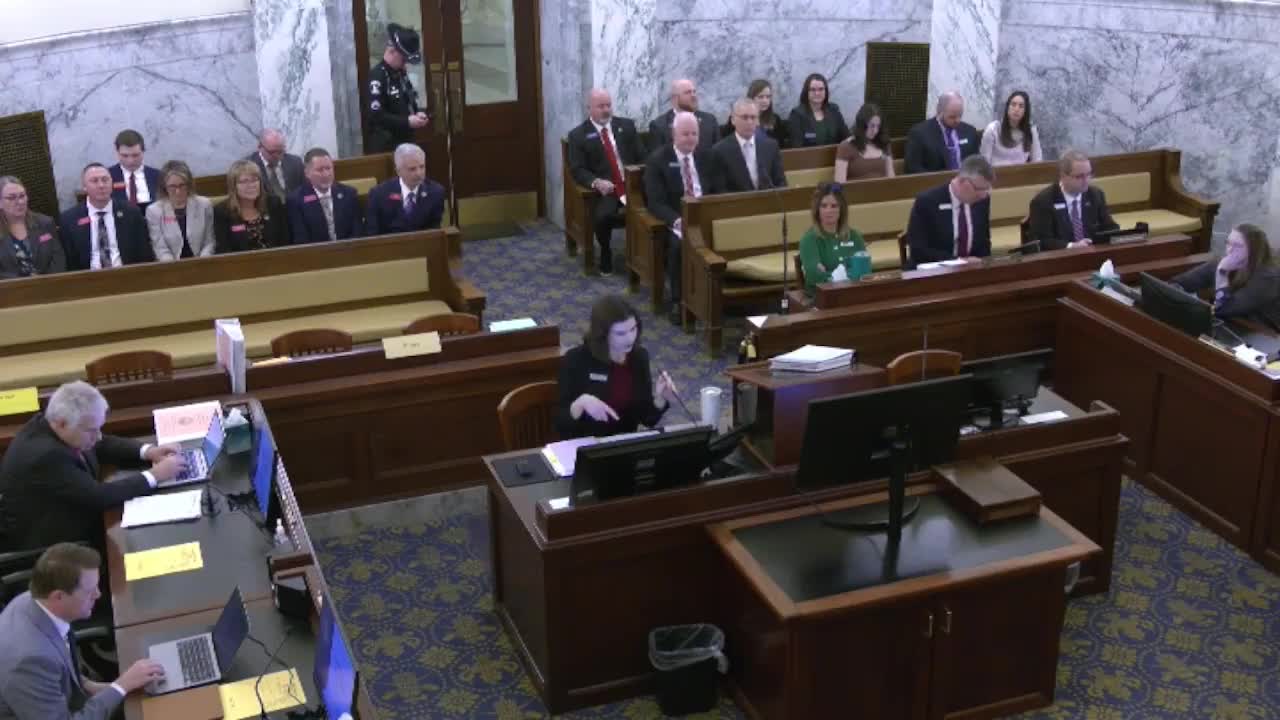
The Joint Finance-Appropriations Committee on President’s Day reviewed the Idaho Department of Administration’s fiscal 2026 budget request, including a request for a general-fund appropriation to the governor’s housing fund after officials told the committee the fund will be exhausted by August 2026 without action.
The department requests an ongoing $660,600 from the general fund for fiscal 2026 to support the governor’s housing stipend and related governor’s housing committee activities, Director Steve Bailey said. The committee previously asked the department to request $30,000 for fiscal 2025; that request was not funded, Frances Lippett, the committee’s budget and policy analyst, told members during the presentation.
The governor’s housing fund is continuously appropriated to the Department of Administration and is administered by the five‑member governor’s housing committee, Lippett told the committee. The fund currently provides a monthly housing stipend set at $4,551 and “has no consistent source of revenue,” she said. Lippett said the department requested an earlier, smaller appropriation that the legislature did not fund and is now seeking the larger, ongoing appropriation.
Beyond the governor’s housing request, the department described its overall appropriation and recent workload: it manages the Capitol Mall and other state facilities, runs the state’s centralized procurement for purchases over $10,000, administers employee benefits, and operates the division of public works that handles capital projects and facilities maintenance. Lippett said two‑thirds of the department’s appropriation is funded by the administration and accounting services fund, sourced by interagency payments for services, and about 10% of the department’s appropriation comes from the general fund. She noted the department’s dedicated fund ending balances have ranged from about $179.4 million to $1.4 billion over the past three years as the state invested surplus general fund revenues into capital projects and deferred maintenance.
On staffing and requests, the department currently is authorized 334 full‑time equivalent positions and has filled 92% of that authorization over five years, Lippett said. For fiscal 2026 the department requested $285,100 in ongoing enhancements that include three new positions: one personnel technician for the office of group insurance, one property values analyst in risk management, and a financial specialist to assist the fiscal officer with invoice volume. The office of group insurance has grown more than 33% since fiscal 2021, Lippett said, driven primarily by participating school districts that do not use the state payroll system.
The department’s one‑time requests total roughly $175,700, including small office equipment items and a $8,500 trailer for Capitol Mall security after the department repurposed a vehicle it earlier planned to buy. The department also asked to transfer a prior capital outlay appropriation into operating expenditures to align funding with the purchase of facility‑condition assessment software originally provided in fiscal 2023.
Faith Knowlton, administrator for the division of insurance, told committee members the division is conducting a four‑year appraisal process and asked for the property values analyst position to reduce over‑insurance and identify assets no longer insured because buildings have been demolished. Knowlton said current staff levels leave one analyst responsible for more than $11 billion in state property and about 8,500 vehicles, and that adding staff would let the division require agencies to coordinate any property changes through central staff, improving accuracy of insured values and enabling refunds only within the current year when overpayments are found.
Director Bailey and Lippett answered questions from members about the statutory basis for the governor’s housing committee and the location of property set aside for a possible governor’s residence. Bailey said the state still holds the property in a revocable easement with the City of Boise and that the committee had discussed revisiting the idea of a governor’s mansion, but no substantive plan has gained traction.
Committee members also asked about the department’s off‑budget, continuously appropriated funds, including the group insurance fund and retained risk accounts. Lippett explained that continuously appropriated expenditures—particularly for group insurance and certain permanent building fund expenditures—are not reflected in the same way on the fund‑balance slide and that committee members would be provided a detailed breakdown of continuous appropriations for the retained risk account upon request.
The department’s director and staff said they would supply additional detail requested by the committee, including the governor’s housing committee report history and continuous appropriation listings for the retained risk fund.
Ending
The committee did not take final action on the department’s requests during the hearing. Department staff provided the committee with follow‑up items the analysts and director said they would deliver, including a historical report on governor’s housing and specific continuous appropriation details for the retained risk accounts.