Get Full Government Meeting Transcripts, Videos, & Alerts Forever!
Get email alerts on the Education Budget topic
No spam. Unsubscribe anytime.
JFAC hears overview of public school support budget as attendance, support units and federal funds shift funding needs
Summary
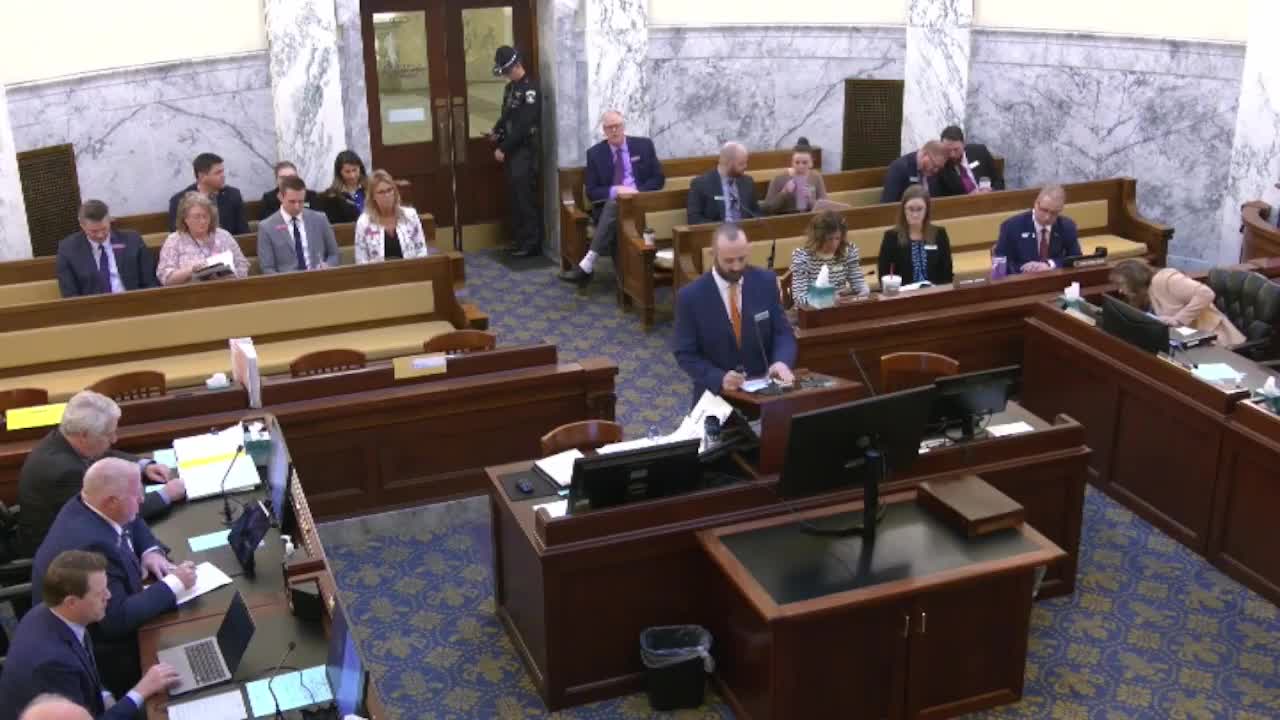
BOISE — The Joint Finance-Appropriations Committee on March 4 received a high-level briefing on the state’s public school support budget, covering roughly $2.7 billion in general-fund spending and a drop in state-funded "support units" tied to lower attendance counts and the end of most federal ESSER funding.
BOISE — The Joint Finance-Appropriations Committee on March 4 received a high-level briefing on the state’s public school support budget, covering roughly $2.7 billion in general-fund spending, the mechanics of how Idaho pays districts and charters, and several proposed statutory changes that could shift where some money is budgeted.
Jared Tetrault, deputy division manager with the Legislative Services Office’s Budget and Policy Analysis Division, told the committee the public school support program covers traditional districts and charters and is driven by formulas in Idaho Code Title 33 and by the state constitution’s obligation to establish a “general, uniform and thorough system of public free common schools.” He said most distributions are made by funding support units and by salary-based apportionments such as the career ladder and discretionary funds.
Why it matters: Changes in how students are counted and in one-time federal funding have reduced the number of state-funded support units and reshaped the state appropriation this year.
Key points and figures
- State funding overview: Tetrault described the “big sheet” summary showing the original appropriation, agency request and governor’s recommendation. He reported roughly $2.65 billion to $2.8 billion in general-fund support for public schools across recent presentations, with dedicated and federal funds layered on top of that. He said the average state-funded support unit is about $147,000.
- Support units and attendance: Committee members pressed staff on why about 200 fewer support units are included in the current forecast even though enrollment is similar to prior years. Tetrault and Department of Education staff explained that Idaho law requires funding be based on average daily attendance rather than raw enrollment; attendance rates that dropped after COVID (from about 98–99% during the pandemic back toward roughly 94–95%) reduced the number of support units that trigger state funding.
- Career ladder and CEC adjustments: The budget’s largest cost drivers include salary-based apportionments such as the career ladder and related compensation cells. Tetrault noted recent compensation adjustments (CEC increases) approved in prior sessions and flagged the difference between a CEC (a flat increase to cell values) and career-ladder placement (movement on the table).
- One-time and federal funds: Superintendent Debbie Critchfield told the committee the bulk of one-time federal ESSER/ARPA funding has ended. “I did not do that. I sent a letter back saying we would not extend the period, for usage of those dollars,” Critchfield said when asked whether the state sought an extension to use federal funds beyond the original timeline. Committee members had earlier raised concerns that some districts used federal dollars for recurring salaries.
- Facilities and House Bill 292 / potential HB 374 changes: Tetrault reviewed the school district facilities fund created in 2024 (House Bill 292), the earlier $1 billion facilities appropriation from House Bill 521 and a separate bill (HB 374) that would make the facilities fund a continuous appropriation if approved. He described allowable uses: bond or levy payoffs, maintenance, renovation and new construction per statutory rules.
- Transportation and other enhancements: The budget request includes a transportation funding line (statutory formula tied to prior-year expenditures) and a proposed statewide routing software contract to improve mileage and ridership reporting; staff said the routing software contract would be optional for districts and that the department has not issued an RFP yet and that the purchase is contingent on legislative appropriation.
- Discretionary funds and PSIF: Tetrault explained discretionary dollars (locally controlled, no-strings money) and the Public Education Stabilization Fund (PSIF), which reconciles distribution shortfalls and surpluses. The committee was shown historical one-time reallocations that prevented deposits to PSIF in prior years.
Committee questions focused on what drives year-to-year changes (attendance vs. enrollment, grade-level divisors that change the number of support units as cohorts age, and the interplay of dedicated, federal and general funds) and on whether the department can supply further detail about district-level impacts, number of employees on the state health plan, and facility distributions by district. Tetrault and department staff said they would provide the requested district-level breakdowns and enrollment details to the committee.
What the committee will decide next
Tetrault noted several items require statutory action (weighted student funding proposals, transportation funding formula, and a proposed special-needs student fund) and that some bills were scheduled in germane committees. The Joint Finance-Appropriations Committee will consider appropriation choices once pending bills and statutory details are resolved.
Ending
The presentation gave legislators a formula-level view of the public schools budget and highlighted that attendance-driven counts, the expiration of one-time federal funds and several pending statutory actions will determine how much money flows to districts and charters in the coming year. Staff committed to return with district-level breakdowns and other clarifying data requested by members.