Get Full Government Meeting Transcripts, Videos, & Alerts Forever!
Get email alerts on the Water Resources Rulemaking topic
No spam. Unsubscribe anytime.
Committee reviews multiple Idaho Department of Water Resources rule dockets; lawmakers ask for clarifications
Summary
IDWR staff briefed the House Resources and Conservation Committee on negotiated rule changes to adjudication and beneficial use examination rules and other chapters; members asked for clarifications on source‑naming and delegation language.
The Idaho Department of Water Resources (IDWR) briefed the House Resources and Conservation Committee on negotiated changes to multiple rule chapters, including adjudication rules and beneficial use examination rules, and announced additional rulemakings in progress.
Eric Bowe, IDWR Water Compliance Bureau chief and the agency's rulemaking officer, said the department completed negotiated rulemaking on four zero‑based review chapters in 2024 — adjudication rules, beneficial use examination rules, injection well rules and well construction rules — and submitted a separate amendment related to conjunctive management. The department presented the pending adjudication rules (IDAPA 37.03.01) and beneficial use examination rules (IDAPA 37.03.02) in the committee's rule docket review.
Key points discussed
- Adjudication rules: IDWR staff explained amendments intended to improve consistency and readability and to clarify how claimants should name a water source when a spring or seep seasonally "sinks" before reaching a named downstream water body. Craig Saxton, IDWR Water Allocations Bureau chief, said the change aims to standardize the use of published U.S. Geological Survey names and simplify claim reporting: "Using the published USGS name for a water body enables IDWR and the courts to consistently name water bodies so it's clear which water rights are diverted from a particular source or stream."
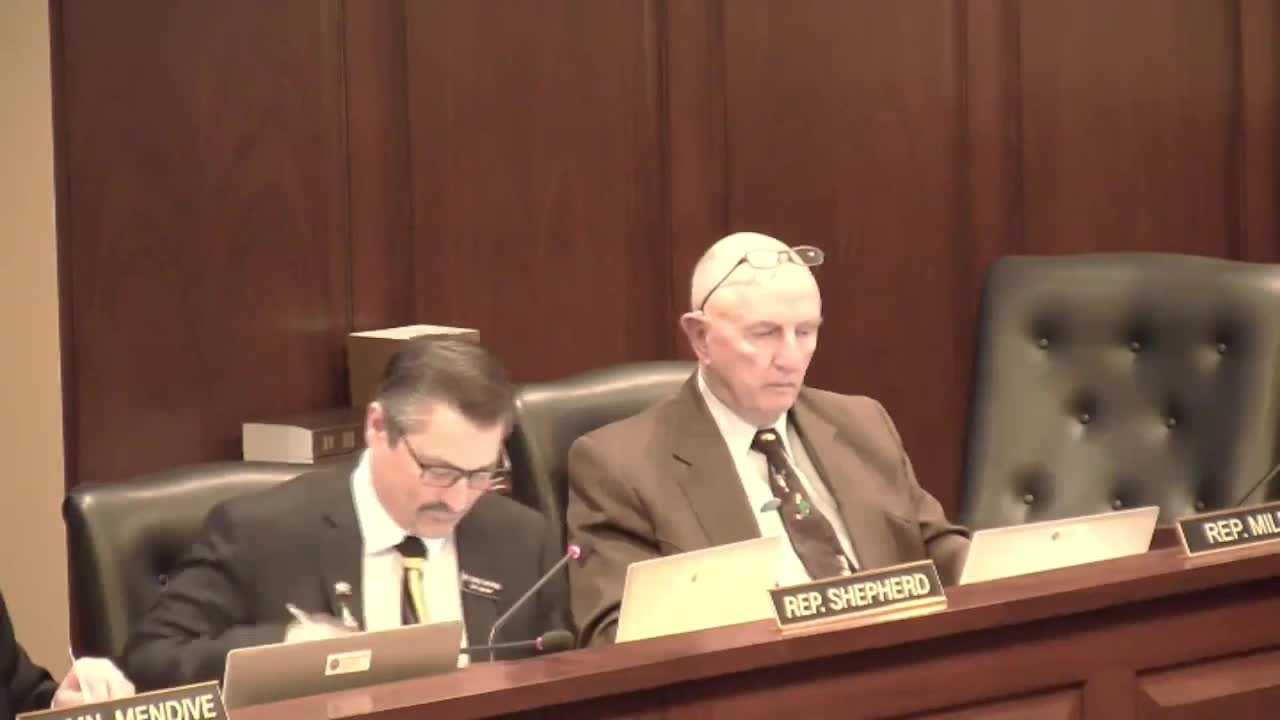
Committee members asked whether the proposed language could have unintended consequences for land management, for example by making it easier to classify springs or other sources as tributary to named streams in ways that might affect setback or permitting decisions. Representative Shepherd and Representative Miller asked the department to provide additional clarification and to confirm whether the change merely standardizes claim descriptions or could have downstream legal effects.
- Delegation language: Representative Tanner asked why the rule set defines the director's authority to delegate, noting that the statute already authorizes delegation (Idaho Code 42‑17013). IDWR staff said the definition was added for clarity and consistency within the rules and because the term "director" is used elsewhere in the chapter.
- Beneficial use examination rules: IDWR presented updates to examiner certification, measurement standards, reporting and forms. The department said the rulemaking reduced overall verbiage and modernized terminology; it also added a provision allowing 50 years of climate data to be used for certain snowmaking permit volume adjustments.
Process and next steps
Department staff told the committee they would follow up with requested clarifications on specific adjudication wording and on stockwater claim language. Committee members asked the department to return with detailed line‑by‑line explanations on major edits before any motions are taken; the committee voted to adjourn rather than complete rule motions at the same meeting and asked IDWR to prepare a more detailed presentation in a future session.
Ending
No rule dockets were approved at the meeting. Lawmakers asked for additional documentation and line‑by‑line explanations on several points — especially the adjudication source description, stockwater claim guidance, and the inclusion of delegation text — before taking further action.