Get email alerts on the Flood Control Districts topic
No spam. Unsubscribe anytime.
Committee introduces resolution updating flood control district meeting and procurement rules
Summary
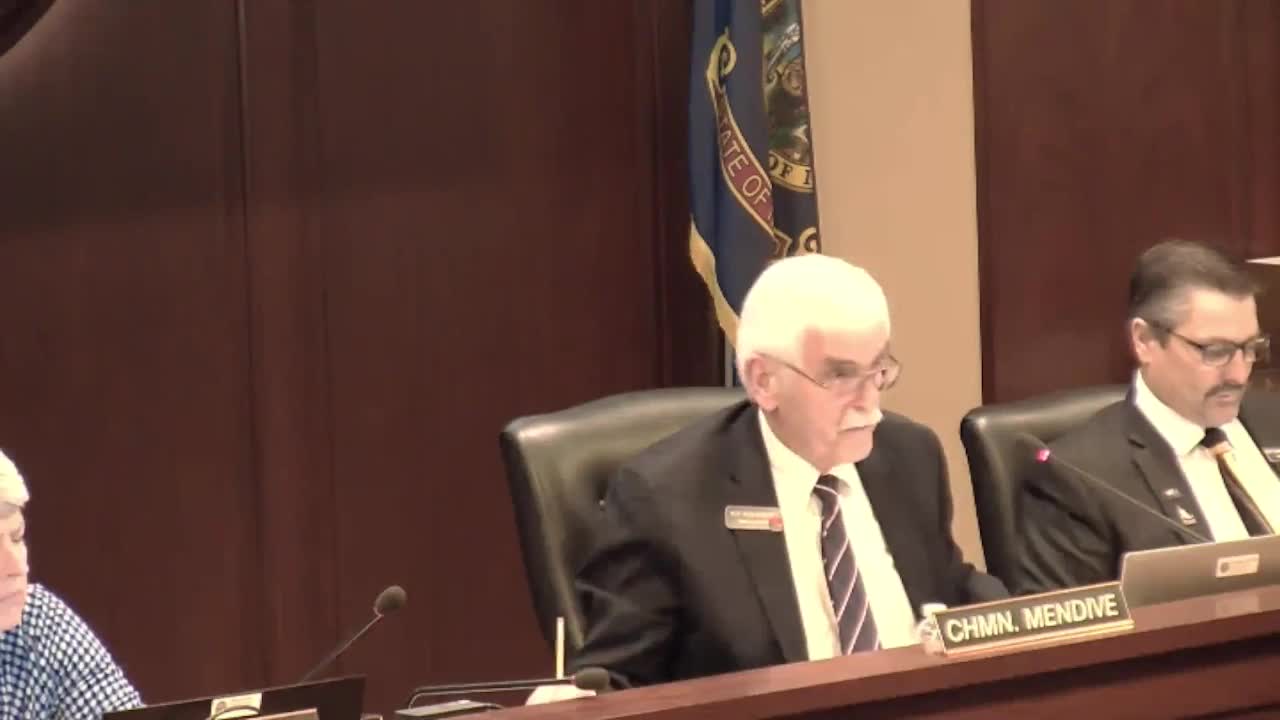
The committee introduced RS 32,209 to modernize flood control district meeting locations, frequency, notice provisions, and procurement references, and to update commissioner per diem; the resolution was introduced by Representative John Vanderrata and motion to introduce passed.
Representative John Vanderrata (R‑District 22) asked the House Resources and Conservation Committee to introduce RS 32,209, a request‑started resolution to amend statutes governing flood control districts.
Vanderrata said the resolution would update meeting locations, frequency and notice provisions to allow a flood control district to have an office and meeting location outside the district boundaries and to modernize meeting practices. He also said the measure would update commissioner per diem and align procurement provisions with current procurement statutes.
The committee moved to introduce RS 32,209 and approved the motion on a voice vote. The chair said the resolution would be introduced.
Why it matters
If enacted as statute, the changes would allow greater flexibility for flood control districts in where they hold meetings and how they handle procurement and compensating commissioners. The transcript did not specify the new per diem amount or other detailed statutory text.
Ending
The committee voted to introduce the resolution; further drafting and formal bill language will follow as the resolution proceeds through the legislative drafting and committee process.
AI generated
The text on this page is AI generated. Summaries, highlights, analysis, and video transcripts are all produced from the original source material.
AI can make mistakes, so if you spot one, and we will fix it for everyone.
Note: the source content is unaltered by us. Any content source we link to, be it a video, an audio recording, or a document, is presented exactly as its publisher released it. That publisher is usually a government body, sometimes an individual official or another organisation.