Get Full Government Meeting Transcripts, Videos, & Alerts Forever!
Get email alerts on the Parks And Recreation topic
No spam. Unsubscribe anytime.
Committee advances bill to raise parks passport and fund nonmotorized trails
Summary
The House Resources and Conservation Committee voted to advance House Bill 57, which would raise the state parks passport from $10 to $20 and earmark $4 of the fee for nonmotorized trail maintenance while directing the remainder to state parks maintenance and operations.
House Bill 57, which would expand Idaho’s Parks Passport into a Parks and Trails Passport and raise the annual resident passport from $10 to $20, was advanced to the House floor by the House Resources and Conservation Committee on a voice vote.
Representative James Petzke (R‑District 21) told the committee the bill is intended to shore up an ongoing revenue stream for the Idaho Department of Parks and Recreation and establish the state's first funding mechanism for nonmotorized trail maintenance. "This legislation will allow [the Department] to fully execute on that code," Petzke said, referring to Idaho law requiring parks to plan for and maintain park facilities. He said $16 of the proposed $20 passport would go to parks maintenance and operations and $4 would be allocated to nonmotorized trails.
Petzke said the existing passport fee has not been raised in over a decade and called the proposal a user‑fee approach so the people who use the system help fund it rather than placing the full burden on general taxpayers.
Why it matters
Supporters and Parks Department allies told the committee that Idaho's trail and parks infrastructure face growing maintenance backlogs and that nonmotorized trails currently lack a dedicated statewide funding stream. Testimony from land‑use and recreation groups, outfitters and small businesses emphasized that better funded, well‑maintained trails support outdoor recreation, tourism and local economies.
What proponents said
Tim Martin, chair of the Idaho Trails Association, said volunteers cannot keep pace with deferred maintenance and argued a dedicated funding source would allow paid crews, tools, bridge replacements and other larger repairs: "Without additional funding to support the non motorized trail maintenance, trails that are currently open will become increasingly crowded," Martin said.
Dan Waugh of the Idaho Horse Council, who described leading the initiative for several years, cited statewide recreation statistics and private‑sector willingness to buy a passport that supports trails. "We are asking to allow us to voluntarily pay into a program just as motorized does," he said.
Representatives of Idaho Business for the Outdoors, Idaho Wildlife Federation, Idaho Outfitters and Guides, and other recreation and business groups also testified in favor of the bill, saying a modest, voluntary user fee can help preserve access and support local economies.
Questions and concerns
Several committee members said they support additional funding for parks but raised concerns about splitting the passport revenue between parks and nonmotorized trails. Representative Tanner and Representative Miller both questioned whether the $20 fee would meaningfully address the parks’ maintenance backlog and whether diverting $4 for trails would leave parks short of what they need.
"When we're trying to break apart an area of where their revenue is coming from and saying we're gonna take it someplace else, we're still leaving them short," Representative Tanner said.
Representative Petzke responded that parks and state trails are "intrinsically linked" and that parks are well positioned to administer nonmotorized trail maintenance, citing the department's experience managing motorized programs.
Administration and enforcement
Department staff said the nonmotorized portion would be administered by the Department of Parks and Recreation. The passport remains voluntary for residents; nonresidents would continue to pay daily nonresident fees when they enter state parks. Department staff clarified that an OHV sticker and a parks passport are distinct programs: OHV registration fees (for off‑highway vehicles) already exist and fund motorized trail maintenance.
Formal action
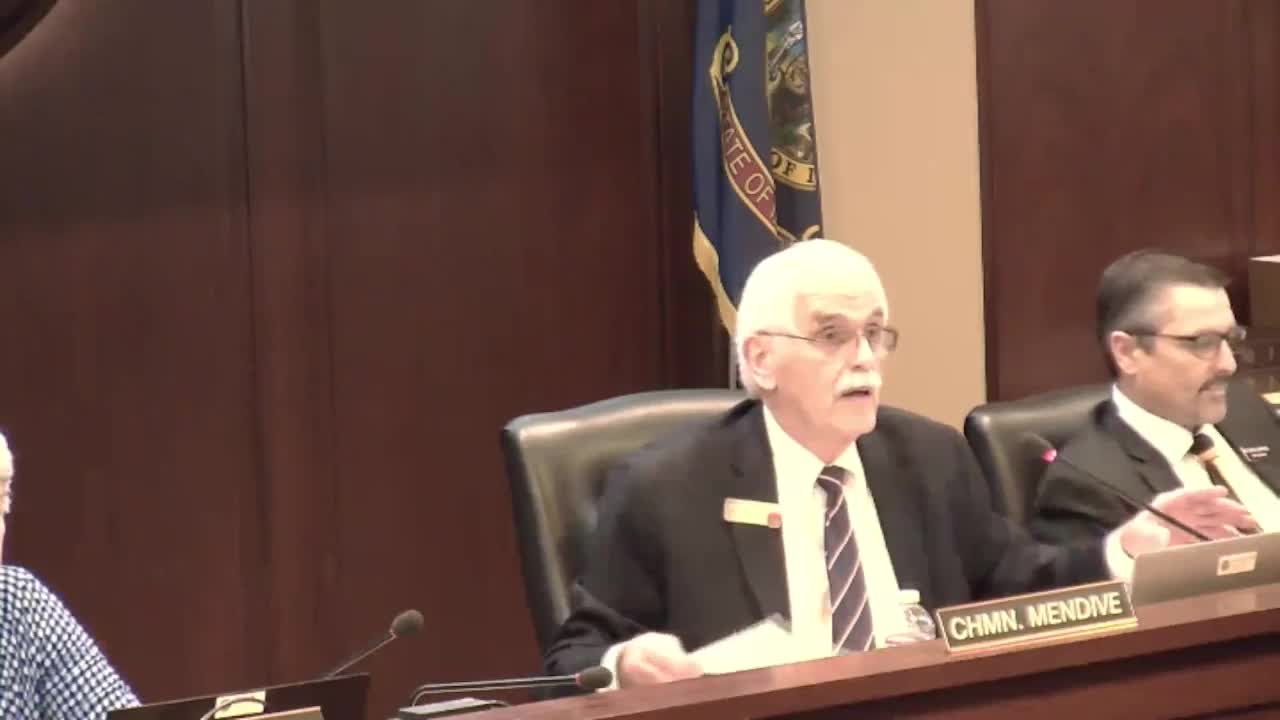
Representative Raymond moved to send House Bill 57 to the House floor with a "do pass" recommendation. The motion was approved on a voice vote; the chair announced, "The ayes have it and it will be sent to the floor." The transcript does not record a roll‑call tally.
Context and next steps
Supporters described the $20 fee as modest relative to neighboring states' passes and said the measure is intended as an initial step to build a sustainable funding stream. Opponents and some members cautioned more study may be needed and said additional revenue may still be required to address the parks’ full maintenance backlog.
Ending
With the committee's vote, House Bill 57 moves to the full House for consideration. Committee discussion and public testimony indicate broad stakeholder support for a user‑fee approach but also highlighted continuing concerns about whether the proposed split of revenues will be sufficient to address parks' maintenance needs.