Get Full Government Meeting Transcripts, Videos, & Alerts Forever!
Get email alerts on the Student Athlete Safety topic
No spam. Unsubscribe anytime.
Committee sends sudden‑cardiac‑arrest awareness bill for student athletes to the floor, 8‑5
Summary
House Bill 313 would require consistent sudden cardiac arrest awareness training for coaches, parents and student athletes on a schedule aligned with current coach training; the House Health & Welfare Committee voted 8‑5 to send the bill to the floor with a due‑pass recommendation.
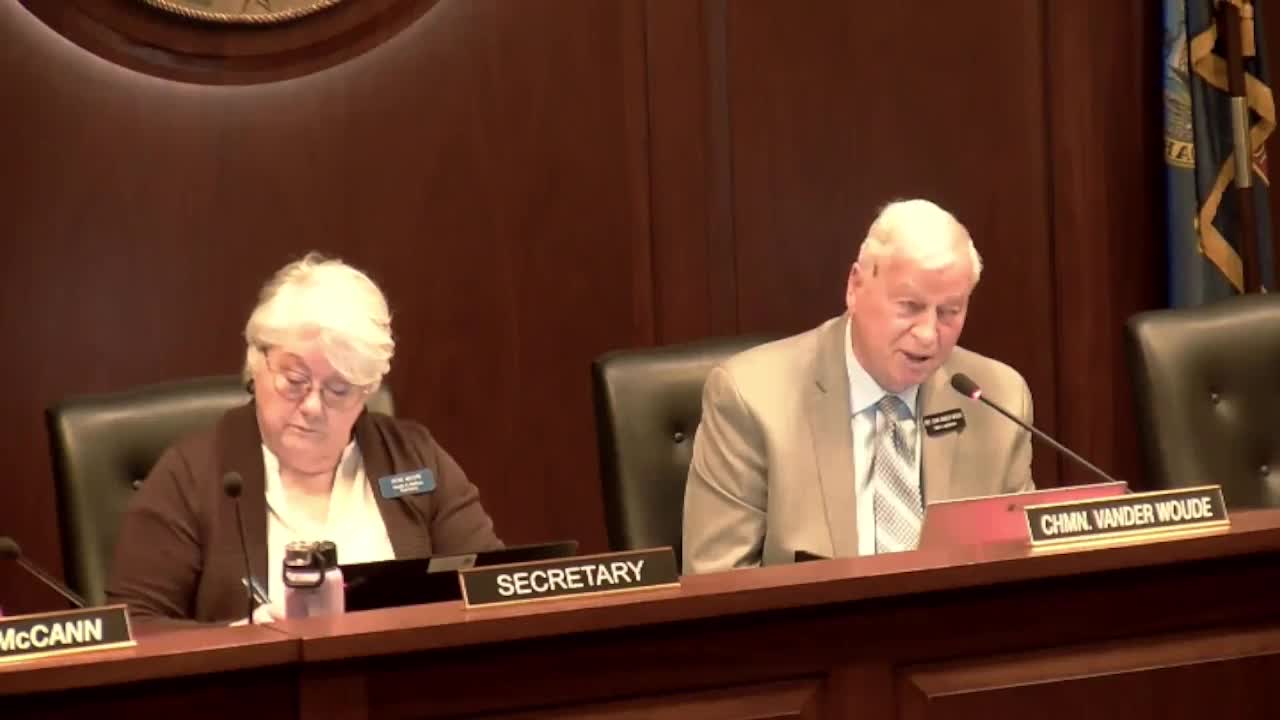
The House Health & Welfare Committee voted 8‑5 to send House Bill 313 to the House floor with a due‑pass recommendation. The bill, sponsored by Representative Josh Wheeler of District 35, would require sudden cardiac arrest awareness training for coaches, parents and student athletes on a schedule aligned with existing coach trainings.
Sponsor and cosponsor remarks: Wheeler said the bill is a revision of an earlier bill and "provides a consistent standard for providing this training on sudden cardiac arrest awareness to both coaches and parents." Representative Healy, who spoke as co‑sponsor on health elements, described the medical conditions that can cause sudden cardiac arrest in young athletes and argued that wider awareness and access to automated external defibrillators (AEDs) and trained bystanders can save lives.
Liability and implementation: Committee members questioned protections for coaches and what would happen if a coach refused training. Representative Wheeler said the bill includes liability language developed with trial lawyers: "no coach shall be subject to civil liability for such coaches' actions or inactions under the provisions of this section unless such coach is found to have acted unreasonably in a grossly negligent or reckless manner," he told the committee, describing the standard as protecting coaches who act in good faith. Wheeler said the Idaho High School Athletic Association (IHSAA) and Idaho Athletic Trainers participated in drafting and that the approach mirrors existing concussion‑education statutes.
Parental role and paperwork: Members asked whether parents would be forced to take training. Wheeler said the bill asks parents to acknowledge they have received and reviewed the material — similar to other acknowledgments schools already collect — and that exceptions and local‑level processes would govern participation decisions.
Votes: The committee took a roll call. The transcript records the roll call result as "Roll call shows 8 in favor, 5 against, 2 absent. Motion passes. House Bill 3 13 is sent to the floor with a due pass recommendation." The roll‑call list in committee remarks named members and votes (examples in transcript include Chairman Bandawada: Aye; Representative Healy: Aye; Representative Burgoyne: Nay; Representative Kaler: Nay; Representative Furman: Yes; Representative Leavitt: No; Representative McCann: Yes; Representative Rasor: No; Representative Thompson: No; Representative Rubell: Yes; Representative Egbert: Yes).
Why it matters: Sudden cardiac arrest is a leading cause of death among young athletes in certain conditions; sponsors said the bill is a budget‑neutral, awareness‑and‑documentation approach intended to increase bystander readiness and parental awareness without creating a large new cost to taxpayers.
Next steps: The bill advances to the House floor for consideration. Committee members discussed local implementation details and the role of school districts and athletic associations in applying the requirement.
Limitations: The hearing record did not include a fiscal note in the transcript; sponsors said the approach is intended to be budget neutral using materials from nonprofit organizations such as Simon’s Heart and the existing IHSAA training cadence.