Get Full Government Meeting Transcripts, Videos, & Alerts Forever!
Get email alerts on the Virtual Charter Funding topic
No spam. Unsubscribe anytime.
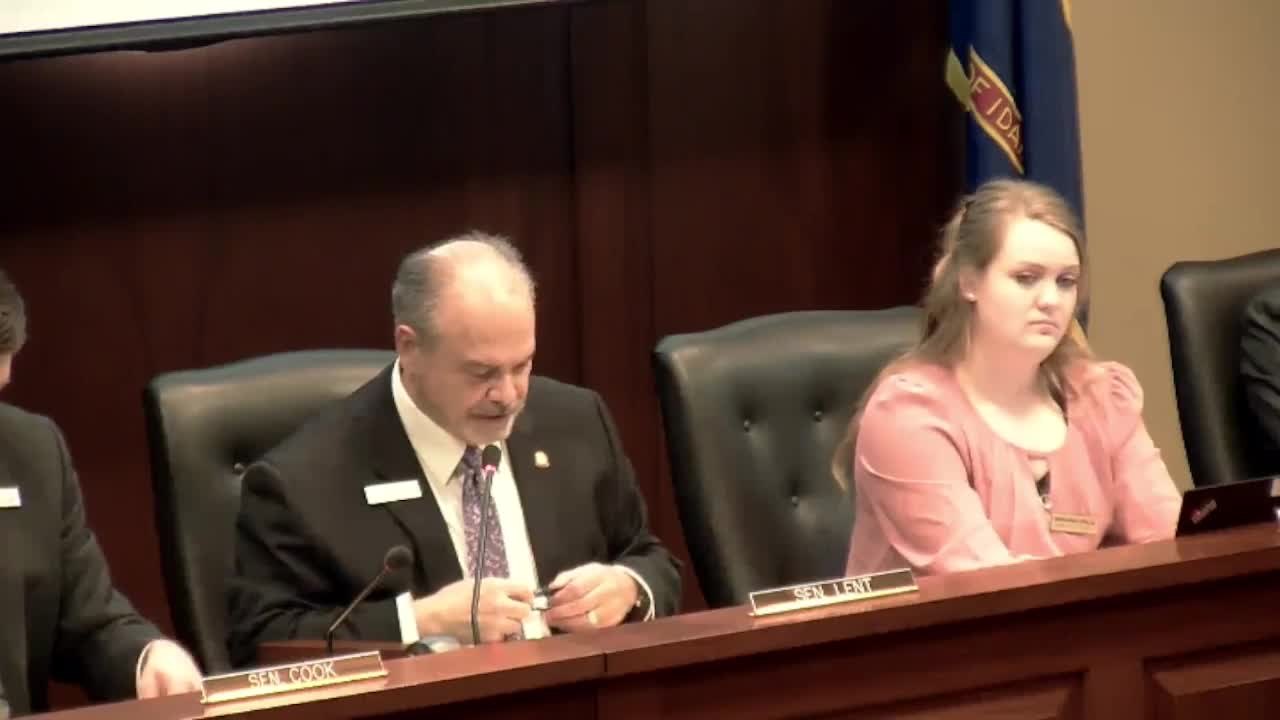
Idaho Home Learning Academy outlines program, funding and accountability to Senate committee
Summary
Terry Sorensen, executive director of the Idaho Home Learning Academy, told the Senate Education Committee IHLA serves roughly 7,900 students statewide and described the school's funding model, accountability systems and the role of contracted educational service providers.
Terry Sorensen, executive director of the Idaho Home Learning Academy (IHLA), told the Senate Education Committee IHLA is a statewide public virtual charter school authorized under Oneida School District that serves students in grades K–12 and provides a range of services including special education, English-language learner supports and interventionists.
"Idaho Home Learning Academy is part of an educational choice movement in Idaho, that gives parents choice within the public school system," Sorensen said. She said IHLA provides a complete online curriculum aligned to Idaho standards, a mixture of teacher-led virtual classes, asynchronous self-paced courses and in-person learning opportunities, and that parents receive an $1,800-per-student annual educational savings account (ESA) that can be used through contracted providers or, in some cases, reimbursed on receipts.
Funding, providers and accounting Senators pressed Sorensen for detailed figures. Sorensen said IHLA's enrollment is roughly 7,925 students and that the district's budget is "about $55,000,000" for the year. She testified IHLA will pay approximately $21,000,000 to three contracted educational service providers; she said roughly $14,000,000 of that amount is returned to families as the ESAs that parents use to purchase curriculum or supplies. Sorensen described contracts with three named providers: Harmony Education (K–8), Braintree Educational Services (K–12) and HomeEd360 (K–8).
Several senators sought clarity on whether parents receive cash directly and on the legal basis for reimbursements. Oneida School District Superintendent Abrams told the committee, "it is not going to parents. It's going to the institution. And they're using it to reimburse parents for expenses they incur." Sorensen said the providers account for purchases through a direct-buy system or, for some items, by reimbursing receipts; she emphasized that parents are not handed cash.
Accountability and outcomes Sorensen described three prongs of IHLA accountability: fiscal (tracking purchases and direct buys), academic (teacher check-ins, portfolio submissions and teacher feedback) and outcomes (state testing including IRI and ISAT and additional engagement surveys IHLA conducts). She said the school uses standards-based rubrics and an electronic portfolio system; K–8 students check in with certified teachers twice monthly and submit artifacts, while high-school students submit weekly work.
Senators pressed IHLA on achievement metrics. Sorensen acknowledged math proficiency has been a challenge and said incoming students are often transient or previously homeschooled and not always taught to state testing standards. She pointed to higher scores in 11th-grade English and said students who remain in IHLA for multiple years often show improvement.
Concerns and clarifications raised by senators - Senator Ward Engelking asked about facility funding; Sorensen said IHLA recently converted to a charter and has not received the $400-per-student facilities allocation. - Multiple senators asked whether families could also access the Empowering Parents program. Sorensen said IHLA does not administer that program and does not promote it; Senator Nichols clarified an important detail: "the only thing that you can get reimbursed for empowering parents right now is for home Internet service." (committee exchange). - Senators asked about instructional time; Sorensen said models vary: some students meet synchronously about one hour per week per subject, others are primarily asynchronous and rely on teacher feedback and interventions.
Legal matter involving Oneida School District Superintendent Abrams told the committee Oneida School District is currently pursuing a lawsuit against the state that challenges a law passed on the last day of the prior session that retroactively rescinded funds the district says it had earned, including bond-equalization dollars. "The issue that led to the lawsuit was that they backdated it," Abrams said.
What did not change at this hearing Committee members asked for more detailed financial breakdowns and requested the district provide exact budget numbers. IHLA did not request or receive committee action at this hearing; the presentation was informational. Senators and staff agreed to follow up with budget details for future committee consideration.