Get Full Government Meeting Transcripts, Videos, & Alerts Forever!
Get email alerts on the Drug Policy Constitutional Amendment topic
No spam. Unsubscribe anytime.
Idaho committee backs sending constitutional amendment on drug authority to the floor
Summary
A House committee voted to send House Joint Resolution 4 to the floor with a due pass recommendation, advancing a proposed constitutional amendment that would give the state legislature sole authority to legalize "marijuana, narcotics, or other psychoactive substances."
A House committee voted to send House Joint Resolution 4 to the floor with a due pass recommendation, advancing a proposed constitutional amendment that would give the state legislature sole authority to legalize "marijuana, narcotics, or other psychoactive substances." Representative Scott moved the motion, and the voice vote carried; Representatives Green and Achilles were recorded as voting no.
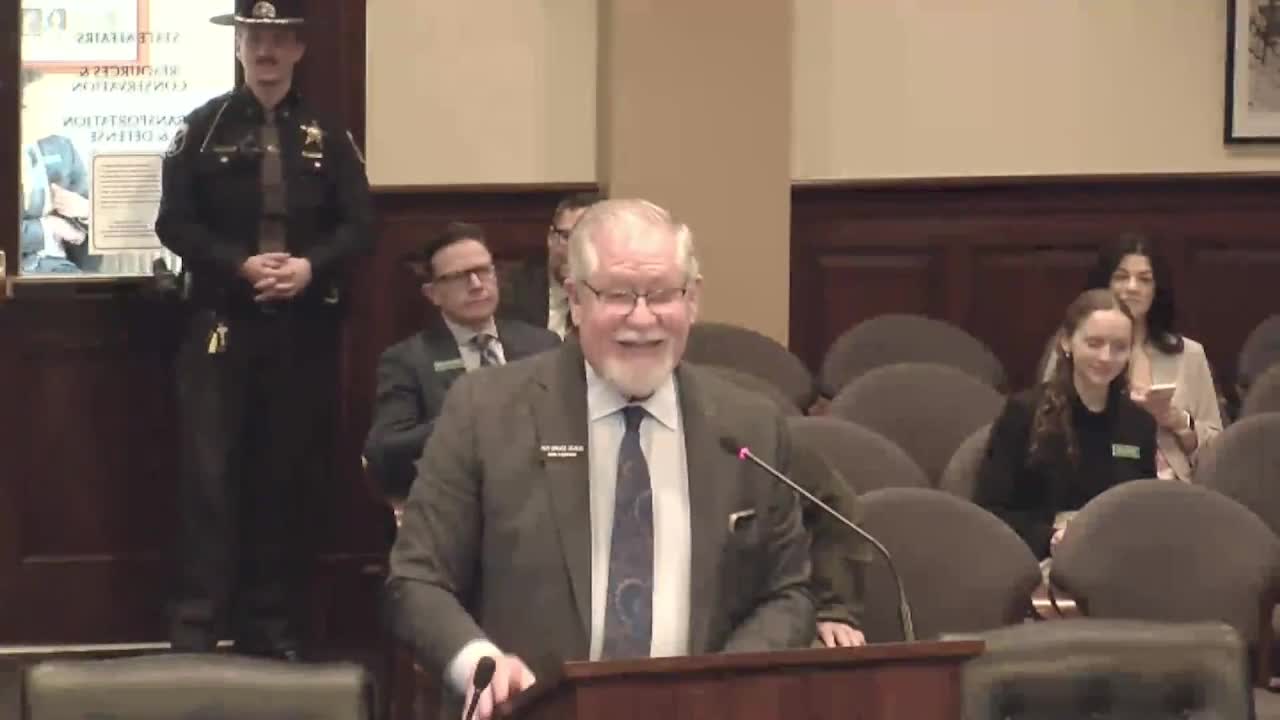
The amendment, sponsored in the House by Representative Bruce Skaug, would add language to the Idaho Constitution to reserve to the legislature the power to legalize those substances. Skaug told the committee the measure is aimed at keeping Idaho"not open to drugs" and to "harmonize the current treatment of intoxicating liquors" with control over other psychoactive substances.
The proposal would still require voter approval to amend the constitution. Supporters framed the change as protecting the state against out‑of‑state initiative campaigns and ensuring drug policy is made through elected representatives rather than ballot initiatives. "We seek to give the legislature the same power over these drugs as we have on liquor," Skaug said. He also said the new resolution differs from an earlier version by removing a supermajority requirement that HJR3 would have imposed.
Supporters from the public and advocacy groups addressed the committee in favor. Christian Brown, a Boise resident and former teacher, said lax drug laws outside Idaho harmed children in the schools where he taught and urged the committee to keep the state’s standards high. Grace Howitt, policy analyst for Idaho Family Policy Center, told the committee the state constitution and the Tenth Amendment support keeping drug policy at the state level. Fred Birnbaum of the Idaho Freedom Foundation argued initiatives are vulnerable to outside money and said "this amendment has a key word and that key word says only the legislature."
Opponents urged the committee to preserve the initiative route, especially for medical and therapeutic uses. Joseph Evans, a U.S. veteran testifying for KIND Idaho, said veterans have benefited from access to cannabis and other psychoactive therapies and urged retention of initiative access: "I'd like to see this continue to be accessible by the initiative process so that we can take care of our veterans," he said. Representative Green asked whether the amendment would require the legislature to review medicines already used in Idaho; Skaug replied the amendment would not list schedules or hundreds of drugs and that the legislature would only be involved if it chose to legalize a currently illegal substance.
The committee’s due pass sends the resolution to the House floor for further consideration. If passed by the Legislature and approved by voters, the amendment would change who — the Legislature versus initiative petitioners — may legalize marijuana, narcotics and other psychoactive substances in Idaho.