Get Full Government Meeting Transcripts, Videos, & Alerts Forever!
Get email alerts on the Aging Services Budget topic
No spam. Unsubscribe anytime.
Idaho Commission on Aging outlines ARPA spending and requests small ongoing increases to support meals and caregivers
Summary
The Commission on Aging told legislators Feb. 24 it has used ARPA funds for meal programs, caregiver support and pilots that expand community health workers; the commission requested modest ongoing general‑fund increases and one‑time ARPA drawdowns to pay final invoices.
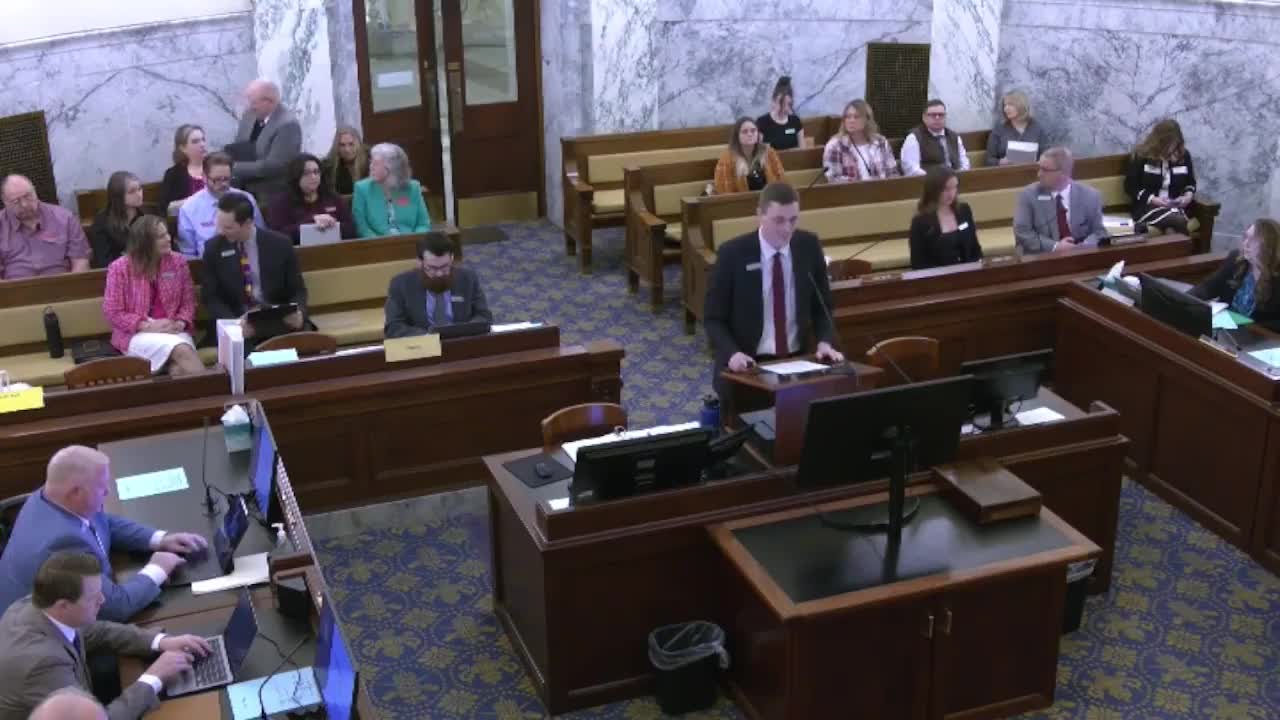
The Joint Finance‑Appropriations Committee heard Feb. 24 from the Idaho Commission on Aging on how it has used American Rescue Plan Act funds and on a modest FY2026 request to adjust the agency’s base budget for inflation and program needs.
Colin McGurkin of the Legislative Budget and Policy staff told the committee, “The Commission on Aging implements the Federal Older Americans Act and Idaho Senior Services Act,” and summarized five years of appropriations and one‑time ARPA awards used for meal services, caregiver supports and a public‑health workforce pilot.
Why it matters: The commission provides trustee and benefit payments to local Area Agencies on Aging (AAAs) that deliver home‑delivered meals, transportation, caregiver assistance and adult protective services. Legislators pressed agency leaders about which services are temporary ARPA enhancements and which might require ongoing state funding.
ARPA, meals and caregivers
McGurkin reported that the commission spent $16.7 million in FY2024, with about 88 percent of expenditures classified as trustee and benefit payments to AAAs; that figure comprised roughly $10.4 million in federal funds and $4.2 million in general fund distributions. The agency has used ARPA and other federal one‑time funding between FY2022 and FY2024 for modernization projects, caregiver education, COVID‑related services and a pilot to support unpaid caregivers of people with dementia.
Judy Taylor, director of the Idaho Commission on Aging, described two caregiver programs and the commission’s high‑risk caregiver pilot that embeds community health workers in local AAAs to perform in‑home assessments and planning. “Caregivers... are hurting their own health and having a lower quality of life because of their dedication,” Taylor said, and she told the committee the pilot uses community health workers to assess needs, provide education and connect caregivers with respite and supports.
The commission said a recent general‑fund appropriation allowed it to raise meal reimbursement rates by 25 cents per meal and said that the home‑delivered meal waitlist has been eliminated. That appropriation also supported efforts to reduce waitlists and expand service capacity at local senior centers.
Budget requests and ARPA closeout
For FY2026 the agency requested a modest ongoing general‑fund increase of $162,600 to cover inflationary costs, including $155,000 to raise trustee and benefit payments by 3 percent and $7,600 for a 2 percent operating increase for the commission itself. The commission also requested a one‑time $500,000 federal appropriation to pay final invoices and draw down remaining ARPA funds before federal expiration on Sept. 30, 2025; McGurkin said $450,000 of that would go to AAAs and $50,000 toward administrative processing costs.
Committee members asked for follow‑up detail on Alzheimer’s‑related spending, the percentage of staff charged to ARPA, and the mix of federal and state funds supporting caregiver and adult protective services. Director Taylor said the commission has tried to use one‑time ARPA funds on one‑time projects and that staff salaries are covered in the base budget; she confirmed some services funded by ARPA — for example, certain memberships and expanded training for adult protective services staff — will end when one‑time funds are exhausted.
Ending note
Taylor told the committee the commission’s mission is to help older Idahoans “live in safety, dignity, and choice in their communities,” and asked legislators to consider the requested inflation adjustment and remaining ARPA drawdown to complete modernization projects and cover outstanding invoices.