Get Full Government Meeting Transcripts, Videos, & Alerts Forever!
Get email alerts on the Parole Commission Compensation topic
No spam. Unsubscribe anytime.
Parole commissioners seek pay increase amid turnover; director warns of preparedness gap
Summary
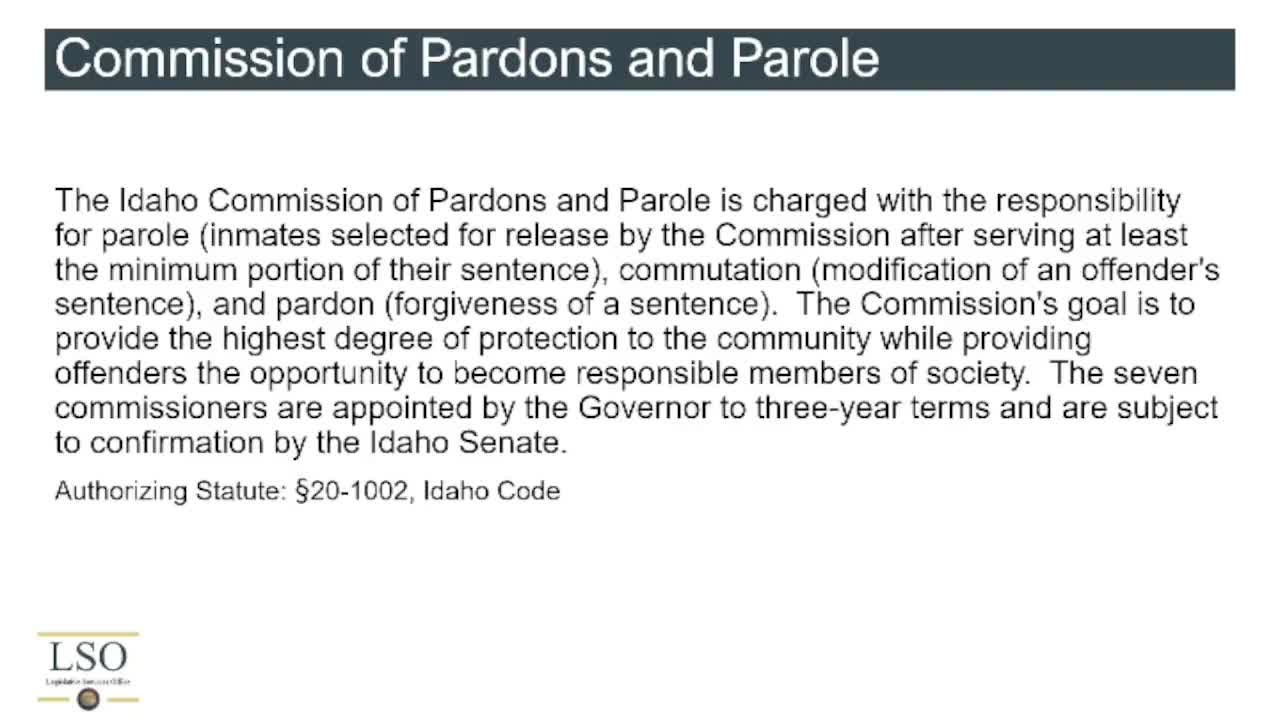
The Idaho Commission of Pardons and Parole requested that commissioners’ pay be raised from $300 to $400 per hearing day. The commission’s new executive director told lawmakers commissioners spend unpaid time preparing for hearings and that more than half the commission will turn over before year’s end.
The Commission of Pardons and Parole asked the Joint Finance Preparatory Committee to support a legislative change to increase commissioner compensation from $300 to $400 per hearing day, citing recruitment and retention concerns.
Noah Peterson, budget analyst with the Legislative Services Office, summarized the commission’s enhancement request and said the governor recommended an amount tied to the pay raise; the governor’s fiscal recommendation for the salary change was listed as $59,300 if the necessary legislation passed. Peterson said the commission last received a pay increase in 2017 and commissioners’ workload has increased: the materials show 5,907 decisions delivered in 2017 and 6,670 decisions in the last completed fiscal year.
Commission Executive Director Christine Starr told the committee that commissioners generally sit three weeks per month on average and that the statutory compensation covers only hearing days. She provided an example showing commissioners routinely work unpaid hours preparing for scheduled hearings: based on the commission’s calendar and typical caseload sizes, she said commissioners put in about 26 hours of preparation for a five‑day hearing block — roughly 3.25 unpaid days for each week of hearings.
“By statute our commissioners are only paid for the time that they are in hearing,” Starr said. “They’ve got 920 pages approximately of reading to do…they’re actually putting in 26 hours of preparation for the 5 days of hearings that they have, which comes out to about 3.25 days that they’re not compensated for.”
Starr told the committee she expects significant turnover: “I will be losing more than half of our commission by December,” she said, adding the agency’s small staff and the commission’s part‑time structure make retaining experienced members difficult.
Peterson said the governor recommended $59,300 for the pay increase but noted the agency limited its request to remain within the Division of Financial Management’s 3% general‑fund growth ceiling; if the legislature enacts the statutory change, the full fiscal note associated with the bill would be the amount recommended by the governor.
Why this matters: Commissioners make decisions that affect victims, community safety and individuals’ liberty. The commission and its new director framed the pay request as part of a retention and capacity issue that affects how thoroughly commissioners can prepare for hearings.
Next steps: The commission requested the statutory change needed to raise compensation and provided the committee with a fiscal figure for the likely cost. The committee did not make a decision on the proposal during the hearing.