Get Full Government Meeting Transcripts, Videos, & Alerts Forever!
Get email alerts on the Public Health Governance topic
No spam. Unsubscribe anytime.
Committee holds bill that would require district health board representatives to be elected officials
Summary
Lawmakers debated House Bill 366, which would require district health board representatives to be elected officials or appointed elected officials, but voted to hold the bill in committee after members raised concerns about qualifications, removal thresholds and local appointment rules.
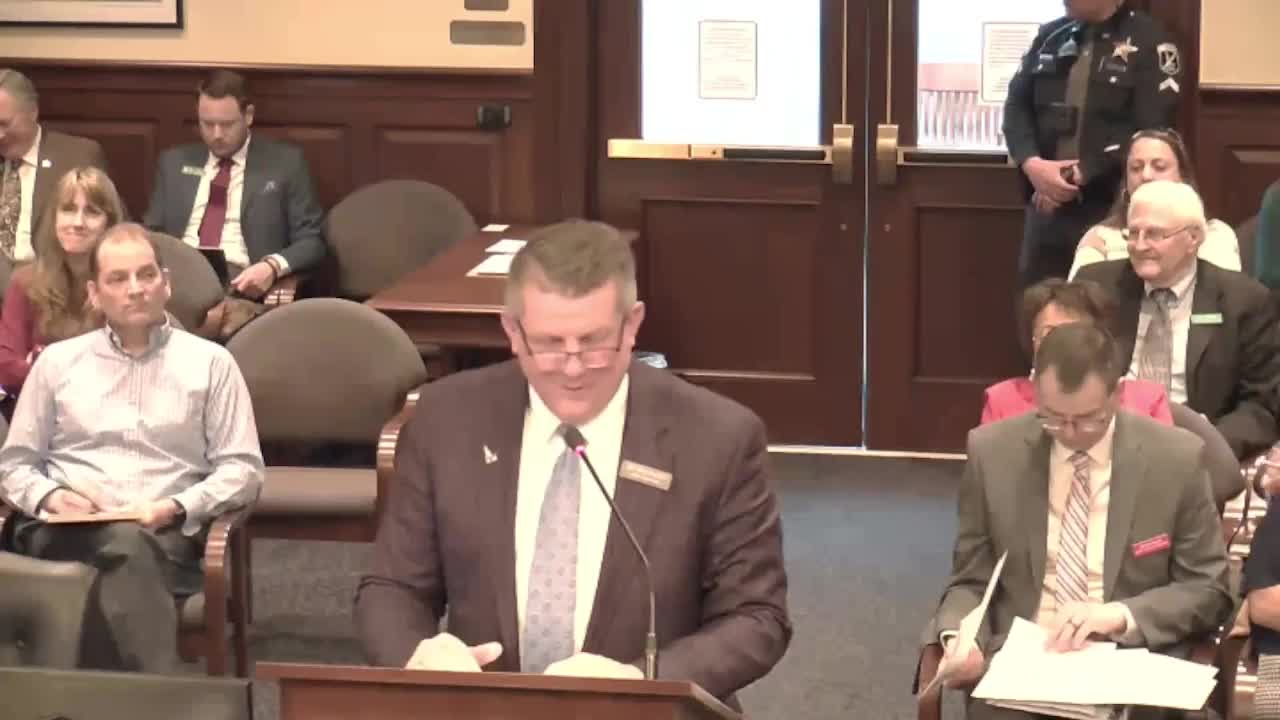
Representative Doug Pickett on behalf of House Bill 366 told the House Health and Welfare Committee that the bill “is intended to ensure that representatives on District Health Boards are elected officials.”
The bill, an updated version of a prior proposal, would prioritize county commissioners as board members and allow other elected officials appointed by county commissions to fill seats when commissioners cannot. Pickett said the measure "still allow[s] for the provision of a physician to serve with them on that board," and framed the change as a question of fiduciary duty and public accountability.
Supporters and opponents focused on whether elected officials should be required to serve on district health boards or whether appointed citizens with subject-matter expertise should remain an option. Former Representative Greg Furch, who told the committee he was speaking only for himself as an appointee to the Central District Health Board, said past legislation already provides an accountability check. “In 2021, those of us that were here, we passed Senate Bill 1060, and what Senate Bill 1060 did is required that any mandate of a health district be rubber stamped by the county commissioners in that jurisdiction within 7 days,” Furch said, arguing that the existing statute gives elected officials oversight of district mandates.
Furch and other lawmakers warned the bill could remove citizen experts from boards. Furch noted his own clinical experience: “...we have a doctor of nurse practitioning, retired registered nurse and myself,” and warned the proposal would “remove the option for county commissioners…to say hey, we have a person in our county that would actually be better suited for this district representation.” Representative Kaler and others also raised concerns about concentrations of power where a single large county could gain preference to fill additional seats; Pickett said the language was a negotiated provision allowing the county that contributes the greatest funding to have appointment priority if smaller counties decline to appoint.
Committee members also questioned a change in removal rules added during stakeholder discussions that would require at least a two-thirds vote to remove a board member. Representative Rubell described that change as “a curious change to make it a much higher threshold for removing somebody,” and requested the rationale; Pickett said the provision emerged through county negotiations and he was not aware of a specific triggering incident.
The committee considered multiple motions on H.B. 366. Representative Kaler moved to hold the bill in committee; Representative Furman offered an amended substitute motion to send the bill to the floor with a "do pass" recommendation; Representative Rubell moved that the amended substitute be changed to require removal by a simple majority rather than two-thirds. Roll call votes defeated the amended substitute and the substitute "do pass" motions and then passed the motion to hold. The secretary recorded the final vote on the motion to hold as 13 ayes and 2 nays; the bill will be held in committee.
The decision leaves in place current statute and practice while giving the committee additional time to resolve how to balance elected oversight, local appointment discretion, removal thresholds and preservation of subject-matter expertise on district health boards.