Get Full Government Meeting Transcripts, Videos, & Alerts Forever!
Get email alerts on the K12 Education Budget topic
No spam. Unsubscribe anytime.
JFAC approves multiple K‑12 budget adjustments: deaf/blind enhancements, IDLA growth, transportation pilot and department allocations
Summary
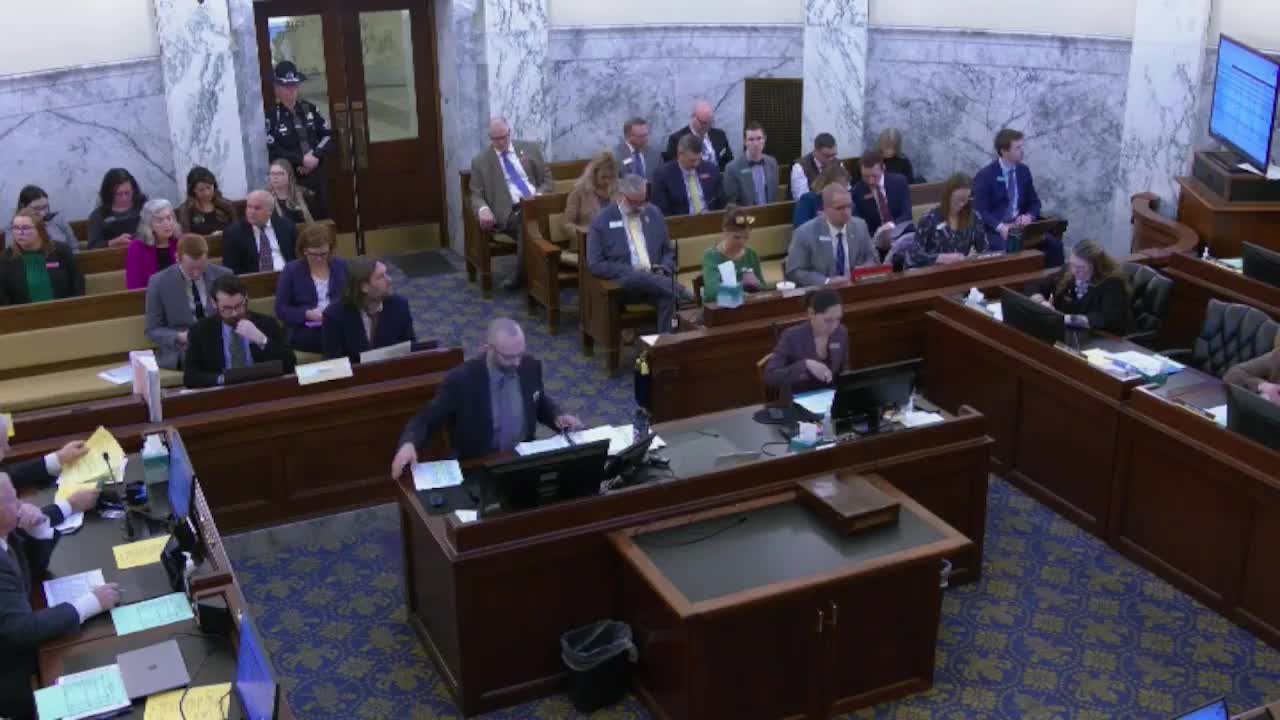
The Joint Finance-Appropriations Committee on Thursday approved a sequence of budget measures affecting K‑12 education and the State Department of Education, including targeted enhancements for the Educational Services for the Deaf and Blind, population‑forecast and formula adjustments for teachers and student supports, a tuition and funding change for the Idaho Digital Learning Academy, and a $2.2 million student‑transportation routing pilot.
The Joint Finance-Appropriations Committee on Thursday approved a sequence of budget measures affecting K‑12 education and the State Department of Education, including targeted enhancements for the Educational Services for the Deaf and the Blind, population‑forecast and formula adjustments for teachers and school programs, a tuition and funding change for the Idaho Digital Learning Academy, a $2.2 million pilot for student‑transportation routing software, and supplemental funds for school bus safety cameras.
Why it matters: The votes implement formula and policy changes tied to bills the Legislature has passed this session and direct one‑time and ongoing general, dedicated, and federal funds to staffing, program adjustments and technology pilots intended to affect student services, special needs support, and statewide online course access.
What the committee approved (high‑level): - Educational Services for the Deaf and the Blind — an increase totaling $504,900 (general and dedicated funds) for career ladder equivalents, recruitment/retention pay, one early childhood outreach administrator, a Region 4 consulting teacher, and endowment adjustments. Motion moved by Representative Miller and seconded by Senator Galloway; passed on committee voice/roll call (committee reported unanimous support as recorded: 19 ayes, 0 nays, 1 absent/excused on the combined action).
- Teachers division (public school support) — an additional $1,630,500 from the general fund to reflect population forecast and career‑ladder placement movement and related salary/benefit costs (motion moved by Senator Ward Engelking; second by Representative Petzke; passed by committee: recorded as 19 ayes, 0 nays, 1 absent/excused).
- Student support supplemental (FY2025) — a one‑time $9,500,000 from federal grant funds to cover Title I and IDEA Part B payments that school districts did not receive in FY2024 because the appropriation cap had been reached; motion by Representative Galvez; second by Senator Carlson. Committee vote recorded: Senate 8 ayes, 1 nay, 1 absent; House 10 ayes; overall majority in favor (total reported 18 ayes, 1 nay, 1 absent).
- Student support division (FY2026 program maintenance and adjustments) — the committee approved a package that shifted some general fund to dedicated/endowment and federal funds, included a requested $9.5 million ongoing federal programs line, and made population forecast adjustments (motion moved by Senator Ward Engelking; second by Adam Coacher). Committee action recorded as a ‘do pass’ recommendation (committee tally reported as 18 ayes, 1 nay, 1 absent on combined action as recorded in the minutes).
- Idaho Digital Learning Academy (IDLA) — approved a population forecast increase of $3,577,600 from the general fund to match an enrollment estimate increase (from ~49,680 to ~58,000). The committee also accepted language that (a) restricts withdrawal from the Public Education Stabilization Account (PISAF) for IDLA for the coming year, (b) reduces IDLA tuition per enrollment from $75 to $40 (amending the maintenance bill language), and (c) directed a working group to review funding verification and reporting. Motion carried with reported committee vote in favor (18 ayes, 1 nay, 1 absent/excused aggregate as recorded).
- Facilities division (school facilities funding) — the committee approved a net reduction of $1,570,100 driven by a projected lottery dividend decrease and offsetting adjustments for charter school attendance estimates ($586,300 increase). Committee members discussed that most funds from HB 292 / HB 521 have flowed to property tax relief and debt repayment rather than direct maintenance; staff pointed members to a published report listing district uses. Motion carried (committee reported approval: 19 ayes, 0 nays, 1 absent/excused on the consolidated action as recorded).
- Central Services — approved a $2,200,000 one‑time appropriation to pilot a student‑transportation routing software (GPS routing) to modernize mileage and routing tracking; motion by Senator Galloway; second by Representative Miller. Passed on committee vote (committee tally reported: 18 ayes, 1 nay, 1 absent/excused as recorded).
- State Department of Education — a $33,601 one‑time supplemental appropriation from the School Bus Camera Fund for equipment and program costs tied to House Bill 610 (school‑bus camera authorities and enforcement) was approved. Motion moved by Representative Gallavese; second by Senator Carlson. Committee recorded majority in favor (total reported 18 ayes, 1 nay, 1 absent/excused).
- State Department of Education (FY2026 enhancements and language) — the committee approved multiple enhancements and limited ongoing support including: two special‑education positions (a dispute resolution specialist and a charter‑school special education specialist), funding for the Idaho Reading Indicator (reduced from an initial ask after RFP results), a child nutrition technology grant (one time), underperforming charter school supports (one time), and language requiring monthly data exports to legislative budget staff and a report on underperforming charters. The motion included reappropriation authority (up to $800,000) for an office remodel and provided authority for the department to pursue an RFP to replace the ISAT contract. The committee accepted the language and the motion carried (committee recorded 15 ayes, 4 nays, 1 absent/excused on that package as noted in the minutes).
Votes at a glance (selected formal actions reported to committee record): - Educational Services for the Deaf and Blind: +$504,900 (total increase); mover: Representative Miller; second: Senator Galloway; outcome: passed (committee ‘do pass’ recommendation). - Teachers division: +$1,630,500 (general fund); mover: Senator Ward Engelking; second: Representative Petzke; outcome: passed. - Student support supplemental (FY25): +$9,500,000 (federal grant fund, one time); mover: Representative Galvez; second: Senator Carlson; outcome: passed. - Student support division (FY26): net total adjustments and fund shifts (see committee packet); mover: Senator Ward Engelking; outcome: passed (do pass recommendation). - IDLA: +$3,577,600 (general fund, population forecast); language amending tuition and PISAF withdrawal rules; outcome: passed; language accepted by unanimous consent. - Central services (transportation pilot): +$2,200,000 one time (general fund); mover: Senator Galloway; second: Representative Miller; outcome: passed. - State Department of Education supplemental (school bus camera fund): +$33,601 one time; mover: Representative Gallavese; second: Senator Carlson; outcome: passed. - State Department of Education FY26 package: mixed general/dedicated/federal totals; included data‑sharing and underperforming charter reporting language; outcome: passed with committee language accepted by unanimous consent.
Context and constraints: Several of these appropriations expressly tie to recently enacted legislation or to bills still pending (for example, the special needs student fund that the committee referenced is tied to House Bill 291). Committee members repeatedly noted that some funds (notably those created in HB 292 / HB 521) have primarily been used by districts to pay bond levies and reduce property tax burdens; that affects the amount available for direct maintenance work. The IDLA tuition change and PISAF restriction were adopted as language amendments and accepted by unanimous consent.
What’s next: The committee reported these items forward with a ‘do pass’ or pass recommendation to the full Legislature as recorded. A number of items (for example, the student support supplemental tied to federal grant timing and the Department of Education dashboards/report card requirements) include reporting requirements, reappropriations or reauthorizations that staff said would be monitored in subsequent months.
Ending note: Committee votes were recorded on the floor as part of the JFAC hearing record; totals quoted above follow the roll‑call and summary tallies announced during the meeting.