Get Full Government Meeting Transcripts, Videos, & Alerts Forever!
Get email alerts on the Grocery Tax Credit topic
No spam. Unsubscribe anytime.
Panel advances revised grocery tax credit to second reading after debate over itemized option and distribution
Summary
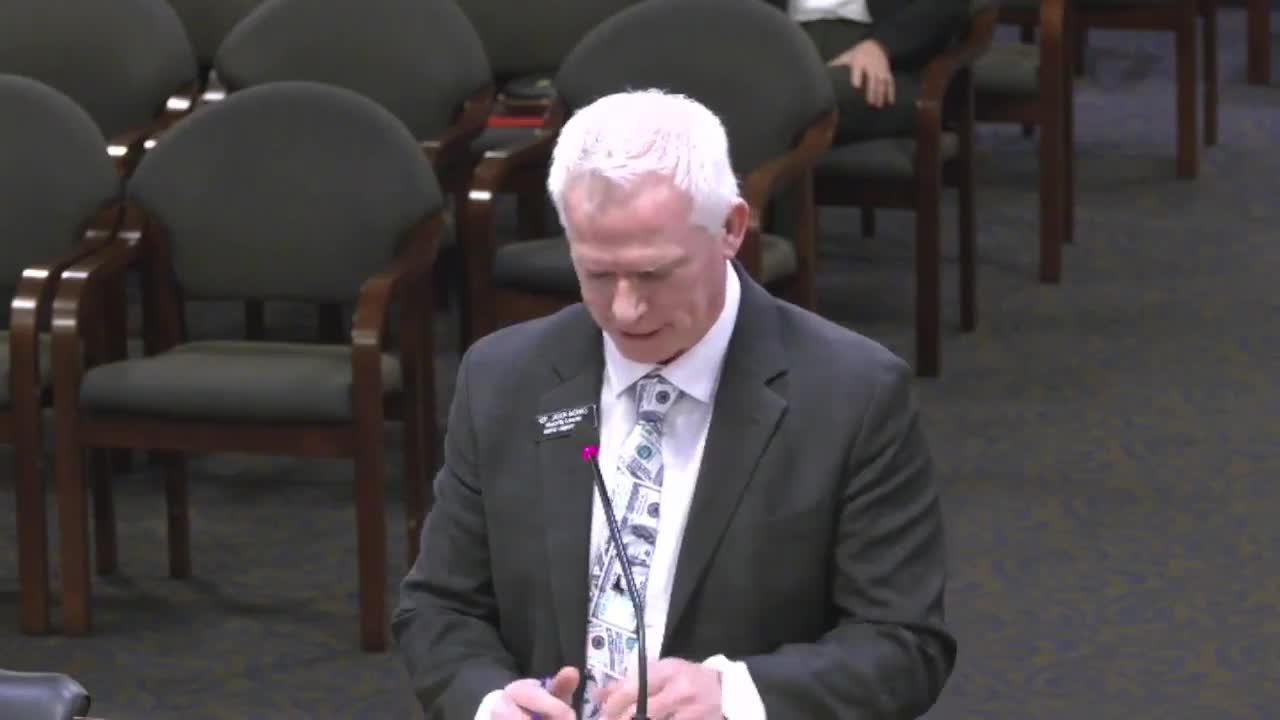
The Idaho House Revenue and Taxation Committee on Feb. 13 voted to introduce RS 32,379 — a revised version of House Bill 61 — that would raise the per-person grocery tax credit from $120 to $155 and preserve an itemized option allowing claims up to $250, sponsor Representative Jason Monks said.
The Idaho House Revenue and Taxation Committee on Feb. 13 voted to introduce RS 32,379 — a revised version of House Bill 61 — that would raise the state's per-person grocery tax credit from $120 to $155 and preserve an itemized option allowing claims up to $250, sponsor Representative Jason Monks said.
The change was introduced after Monks said the revised statute language adds the word "retail" before "seller" in several places to address concerns from food processors and to clarify which sales are affected. Committee members held HB 61 in committee and approved introducing RS 32,379 and recommending it to the second-reading calendar for further consideration.
Why it matters: The measure would increase the refundable grocery tax credit available to individual Idaho taxpayers, affecting households across the state while maintaining a mechanism for taxpayers with larger grocery spending to itemize receipts. Supporters argued the approach returns sales-tax revenue to Idaho residents while preserving stable sales-tax revenue from tourists and out-of-state visitors. Opponents and some committee members pressed for larger relief and questioned administrative burdens for taxpayers and the Idaho State Tax Commission.
Sponsor explanation and bill details Representative Jason Monks, sponsor of House Bill 61 and co-sponsor of the RS, told the committee the RS mainly makes two changes: it inserts the word "retail" before "seller" in several places to exclude certain processors and it raises the per-person food tax credit from $120 to $155 across the board, eliminating the separate senior bump. "The RS that you have in front of you has one word added in a couple places ... we've added 'retail' in front of that term 'seller' on all three of those lines and so that's the difference between the bills," Monks said.
Monks described the policy choice as a preference for a targeted credit over full repeal of the grocery tax, arguing repeal could cause price adjustments by retailers. He also noted the bill allows taxpayers to itemize their food purchases to the Tax Commission and claim up to $250 per individual if they choose that route.
Public testimony Four people who signed up to testify supported the measure. Mark Johnson of Meridian said he favored the credit over outright repeal because he expects retailers could raise prices to make up a lost 6% tax. "I don't think people are going to see the savings that they think they might," Johnson said, arguing a credit offered more predictable relief.
Lupe Weasel, State Director for AARP Idaho, said the increase would help older Idahoans on fixed incomes. "This is going to help ... if they can have some nutrition, nutritious food, it will cut down on their, on disease, on aging healthier," she said, urging a "due pass." Victor Miller, a Meridian resident, cited figures he said came from Idaho's general fund revenue book to argue the state already refunds a substantial share of grocery taxes through the credit and that some collections come from tourists. He summarized his view: "Please support House Bill 61."
Miguel Lagoreta (introduced to the committee as Miguel Lagoreta), president of the Associated Taxpayers of Idaho, presented household-level calculations based on Bureau of Labor Statistics data and said about 90% of Idahoans are covered by the credit; he recommended a do-pass.
Key points of debate - Distribution and scope: Several lawmakers said they preferred deeper relief. Representative Gannon floated a larger increase and later made a substitute motion to raise the $155 figure to $225; that substitute motion failed on a voice vote.
- Administrative burden and audits: Representative Birch asked whether the itemized option 'which requires taxpayers to submit scanned sales-tax receipts with the application ' would be workable for seniors and people without easy access to scanners. Monks said the Tax Commission had worked on the language and that taxpayers who already use itemized returns face similar work; he also noted the Tax Commission had open FTP positions. Representative Ehlers cited the fiscal note's estimate of roughly $3 million related to additional itemizers and said that would be a small share of the Tax Commission's workload.
- "Slippage"/price response: Testimony and the sponsor raised the concern that repealing the grocery tax could lead grocers to raise prices to capture lost tax revenue; supporters of the credit said the refundable credit preserves price signals while returning revenue.
Committee actions and next steps - Motion to hold House Bill 61 in committee: Representative Shepherd moved that HB 61 be held in committee; the motion carried on voice vote and the bill was held in committee.
- Motion to introduce RS 32,379 and send it to second reading: Representative Shepherd moved to introduce the RS and recommend it to the second-reading calendar. After debate and a failed substitute motion to increase the credit to $225, the committee approved introducing RS 32,379 and sending it to the second-reading calendar by voice vote. The assigned floor sponsors are Representative Jason Monks and Representative Scott.
The committee closed the hearing after the vote. Members also recognized committee page Elena Russell for her service.
Ending note: RS 32,379 will appear on the House second-reading calendar for further consideration and possible amendment; HB 61 remains held in committee.