Get Full Government Meeting Transcripts, Videos, & Alerts Forever!
Get email alerts on the Transportation Funding topic
No spam. Unsubscribe anytime.
House panel advances bill to boost Techum transportation bonding with phased increases
Summary
The House Revenue and Taxation Committee voted to send House Bill 25 to the floor with a "do pass" recommendation. The bill would increase annual sales-tax-derived contributions to the Techum transportation program by $20 million the first year, $40 million the second and $60 million the third, and sets a $45 million local allocation cap.
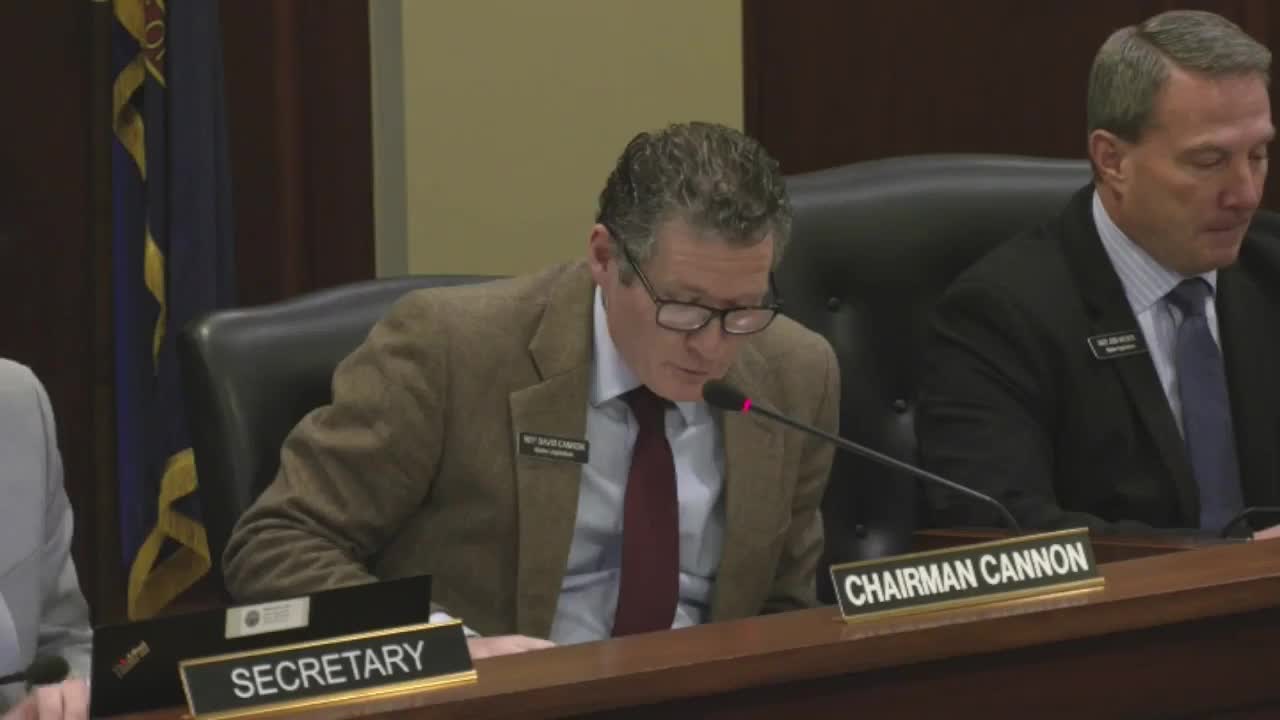
The House Revenue and Taxation Committee on Feb. 20 voted to send House Bill 25 to the full House with a “do pass” recommendation. The bill, introduced by Representative Joe Palmer of District 20, would change the Techum program to increase sales-tax-derived contributions used to support bonding for large transportation projects by $20 million in the first year, $40 million in the second and $60 million in the third.
The change is intended to expand the amount of state sales-tax revenue available to back bonded large-scale road projects. Representative Joe Palmer, the sponsor, told the committee the program began in 2017 as a sales-tax allocation for roads and in 2021 was altered to allow bonding for large projects. “When you're talking large projects, we're talking some of them cost $50 to $300 million or even more,” Palmer said, and said the current sales-tax contribution that supported bonding has been about $80 million.
Palmer and supporters argued bonding accelerates projects and can save money and lives by finishing work sooner. He said construction costs have risen substantially, including an example that the concrete used for an overpass rose from about $500 per ton to about $1,500 per ton. “By investing this money up front and bonding and getting those projects done ... it saves the money also,” Palmer said.
Industry testimony backed the bill. Dave Butzier, who identified himself as representing AECOM and the American Council of Engineering Companies of Idaho (ACEC of Idaho), told the committee ACEC members support the expansion because it helps engineers and contractors finish projects that increase safety and capacity. “We are in support of this,” Butzier said.
Committee debate focused on the source of the increase and local allocations. The bill would set the local allocation at $45 million, an increase from recent practice, and would hold that figure for the period covered by the bill. Representative Cheatham said he supports the bill but expressed concern that the local allocation is effectively frozen at $45 million rather than indexed to growth; he noted more than 70% of Idahoans live in local jurisdictions that rely on that funding. Representative Birch said she would not support the motion, citing concern that the funding increases are drawn from the General Fund and could reduce money available for public education, and she referenced recent state income tax cuts as a factor reducing General Fund capacity.
Other members voiced support based on the state's geography and reliance on roads. Representative Raybould said Idaho’s economy depends on roads to move goods and people and said he believes the investments are necessary. Representative Andrus questioned when the state would reach sufficient transportation funding, asking rhetorically, “When will we have sufficient for what we need?” Representative Shepherd, who moved the committee recommendation, said transportation is a core government responsibility and supported the funding increase.
Shepherd moved that House Bill 25 be sent to the floor with a do-pass recommendation. The committee heard one public witness (Butzier) and no others signed up to testify. The committee adopted the motion by voice vote; a roll call was not requested. The chair recorded the motion as passing and noted Representative Palmer will be the bill’s floor sponsor.
The bill now goes to the House floor for consideration; the committee did not set a floor date during the hearing and no timetable was provided.