Get Full Government Meeting Transcripts, Videos, & Alerts Forever!
Get email alerts on the School Bonding Capacity topic
No spam. Unsubscribe anytime.
Committee advances bill to raise school bond capacity from 5% to 8%
Summary
The Idaho House Revenue and Taxation Committee voted to send House Bill 147 to the floor with a "do pass" recommendation. The bill would increase the statutory bonding-capacity percentage used to calculate how much a school district can ask voters to approve for construction and other needs.
The House Revenue and Taxation Committee voted Friday to send House Bill 147 to the full House with a due-pass recommendation. The bill, introduced by Representative Ben Furman, would raise the percentage used to calculate a school district's bonding capacity from 5% to 8%, a change sponsors say would give many rural districts a better chance to fund school construction or renovations.
Representative Ben Furman, R., of District 30 (Butte County), said he brought the bill after the Shelley School District failed to pass a school bond and he discovered that construction costs have risen faster than assessed property values. "The cost of constructing a new high school has increased by 43.25% over the past 6 years," Furman said, and, he added, the existing 5% capacity limit can leave districts unable to present a bond that matches local needs.
The measure does not change the voter-approval requirement for school bonds; it changes only the statutory cap that helps determine how much a district can ask voters to approve. "This does not raise property taxes at all, but it does give the schools the ability to present a bond that meets their needs," Furman said, noting that voters would still decide whether to approve any bond.
Quinn Perry, deputy director of the Idaho School Boards Association, testified in strong support of the bill and urged the committee to send it to the floor. "There is no silver bullet in trying to solve the school facilities issues that we have here in Idaho," Perry said, but added that raising the cap would "lend itself to yet another avenue for school districts to be able to tackle the challenges within their school infrastructure problems."
Furman used high schools as a consistent statewide benchmark in committee materials because, he said, high-school construction costs and capacity needs are more comparable across districts. He told the committee that the proposed increase would not be limited to high schools; it would increase bonding capacity available to districts for elementary schools, maintenance or other uses. He also said he considered raising the cap to 10% but chose 8% as a more measured change.
Committee members asked whether the change would shift tax burdens to property owners. Representative Shepherd asked whether the bill would "change the burden on the property taxpayer in any way," and Furman replied that it would not unless voters approved specific bonds that increased taxes. Representative Cheatham asked whether the 8% would apply only to high schools; Furman clarified that his high-school example was illustrative and that the capacity increase would apply to school-district uses generally.
Furman offered examples to illustrate the disparity between districts: he said rural districts with low assessed property value can be unable to propose bonds that match their construction needs, while districts with higher property values can propose larger bonds. He cited a recent $29,000,000 elementary school bond in Oneida County that passed and contrasted it with a $500,000,000 levy that failed in West Ada. Furman also referenced materials from Headwaters Construction demonstrating differences between Sugar (north of Rexburg) and Soda Springs.
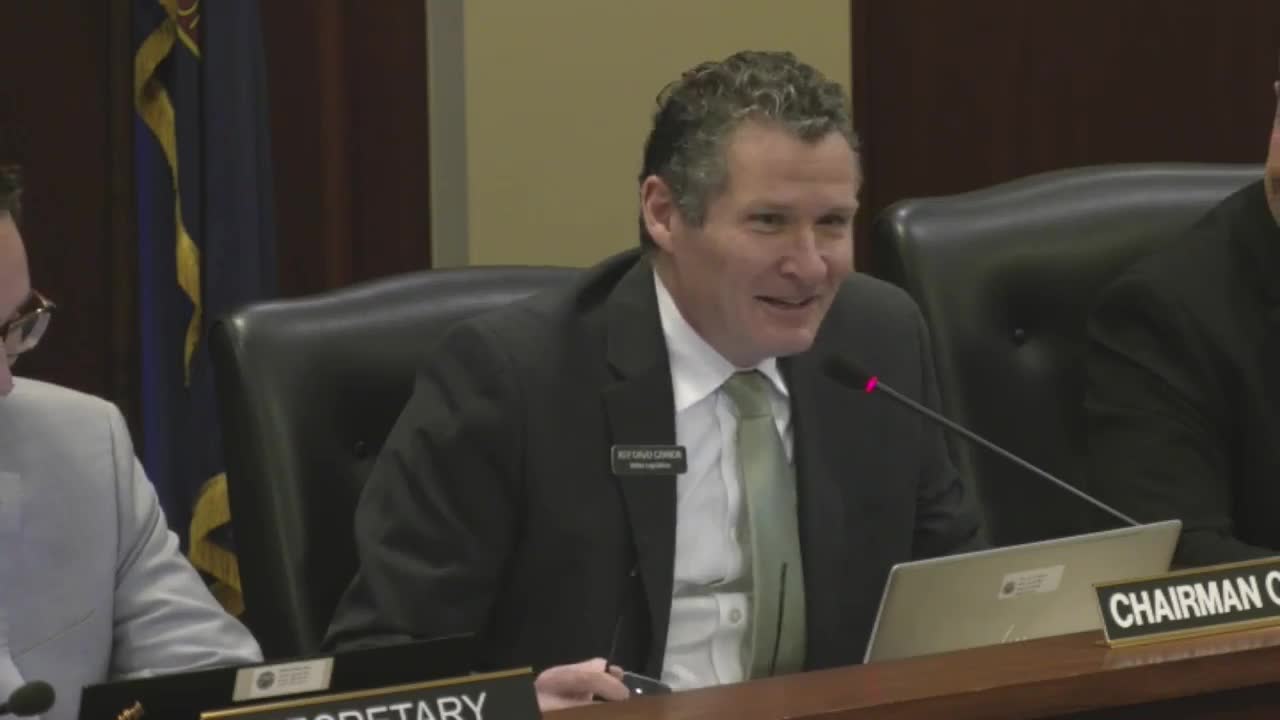
Representative Raybould moved to send House Bill 147 to the floor with a due-pass recommendation. The committee voted by voice; Chairman Cannon called for "ayes" and then announced, "The motion carries. House Bill 147 will be sent to the floor with a due pass recommendation." Representative Ben Furman was identified as floor sponsor for the bill going forward.
The committee record shows one registered proponent testified; no opponents registered or spoke during the hearing. The committee did not record a roll-call tally in the transcript and advanced the bill by voice vote.
The committee adjourned and said it will meet again on Monday morning.