Get Full Government Meeting Transcripts, Videos, & Alerts Forever!
Get email alerts on the Geologic Survey Data Preservation topic
No spam. Unsubscribe anytime.
Idaho Geologic Survey seeks stable funding for database manager, presses case for data repositories
Summary
The Idaho Geologic Survey told the Joint Finance Committee it needs permanent general‑fund support to convert a historically grant‑funded database manager into ongoing staff and described plans to expand data preservation, including a physical repository for exploration core samples.
The Joint Finance Committee heard the Idaho Geologic Survey (IGS) describe a personnel request and data‑preservation priorities tied to mineral‑resource assessment and public safety work.
Kevin Campbell, the Legislative Services Office analyst, reviewed IGS funding and program structure. IGS had 12.47 authorized FTE at the sampling date and consistently spends its full appropriation, Campbell said. Capital purchases in recent years included research microscopes and a seismometer for the Idaho Seismic Network.
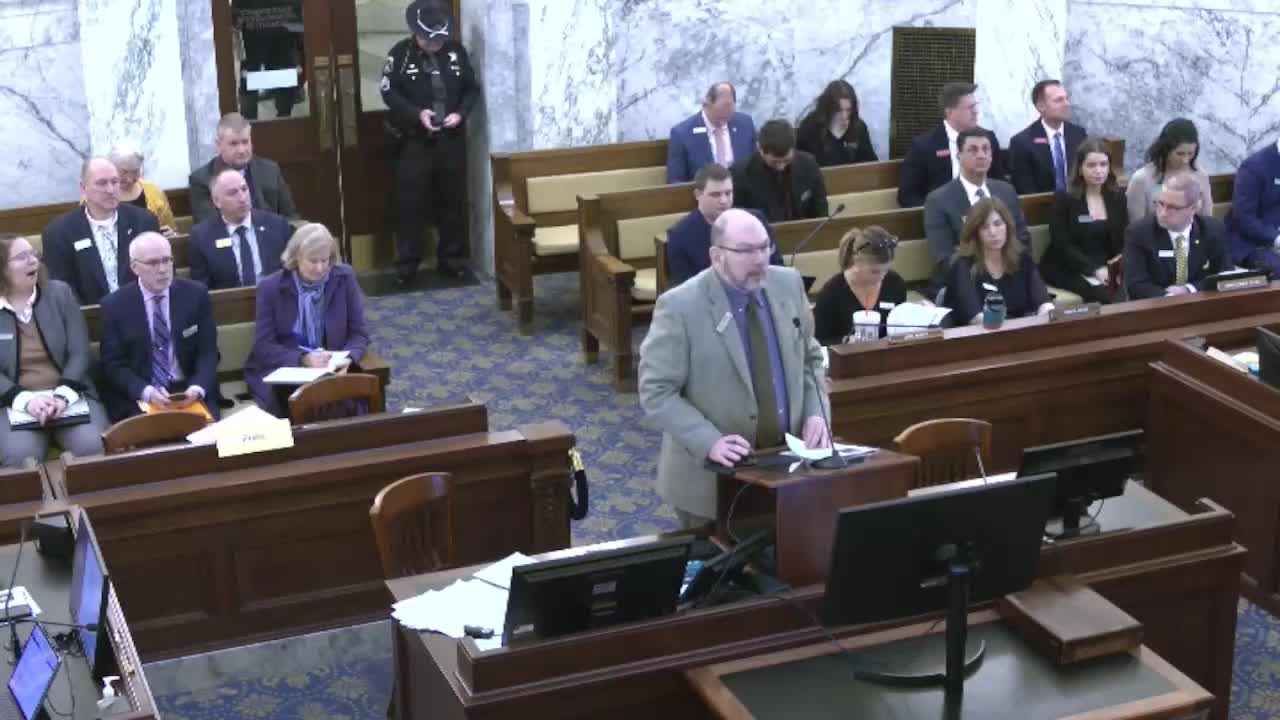
State Geologist Claudio Berti said a database manager position has been funded by grants for several years and is now at risk as grant support declines. "It would be catastrophic for the survey to lose this position," Berti said, noting the job supports data systems that allow IGS to match federal grants at a two‑to‑one rate and that the position enables additional funded roles. Berti said the survey previously used abandoned‑mine‑lands funds and other grants to support the position and that the agency seeks partial general‑fund support in FY2026 (the FY2025 budget included 0.19 FTE; FY2026 request adds 0.13 FTE toward a fuller position).
Berti described IGS’s ongoing efforts to collect statewide geologic and mineral data, make that data publicly available, and expand a data‑preservation program. He told lawmakers Idaho currently lacks a physical core repository for drill cores and other physical exploration samples and said other states preserve core and physical data to avoid duplicative permitting, reduce exploration costs and retain valuable information for future research and economic use. He offered to provide the committee with cost and location estimates and return‑on‑investment studies used by other states.
On exploration data policy, Berti said IGS does not perform proprietary work for companies: any data contributed to the survey becomes public record and companies that collaborate are told that in advance. He said IGS provides mapping, regional framework and other information that helps both public planning and private exploration.
No votes were taken. Committee members asked for follow‑up materials on the database position funding plan and on the potential costs and benefits of establishing a physical repository for core and other exploration materials.