Get Full Government Meeting Transcripts, Videos, & Alerts Forever!
Get email alerts on the Public Health Taxation topic
No spam. Unsubscribe anytime.
Committee introduces proposal to tax vape products, require permits; estimates $1.4 million revenue
Summary
Representative Gerald Raymond introduced RS 32259 to add vape products to Title 63, require seller permits and impose a 3¢ per milliliter excise tax; sponsor estimated roughly $1.4 million in revenue, with 75% for enforcement and regulation and 25% to local health districts.
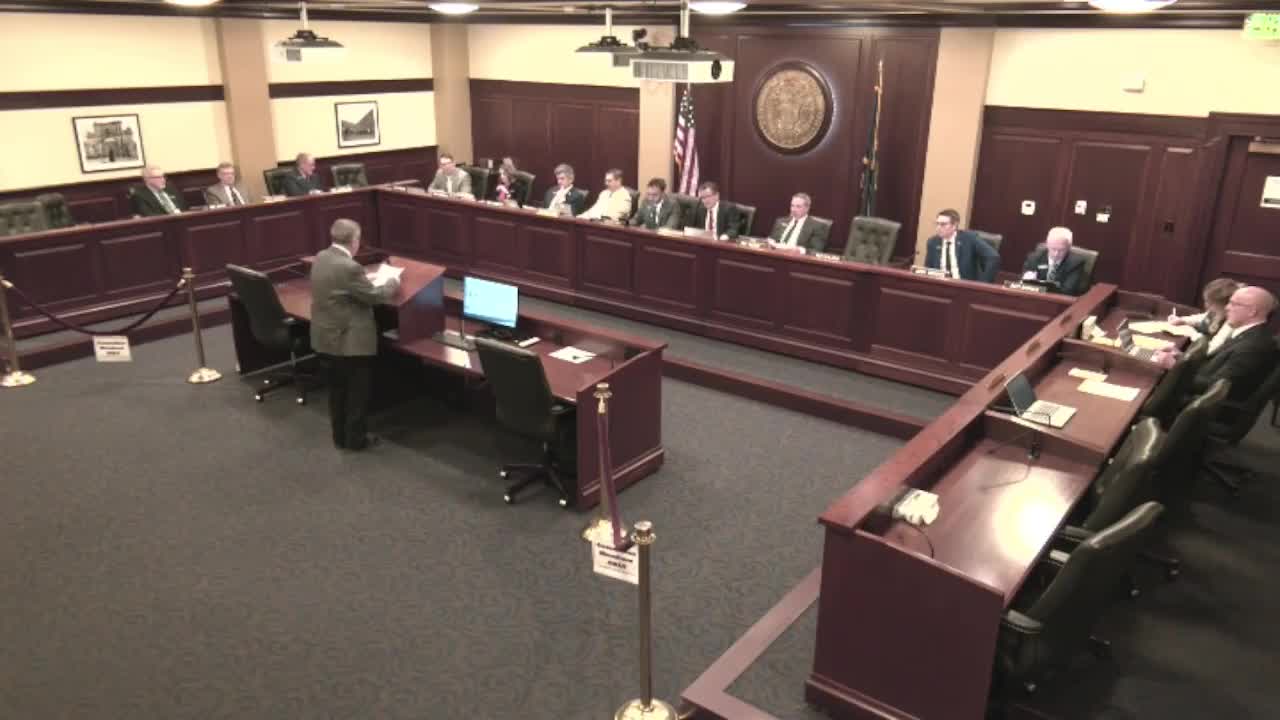
The House Revenue and Taxation Committee introduced RS 32259 on Feb. 24, a sponsor‑led measure to bring vaping products under the same Title 63 tax framework as tobacco products, require seller permits and impose an excise tax on the e‑liquid itself.
Representative Gerald Raymond, R‑District 31, said Idaho has historically only applied sales tax to vape products and that the RS would update state code to align vape products with tobacco and cigarette taxation. The RS would require sellers to obtain permits and would impose a 3¢ per milliliter excise tax on the product. Raymond said the tax is projected to generate approximately $1,400,000; he said 75% of revenue would be allocated to enforcement and regulation and 25% to local health districts for education and prevention.
Raymond said the tax is tied to other pending legislation, including House Bill 244 in Health and Welfare, which carries a fiscal note of about $1,000,000. Raymond said the industries represented at interim study committee meetings asked to be "part of the solution" and that the RS reflects input from industry stakeholders.
Representative Raybould moved to introduce RS 32259; the committee approved the motion by voice vote and the RS was introduced for further consideration. The transcript records no roll‑call tally and no amendments during the introduction.