Get Full Government Meeting Transcripts, Videos, & Alerts Forever!
Get email alerts on the Snap Candy Soda Waiver topic
No spam. Unsubscribe anytime.
Senate panel advances bill asking Idaho to seek federal waiver to bar candy and most sodas from SNAP purchases
Summary
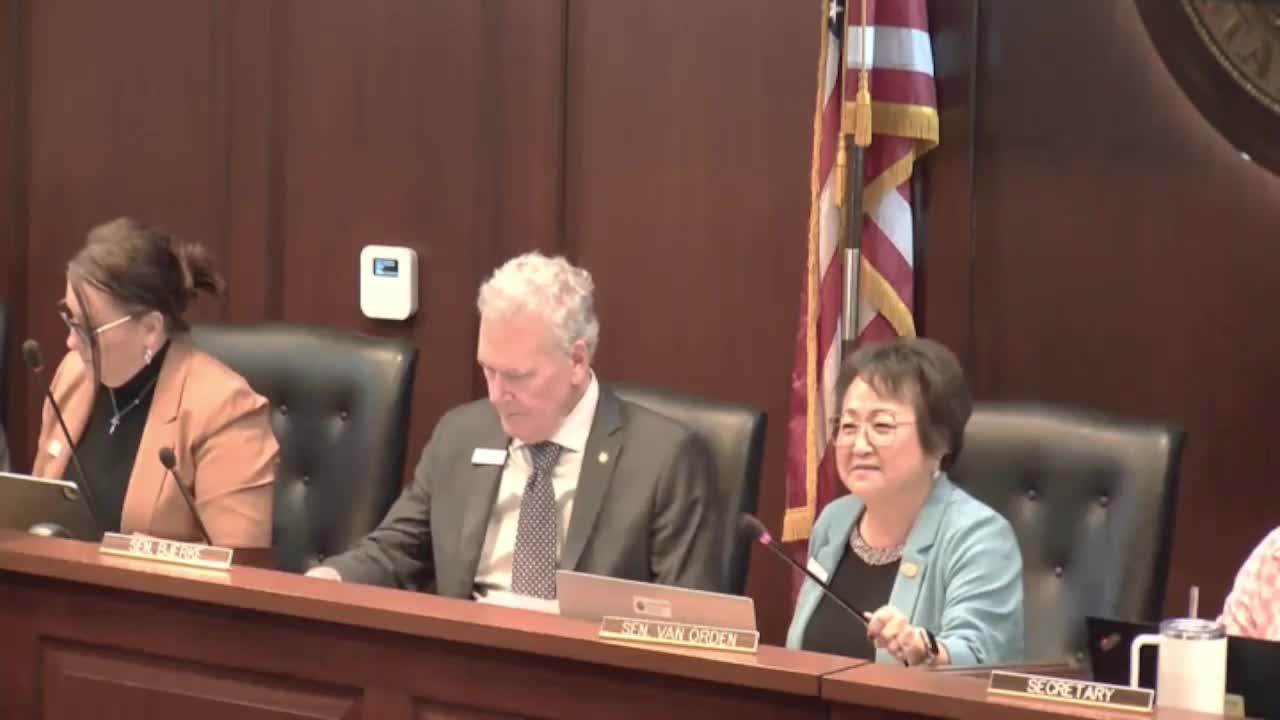
The Idaho Senate Health and Welfare Committee voted to send House Bill 109 to the floor with a do‑pass recommendation, advancing legislation that would direct the Idaho Department of Health and Welfare to request a federal waiver to exclude candy and most sugar‑sweetened beverages from purchases made with SNAP benefits.
The Idaho Senate Health and Welfare Committee voted to send House Bill 109 to the floor with a do‑pass recommendation, advancing legislation that would direct the Idaho Department of Health and Welfare to request a federal waiver to exclude candy and most sugar‑sweetened beverages from purchases made with SNAP benefits.
Sponsor Senator Ben Toews, state senator for District 4, told the committee the bill is intended to align SNAP purchases with the program’s stated purpose. "The actual purpose of the SNAP program ... is to provide a nutritious diet to low‑income households," Toews said, and he cited a USDA Food and Nutrition Service report saying sugary drinks and prepared desserts account for roughly one‑fifth of SNAP spending.
Proponents framed the bill as a public‑health measure and a stewardship action. Brian Sickman of the Make America Healthy Project said state demonstration waivers are a practical route to change and described HB 109 as "a strong first step." Roy Leonardson of FGA Action said taxpayers subsidize products that contribute to obesity and related illnesses.
Opponents and several expert witnesses raised practical and equity concerns. Jen Beazer, a registered and licensed dietitian who testified as a private citizen, said a key drafting element is unworkable. "The language in the bill of containing more than 10% of flour by weight is unachievable," Beazer said, noting recipe details are proprietary and not listed on nutrition labels. Pam Eaton, president and CEO of the Idaho Retailers Association, warned the bill would undo recently adopted federal EBT interoperability gains and impose heavy operational burdens on stores: "If states start doing their own things ... it would undo the efficiencies that the grocers, the states, and the USDA worked in concert to put together."
Retail trade groups and beverage industry representatives urged the committee to hold the bill. Steve Thomas, representing the Idaho Soft Drink Association, said many beverages now contain zero calories and called the bill based on a "false premise" that sugary beverages are the primary driver of obesity. Melinda Merrill, representing the Northwest Grocery Retail Association, said the bill does not specify who will determine eligibility at the register and that inconsistent state rules could shift business across borders.
Committee discussion focused on two recurring points: whether restricting candy and sugar‑sweetened beverages advances SNAP’s nutrition purpose and how the state would operationalize the law at grocery checkouts. Several members said the bill is a limited first step that would signal state intent and could prompt federal action; others said the definitions and implementation problems outweigh the benefits. Senator Wintrow noted program scale and drafting problems and said the bill as written would create confusion for retailers and recipients, citing the state's roughly 129,000 SNAP recipients and an average monthly benefit figure discussed during testimony.
A motion to send House Bill 109 to the Senate floor with a do‑pass recommendation was made, seconded "from Senator Lenny" as recorded in the hearing, and carried. The clerk announced, "The ayes have it. The bill passes." The committee did not record a roll‑call vote or a numerical tally in the hearing transcript.
If the bill becomes law in its current form, its effect would depend on a federal waiver from USDA; several witnesses and committee members said federal approval and technical guidance would be required before changes could be implemented at retail checkouts. The committee set no implementation date and did not detail a timetable for a waiver application.
Votes at a glance House Bill 109 — Motion: send to the floor with a do‑pass recommendation. Second: Senator Lenny (recorded). Outcome: approved by voice vote in committee ("The ayes have it"). No roll‑call tally recorded in the transcript.
Next steps: The bill will be considered by the full Senate. Any state action to bar candy and most sugar‑sweetened beverages from SNAP would require USDA approval of a state demonstration waiver before retailers would be required to implement changes.