Get Full Government Meeting Transcripts, Videos, & Alerts Forever!
Get email alerts on the Industrial Commission Budget topic
No spam. Unsubscribe anytime.
Industrial Commission asks for IRIS maintenance, staff funding as caseloads rise and backlogs clear
Summary
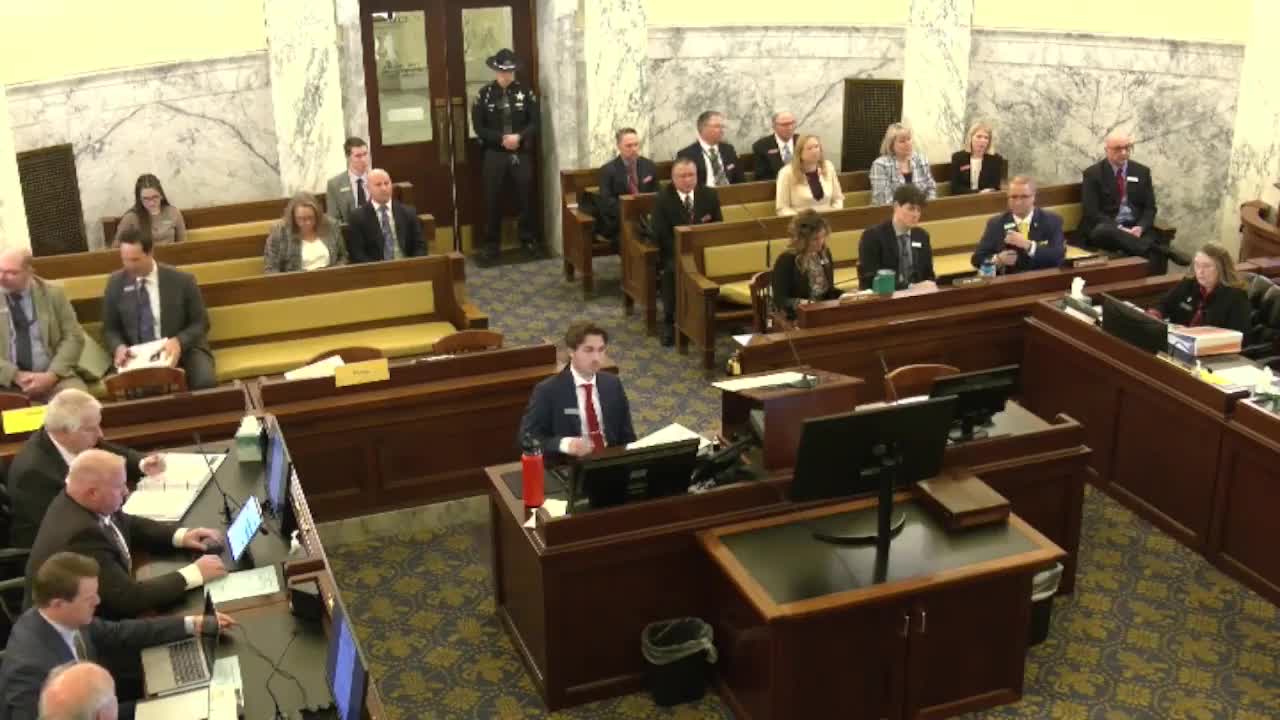
At a Jan. 23 Joint Finance Preparation Committee hearing, the Idaho Industrial Commission requested ongoing and one-time funds to maintain its IRIS case-management system and to fill staffing gaps tied to higher caseloads and a backlog in the crime victims compensation program.
The Idaho Industrial Commission asked the Joint Finance Preparation Committee on Jan. 23 for a mix of ongoing and one-time funding to support continued maintenance of its IRIS case-management system and to add or reclassify staff to handle rising workloads and past vacancies.
The request matters because the commission administers workers' compensation, rehabilitation and the crime victims compensation program. Committee analysts and the commission told lawmakers that the agency is seeing more cases, has had a multi‑year modernization project, and continues to operate with vacant positions while trying to clear a backlog of payments to crime victims and keep adjudication timelines from slipping.
Noah Peterson, budget and policy analyst with the Legislative Services Office, told the committee the commission has three budgeted programs — compensation, rehabilitation and the crime victims compensation program — and a total of 130.25 FTP. He said the agency had 12 vacant positions as of August and noted large one‑time and personnel reversions in the prior year.
Peterson summarized appropriations and reversions from the prior year: the commission reverted about $4,555,000 total; $3,000,000 of that was trustee and benefit payments (roughly $2,400,000 from the crime victims compensation program), $644,000 in personnel costs, $835,000 in operating expenses and $55,000 in capital outlay. He also said the IRIS modernization work had accounted for most of the one‑time spending over the last several years, including a total of $12,874,000 appropriated from 2021–2025 for development and related items.
Director George Gutierrez, who attended with three commissioners and IRIS staff, told lawmakers the IRIS project has reduced paper handling and increased electronic records and data sources available to staff, and that those changes have pushed more work toward legal‑preparation and compliance functions. "IRIS did increase our business system efficiency," Gutierrez said. "The difference here is some of those responsibilities ... fell to our referees to work on. So now we're shifting some of that responsibility back to our legal associates." He added that better data intake has also increased identified employer noncompliance.
The commission's fiscal requests for FY2026 included 10 enhancement proposals totaling $298,200 ongoing and $554,200 one‑time, with no request for added FTPs. Key items described to the committee included:
- A one‑time request of $288,000 for long‑term contracted maintenance support for IRIS, after the Office of Information Technology Services (OITS) said it could not immediately provide that support. Peterson said ITS had advised pursuing one‑time appropriations to cover needed technical support.
- An ongoing senior financial technician position ($66,500 ongoing) aimed at the crime victims compensation fiscal unit to reduce payment turnaround time. Peterson said the targeted turnaround is 30 days; in August there were about 872 outstanding payments and an estimated turnaround of 12 weeks.
- A rehabilitation field consultant for the Twin Falls/Burley area ($32,300 ongoing) intended to address a region handling about 35% more cases than the five‑year average for the rest of the state.
- A referee (hearing officer) position ($111,600 ongoing) to restore staffing lost after a retirement in 2020; the commission said time to decision has grown from about 90 days to about 110 days since the vacancy.
- Reclassification of five adjudication associates ($25,500 ongoing) to reflect higher skills required post‑IRIS; proposed reclassification would move them from salary grade H to I.
- A technical records specialist ($62,300 ongoing) to support employer compliance and the increased volume of incoming data.
- One‑time contingency/IRIS replacement and contingency requests and IT replacement items, including laptops and docking stations, and four replacement SUVs for field staff.
On the IRIS maintenance item, Senator Cook asked whether the $288,000 is for maintenance rather than new functionality; Peterson replied it is contracted maintenance support, and that the agency expects to seek similar support until ITS can assume responsibility. Representative Tanner and others asked for a written breakdown of IRIS development, ongoing maintenance and expenditures; Director Gutierrez agreed to provide a more detailed report.
Representative Petzke and others asked whether reverted funds could be repurposed to fill positions. Gutierrez said the majority of reversions were trustee and benefit payments dedicated to specific funds (for example, peace officer temporary disability and crime victims compensation), and that the commission cannot unilaterally reallocate those trustee payments without special approval.
Committee members also questioned vehicle replacement requests. Gutierrez said the fleet items targeted for replacement are high‑mileage field vehicles used by rehabilitation consultants and employer compliance investigators; several vehicles were described as unreliable and potentially unsafe.
Discussion vs. decisions: committee members asked clarifying questions and requested more documentation; no binding appropriations or statute changes were enacted during the hearing. The governor's budget recommendation included a 5% CEC increase to commissioner pay and did not recommend one of the contingency items.
What’s next: the commission will provide the committee a fuller breakdown of IRIS costs and maintenance needs, and staff indicated some items—such as commissioner compensation—would require statutory change or further legislative action.
Director Gutierrez closed by thanking the committee for past support and asking for backing of the FY2026 request to sustain performance goals and reduce delays for victims and workers.