Get Full Government Meeting Transcripts, Videos, & Alerts Forever!
Get email alerts on the Education Finance topic
No spam. Unsubscribe anytime.
Legislative analysts report Public Education Stabilization Fund is well below new 15% cap
Summary
Legislative Services Office analyst Jared Tedrow told the Joint Finance-Appropriations Committee that the Public Education Stabilization Fund (PSIF) has a $250.8 million balance and can accept about $189.6 million more before hitting a 15% statutory cap; the governor has recommended a $50 million transfer in 2026.
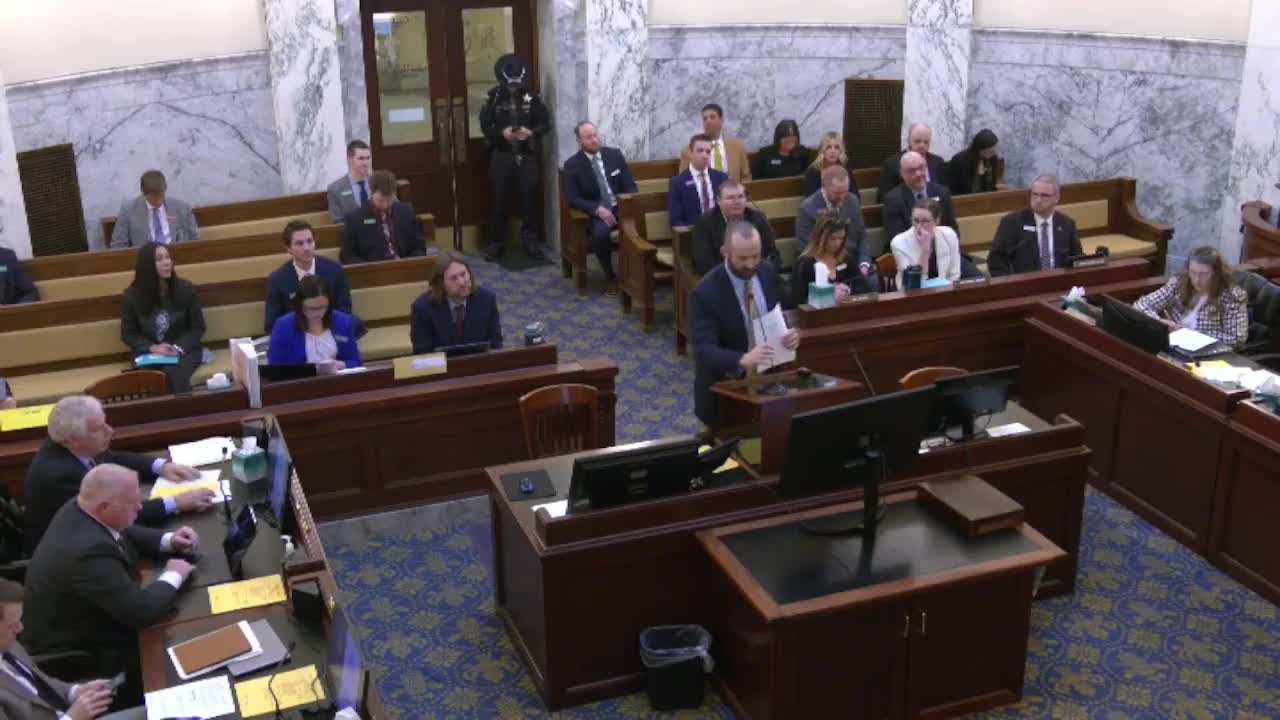
At a Joint Finance‑Appropriations Committee meeting, Jared Tedrow, deputy division manager in the Budget Policy Analysis Division of the Legislative Services Office, reviewed the Public Education Stabilization Fund and said the fund currently has a cash balance of $250,800,000 and ‘‘acts as a safety net for the public school support program appropriations.’’
Tedrow said the statutory cap on deposits to the fund was increased last year from 8.334% to 15% of total state funds appropriated to public schools, and that Idaho code language requires JFAC to review the fund and consider transfers if withdrawals have occurred. He told the committee that 15% of current state funds designated for public schools is about $440,390,000, leaving roughly $189,600,000 of room before the fund would reach the cap.
Tedrow identified recent history in summary: PSIF saw withdrawals from 2015 through 2021 during years of increased support units and appropriations, followed by deposits and legislative transfers in later years. He said no deposits or withdrawals were recorded for fiscal year 2024 as a result of committee language directing that appropriations for that year be distributed directly to schools rather than to PSIF.
Tedrow also noted monthly interest earned on the fund and summarized the governor’s recommendation: ‘‘The governor’s recommended a $50,000,000 transfer into PSIF on July 1 of 2026.’’ He said, based on current appropriation patterns and fewer support units, an additional ‘‘35 to 40,000,000, very rough number, could be deposited into PSIF at the end of the year’’ if no further action is taken.
The presentation included references to statutory sources and charted the fund’s balance from its first legislative investment in 2006 through the present. The committee did not take a formal action on PSIF during the presentation; Tedrow concluded by directing members to the handout with statutory references for more information.
The committee moved on to subsequent agenda items after the presentation.