Get Full Government Meeting Transcripts, Videos, & Alerts Forever!
Get email alerts on the Higher Education topic
No spam. Unsubscribe anytime.
North Idaho College growth outpaces EWA; college seeks faculty hires for nursing, welding and cybersecurity
Summary
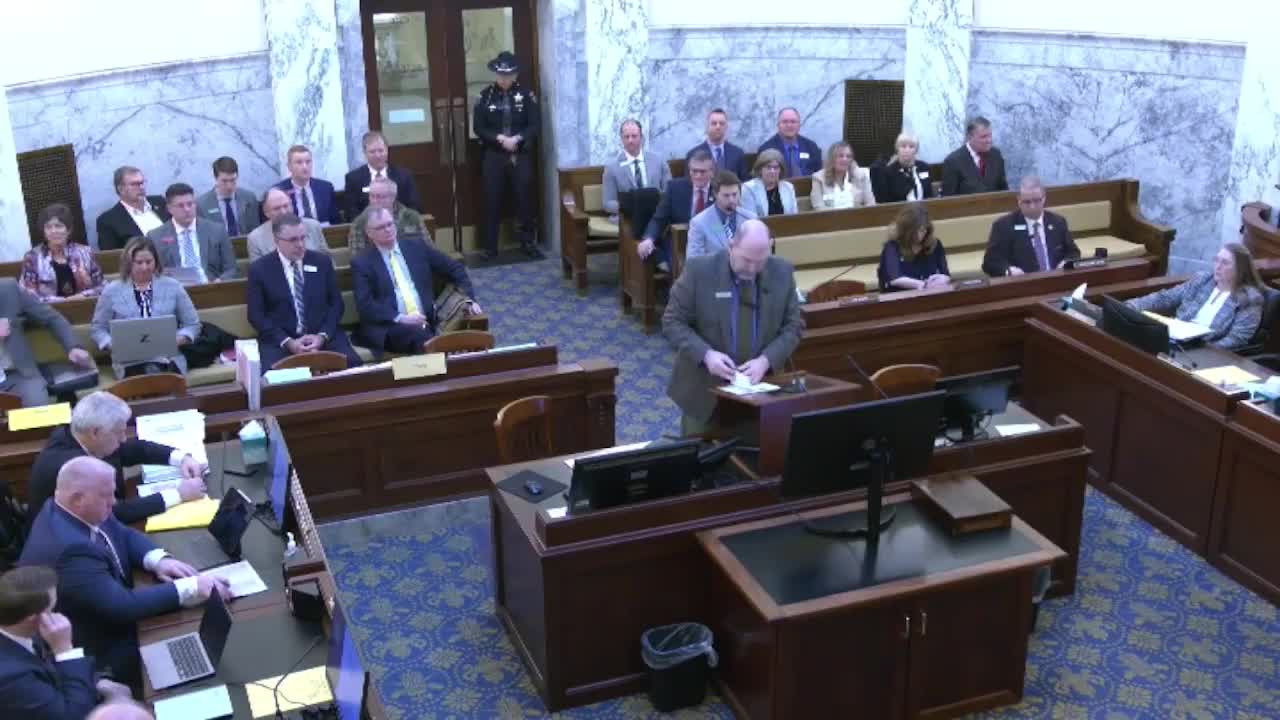
North Idaho College President Dr. Nick Swayne told JFAC that NIC saw roughly 15% enrollment growth in fall 2024 and spring 2025 but faces an FY2026 Enrollment Workload Adjustment (EWA) reduction of $446,800. The college asked for additions to nursing and welding instruction, and cited cybersecurity and accreditation staffing challenges.
North Idaho College President Dr. Nick Swayne told the Joint Finance-Appropriations Committee that NIC recorded double-digit enrollment growth (about 15% in fall 2024 and roughly 15% in spring 2025), including 571 new students this spring, but the State Board’s Enrollment Workload Adjustment (EWA) formula produces an ongoing FY2026 reduction of $446,800 for the college.
Kevin Campbell, the Legislative Services Office analyst who presented NIC’s budget overview, said NIC’s FY2026 EWA formula results in an “ongoing reduction of $446,800.” Swayne and trustees said that the trailing-average nature of EWA has produced a painful cut even as enrollment rebounds: in Swayne’s words, “the challenge with EWA is that it's a trailing average … when your numbers turn around, it hurts you because it's still cutting you.”
Swayne described pressed capacity needs in healthcare and CTE programs. He told the committee NIC had waiting lists for nursing (he said there were 77 students on the nursing waiting list this spring) and asked for five nursing faculty positions to grow the program from admitting 40 students per semester toward a target of 60 — a 50% increase. He explained clinical supervision and external accreditation requirements, including commonly cited clinical ratios such as 10-to-1 student-to-instructor for certain clinical experiences, as constraints on expanding enrollment.
NIC also seeks a welding instructor to expand first-year capacity (Swayne said the program often loses first-year students to employment before second year), and asked for support for cybersecurity defenses — Swayne said NIC’s cybersecurity budget had risen from roughly $250,000 a year to above $500,000 to protect student and employee data after regional cyberattacks.
On compensation and staffing, Swayne said NIC has struggled with recruitment and retention in a high cost-of-living area and that show-cause accreditation status (imposed in February 2023) has been a recruitment headwind; he told the committee that NIC was recently moved off show cause and is now under probation. Committee members asked about taxing authority (Swayne said NIC has taxing authority only in Kootenai County and that out-of-district students may be reimbursed by their counties under a separate arrangement) and about satellite facilities in Sandpoint, Rathdrum and Post Falls, which Swayne said host a range of services including dual credit, transfer programs and expanded CTE offerings.
Swayne urged lawmakers to consider governor-led capacity funding for CTE and to hold community colleges harmless for EWA volatility during the enrollment rebound. He said NIC’s community-focused programs provide workforce graduates for health care, law enforcement (post academy) and trades; he emphasized the college’s effort to raise retention and graduation rates and asked for support to hire faculty needed to meet immediate community demand.