Get Full Government Meeting Transcripts, Videos, & Alerts Forever!
Get email alerts on the Higher Education topic
No spam. Unsubscribe anytime.
College of Southern Idaho asks JFAC for $475,700 EWA as enrollment rises 20%
Summary
College of Southern Idaho President L. Dean Fisher told the Joint Finance-Appropriations Committee that CSI saw 20% freshman growth in fall 2024, has added about 3,800 students since fall 2021 and is requesting $475,700 in an enrollment workload adjustment (EWA) to hire five instructors, reduce wait lists and expand capacity.
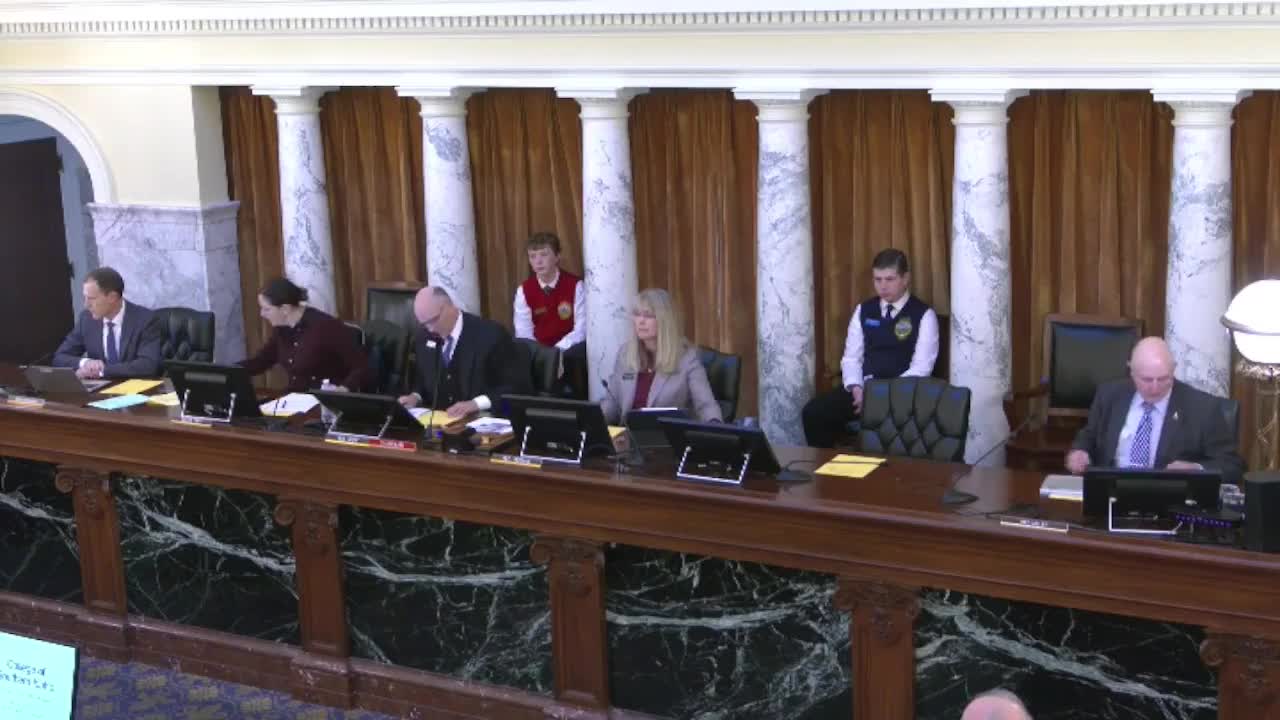
At a Joint Finance-Appropriations Committee hearing, College of Southern Idaho President L. Dean Fisher and Legislative Services Office analyst Kevin Campbell told lawmakers that CSI experienced a 20% increase in fall 2024 enrollment and is requesting $475,700 for an enrollment workload adjustment in FY2026 to hire five instructors and reduce wait lists.
The request is one part of CSI's broader budget and capacity concerns. Kevin Campbell, a budget and policy analyst with the Legislative Services Office, told the committee that “CSI's 2026 request is for the enrollment workload adjustment in the amount of $475,700.” Campbell also explained that appropriations to Idaho's community colleges are made as a single trustee appropriation rather than by object category.
President L. Dean Fisher said the college enrolls many Idaho students and that the recent growth is tied in part to Idaho Launch. “Last fall … we had 579 Launch recipients matriculate to the College of Southern Idaho. We ultimately experienced a 20% enrollment growth,” Fisher said, adding that CSI has added about 3,800 students since fall 2021. He told the committee that the requested five instructors would be used on the general-education side to support expanded CTE enrollment, and that an average faculty member teaches roughly 150 students a year — so five instructors were estimated to allow instruction for about 750 additional students.
Fisher described specific capacity constraints in CTE programs: a radiologic technology program with a cohort of 15 and a waiting list of 84; nursing programs constrained by clinical space and faculty; and welding cohorts that run long hours to meet demand. On the broader workforce side he also said the college has a veterinary technician program limited by accreditation rules (20 first-year and 20 second-year students under current faculty capacity) and would require new facilities and staff to expand.
On compensation, Fisher said CSI lags regional community college pay by roughly 12% and is below K‑12 on some faculty pay ladders. He told the committee “about a $400,000 amount would allow us to catch up there” (referring to the scale of funding needed to close the identified pay gap compared with regional community colleges). Fisher noted staff pay gaps for positions such as mental health counselors, financial aid advisors and academic advisors.
Fisher highlighted student success metrics he described as strengths: an 85% fall-to-spring retention rate, higher than a cited national average of about 60%, and a roughly 50% reduction in student textbook costs after a shift to open educational resources and other lower-cost instructional materials. He recommended support for the governor’s capacity-building proposal and for one-time infrastructure funding, saying “I recommend the support for the governor's proposed capacity building … and I also recommend the support for the one-time money, $15,000,000 to assist with infrastructure needs.”
Committee members asked about the composition of the five requested instructors (Fisher said they would be general-education faculty to support the CTE growth), how many additional students could be served (Fisher estimated about 750), and the breakdown between one-time infrastructure needs and ongoing personnel costs. Campbell and Fisher also described the mechanics of the Enrollment Workload Adjustment (EWA), which is a State Board of Education formula that can increase or decrease an institution’s appropriation based on a multi‑year average of weighted credit hours.
Fisher closed by urging continued attention to compensation parity for community college faculty and staff and to infrastructure to support specialized CTE learning spaces. He said CSI will celebrate its 60th anniversary in September and asked the committee to consider the capacity and parity requests as the committee evaluates the community colleges’ budgets.
The presentation generated questions but no formal committee action during the session; lawmakers asked staff to consider the requests as they develop budget recommendations.