Get Full Government Meeting Transcripts, Videos, & Alerts Forever!
Get email alerts on the State Budget topic
No spam. Unsubscribe anytime.
Governor proposes FY2026 budget that maintains roughly $700 million structural surplus
Summary
Legislative staff presented the governor's FY2025–26 revenue and spending projections to the Joint Finance-Appropriations Committee, outlining a projected structural balance of about $700 million and a $338 million projected FY2025 year-end cash balance under the governor's recommendations.
The governor's recommended budget for fiscal 2026 projects continued revenue growth and a persistent structural gap between ongoing revenues and ongoing obligations, legislative budget staff told the Joint Finance-Appropriations Committee.
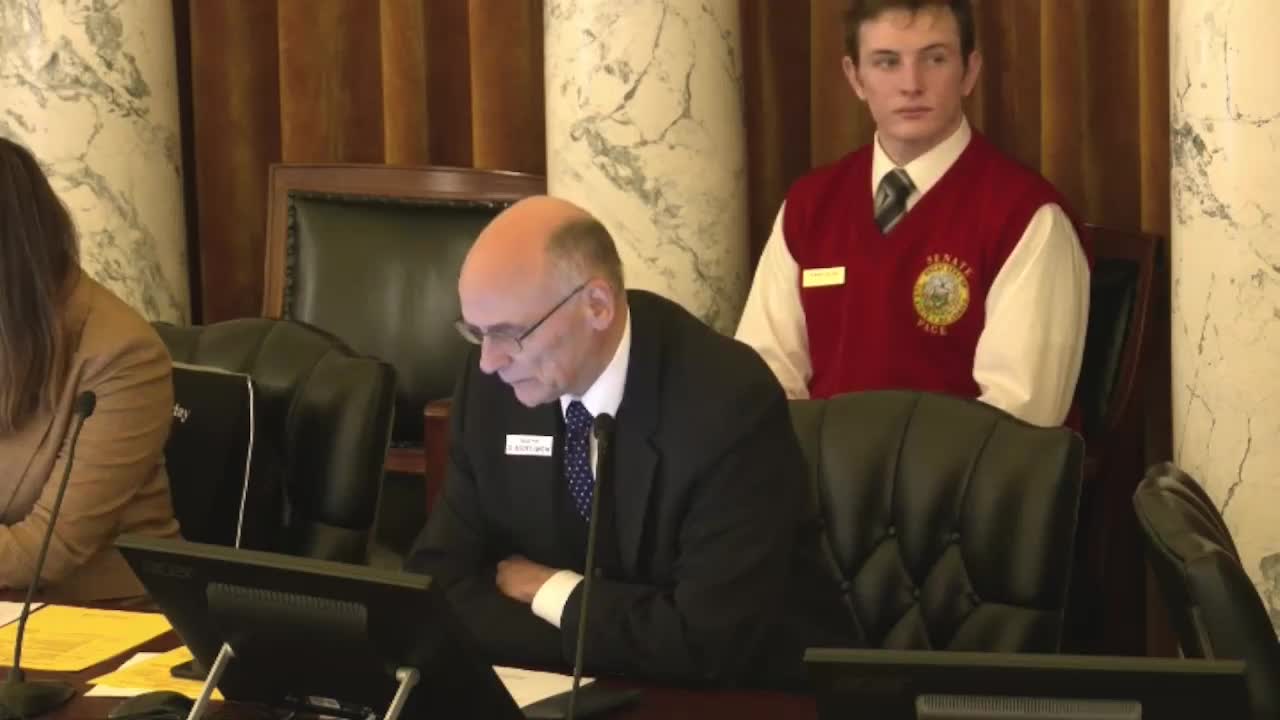
Keith Bybee, division manager for budget and policy analysis at the Legislative Services Office, said the governor's baseline for FY2026 uses a revenue forecast that produces a structural balance of about $700 million in the near term. "Short of focusing on that big peak during the COVID years ... the top red line is our general fund revenues," Bybee said during his presentation. He identified $5.9 billion as the governor's baseline revenue estimate and outlined projections that put FY2026 expenditures higher than ongoing revenues, producing the roughly $700 million delta on the business-cycle projection.
The nut of the matter is that the state is not returning to pre‑COVID revenue trends because population growth has raised the new baseline of collections. Bybee said the state appears to have a new trend near $5.7 billion in baseline annual collections, not the $4 billion‑plus baseline before 2020. He attributed the earlier spike to federal pandemic relief (CARES Act, American Rescue Plan Act) and to rapid in‑migration that pushed personal income and income‑tax collections higher.
That higher baseline, he said, still leaves policy choices for the legislature: how much to use for tax relief, how much to commit to ongoing spending, and how much to place into savings or one‑time investments. Bybee framed the situation plainly: "So that will be the challenge for this year. And it's a big challenge for this year. And it's a big lift." He also noted the governor's FY2026 proposal uses a mix of ongoing and one‑time cash: roughly $160 million of one‑time cash in the governor's recommendation, with the remainder funded from ongoing revenues.
The governor's recommendation places estimated total state spending across all funds at about $14.39 billion. Bybee also provided program‑level summaries showing the largest functional changes were increases in natural resources (driven in part by wildfire spending and ARPA closeouts), a larger request for the state public defender office, and growth in Health and Welfare.
Why it matters: The projections set the baseline from which JFAC will begin program‑maintenance and enhancement decisions. The committee will weigh the tradeoffs among tax relief, ongoing spending increases, and one‑time uses of the structural balance.
Looking ahead: Bybee noted the numbers in the front‑end reports are derived from the Legislative Budget Book and are intended to be the starting point for JFAC's deliberations this session. The committee will soon review agency presentations and decide program maintenance adjustments, enhancements and transfers that will determine final appropriations for FY2026.