Get Full Government Meeting Transcripts, Videos, & Alerts Forever!
Get email alerts on the Fire Code Adoption topic
No spam. Unsubscribe anytime.
Committee adopts updated state fire code but members press for prosecutorial clarity
Summary
The House Business Committee approved adoption of the International Fire Code (IDAPA 18.08.01) as the state's minimum standard for fire safety but debated changes that give local prosecutors discretion on criminal enforcement instead of mandatory misdemeanor charges.
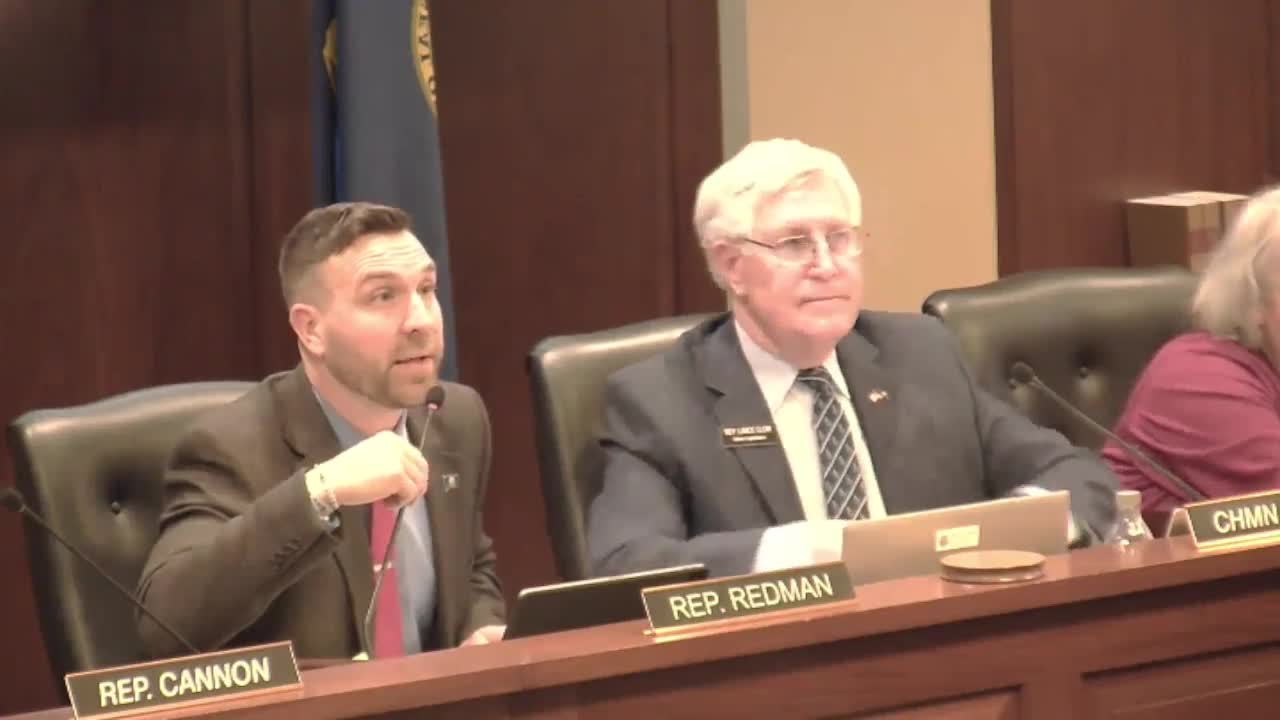
The Idaho House Business Committee voted to adopt an updated version of the state fire code on Monday after extended discussion about enforcement and whether violations should automatically trigger misdemeanor charges.
State Fire Marshal Knut Sandahl presented the adoption of the International Fire Code as part of IDAPA 18.08.01 and said the rule sets minimum standards "for the protection of life and property from the effects of fire and explosion in the state of Idaho." The docket incorporates edits recommended by the State Fire Marshal's Office and clarifies how violations and penalties are resolved.
Lawmakers pressed the department on whether the revised language, which uses permissive phrasing, would make it harder to enforce life-safety provisions. Representative James Harris asked directly whether someone could be charged with a crime for failing to install required devices such as a carbon monoxide detector in new construction. "Are you saying that at that point they could be charged with a crime for not putting in a carbon monoxide sensor?" Harris asked.
Director Dean Cameron of the Idaho Department of Insurance and State Fire Marshal Knut Sandahl explained that the change clarifies the prosecutorial process and emphasizes local enforcement and education. "It would be administered by the fire marshal, or the local fire marshal," Sandahl said. "There would be a law enforcement component if, in fact, it did go there. We advocate...to conduct progressive enforcement." Cameron added: "It's not the fire officials that determine whether to prosecute, it's the local prosecutor. They may prosecute if they have enough evidence, if they deem it appropriate."
Representative Brent Crane, who declared a Rule 80 conflict because his business does fire alarm and sprinkler work, described scenarios where strict application of a particular code measurement (for example, horn-strobe mounting height) might result in technical noncompliance that was not willful. He said the permissive language allows the department to work with companies to correct non-willful mistakes rather than immediately pursue criminal action.
Representative Lance Birch and others expressed concern that delegating the decision to prosecutors could leave some safety violations low on prosecutorial priority lists. Birch said he was worried about "consumer safety" if violations were not prosecuted and noted uncertainty about how prosecutors would prioritize such cases.
Ending: After debate and requests for clarifying materials from the Fire Marshal’s Office, the committee voted to approve the docket. Representative Birch recorded a vote against the motion on the record; the measure carried. The Fire Marshal agreed to provide the committee with specific code sections for review following the meeting.