Get Full Government Meeting Transcripts, Videos, & Alerts Forever!
Get email alerts on the Veterans Services topic
No spam. Unsubscribe anytime.
Veterans services seeks temporary nursing pool, faces Build America/Buy America waiver delay on Boise home rebuild
Summary
Idaho Division of Veteran Services asked JFAC for authority to shift some operating dollars to hire 22 temporary benefited nurses, described persistent turnover and a federal waiver dispute delaying a federally funded Boise veterans‑home rebuild.
The Idaho Division of Veteran Services told the Joint Finance‑Appropriations Committee on Oct. 24 that it is piloting a temporary‑nurse pool to reduce reliance on higher‑cost contracted nurses, and that federally funded construction to replace the Boise veterans home has been delayed while the agency and the U.S. Department of Veterans Affairs reconcile compliance with the Build America, Buy America Act.
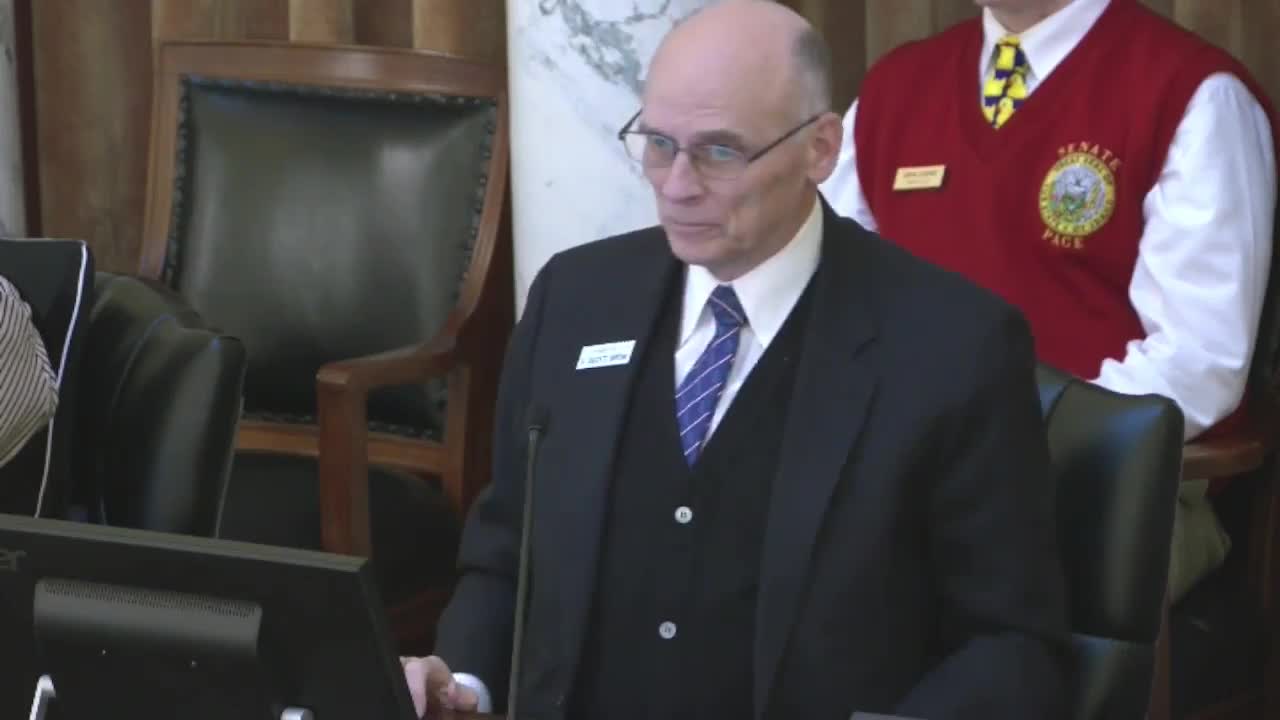
Administrator Mark Shample (chief administrator, Idaho Division of Veteran Services) and the division’s budget analyst, Frances Lippett, said the division aims to move roughly $1.2 million of operating appropriation into personnel costs to establish a pool of 22 temporary benefited state employees to perform nursing shifts and reduce premium contracting costs.
Why it matters: the division said contracted nursing costs are substantially higher than state staff and that bringing some temporary roles in‑house would lower expenditures while preserving care capacity at four state veterans homes.
Staffing and turnover
Lippett told the committee the division has averaged an 82 percent fill rate of authorized positions and spent about 84 percent of its personnel appropriations in prior years. The division reported a turnover rate for skilled nursing staff of roughly one‑third (Lippett cited 35 percent; Administrator Shample cited roughly 34 percent) and considerable reliance on contracted staffing agencies to meet care ratios.
Shample said the temporary nursing pool is intended to capture nurses who want part‑time or occasional shifts but do not want full‑time employment, and that the transfer from operating to personnel would allow the agency to convert some contracted hours into state positions. He estimated the shift could save roughly $600,000 versus continued contractor staffing if the pilot succeeds.
Construction and federal grant issues
Lippett and Shample explained the division received about $43.1 million in federal appropriations through the U.S. Department of Veterans Affairs’ State Home Grant program to replace the Boise veterans home and renovate Lewiston, but the projects have not yet moved forward because of a Build America, Buy America (BABA) compliance issue. Shample said the VA requires construction materials to be sourced domestically under BABA, and the agency is still awaiting a waiver for materials that cannot be sourced in the U.S.
"That law came into existence in 2021 ... our manufacturing in America has not caught up to that law and it is impossible for us to get every single component that goes into a building from American made sources," Shample said, adding the VA has not yet granted waivers the state has requested.
Other requests and details
- FY2026 ongoing: $120,600 for IT maintenance and licensing (per OITS recommendations). - One‑time FY2026 requests: $588,400 (site shed and equipment, dump truck for cemetery), $354,700 for replacement items (vehicles, medical and kitchen equipment), and $100,300 for IT hardware replacement. - The governor recommended the division’s requested enhancements.
Committee discussion and follow‑ups
Legislators asked for comparative pay information between contracted nurses and state employees; Lippett said contracted nurses cost roughly 40 percent premium over state staff but also noted in committee testimony that contracted labor can cost about three times per hour compared with state staff in some situations. Committee members asked the division to provide more detailed salary and contracting cost comparisons.
Shample highlighted other program activity: the division’s Office of Veterans Advocacy filed a record of claims and brought in substantial federal benefits for Idaho veterans; the division also is finishing an expansion of the Boise veterans cemetery and remains near capacity at the state homes.
Next steps
The committee requested additional documentation on the proposed 22‑person temporary nursing pool, a wage/comparative‑cost analysis versus contracted staff, and the status of the VA’s waiver on Build America, Buy America compliance. No formal appropriation vote was recorded in the transcript; the governor recommended the requested items.