Get Full Government Meeting Transcripts, Videos, & Alerts Forever!
Get email alerts on the Public Safety topic
No spam. Unsubscribe anytime.
Idaho military division seeks supplemental funding for public‑safety communications, vehicle backlog and hazmat equipment
Summary
The military division told legislators it needs supplemental appropriations and facilities work to clear a backlog of state vehicles outfitted with communications equipment, to separate public‑safety networks from ITS, and to modernize seven regional hazardous‑materials teams.
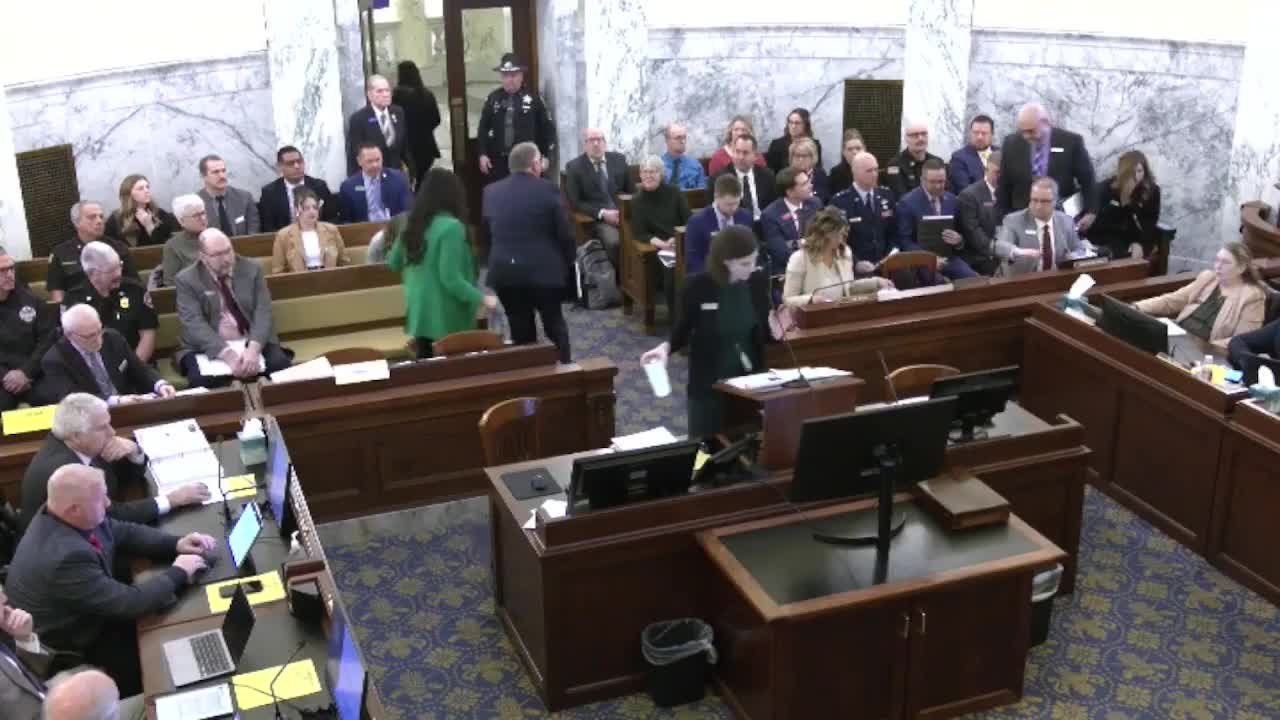
Major General Tim Donilon, the Adjutant General and commander of the Idaho National Guard, and legislative analysts told the Joint Finance‑Appropriations Committee on Oct. 24 that the Military Division’s fiscal 2026 request includes supplemental funding aimed at clearing a vehicle backlog for public‑safety communications, establishing IT independence for public‑safety networks, and replacing two decades‑old hazardous‑materials equipment used by regional response teams.
Analyst Frances Lippett summarized the division’s request and the governor’s recommendations, describing a supplemental package that includes funding to install critical radio and communications equipment in 40 vehicles formerly held by Idaho State Police and help create additional installation bays, plus IT infrastructure and licensing to establish a separate, secure public‑safety communications network.
“ISP has been unable to use these vehicles without the critical communications equipment installed,” Lippett said, and the governor’s supplemental included both private‑contract work and construction to address the backlog.
Why it matters: installation backlogs affect the availability of patrol and enforcement vehicles; aging hazmat equipment raises safety and response concerns; and public‑safety communications are critical to first responders statewide.
What the requests would fund
- Vehicle backlog and facility work: Lippett said private‑contract work to clear the backlog was estimated at $240,000 with construction to add installation bays estimated at $300,000; the package would also support installation capacity to prevent future backlogs. Donilon identified 40 Dodge Durangos owned by the Idaho State Police that could be placed into service once equipment is installed. - IT infrastructure: the governor recommended $759,200 for infrastructure and licensing costs to establish a public‑safety communications network independent of the state ITS network. - Regional hazmat teams: the governor recommended $8.6 million to be transferred from the State Emergency Relief Fund to the Office of Emergency Management so regional hazardous‑materials response teams could replace equipment that, the division said, had not been updated since about 2005. - Hazardous‑substance deficiency warrant: the division requested a FY2025 deficiency warrant of $34,200 for hazardous‑substance incident costs it could not recoup from incident originators.
Division testimony and operational context
Major General Donilon told the committee the vehicle backlog stemmed in part from a period when vehicle orders were delayed due to shortages of computer chips; when chips became available agencies received a large batch and installations lagged. Donilon said the division plans to split the work between contractors (to clear the backlog) and in‑house expansion of installation capacity so future deliveries can be handled promptly.
On hazmat equipment, Donilon said regional teams had not been modernized since 2005 and that seven regional teams—drawn from local fire departments—respond statewide to incidents ranging from vehicle spills to propane or meth‑lab responses. "We have not updated our hazardous response equipment since 02/2005," Donilon said. The division told the committee the money would be distributed through the Idaho Office of Emergency Management to purchase and distribute modern equipment to all seven regional teams.
Committee questions and agency responses
Senators and representatives pressed the division on timing, execution and cost. Senator Cook asked whether supplemental funding could have been an FY2026 enhancement instead; Donilon and staff said the vehicle and IT work needed immediate attention to clear the backlog and permit use of existing vehicles. Representative Handy asked whether private contractors were the most cost‑effective long‑term solution; Donilon said contracted work costs more per vehicle and often requires state quality control after installation, but contractors can reduce the short‑term backlog while the division expands in‑house capacity.
Other points
- The division requested to shift a network administrator position from federal to dedicated funds and proposed billing adjustments related to IT services. - Personnel and federal funding drive large year‑to‑year variation in division appropriations; the division reported about a 15 percent turnover rate and a 10 percent vacancy rate in FY2024, and cited heavy federal contract activity for construction and cybersecurity projects in recent years.
Outcome and next steps
The governor recommended the supplemental and enhancements described in testimony; committee members asked for documentation of estimates and timelines. No formal appropriation action was recorded in the hearing transcript; staff committed to follow up on execution timing and further implementation details.
(Reporting note: direct quotes and facts are attributed to Major General Tim Donilon and analyst Frances Lippett as presented in committee testimony.)