Get Full Government Meeting Transcripts, Videos, & Alerts Forever!
Get email alerts on the Agriculture topic
No spam. Unsubscribe anytime.
Idaho Department of Agriculture asks for pay, equipment and quagga-mussel funding as staffing strains persist
Summary
Department officials told the Joint Finance-Appropriations Committee the fiscal 2026 request centers on quagga mussel response funding, investigator pay reforms and equipment replacements; leaders described elevated turnover among agricultural investigators and asked for vehicle and IT replacements.
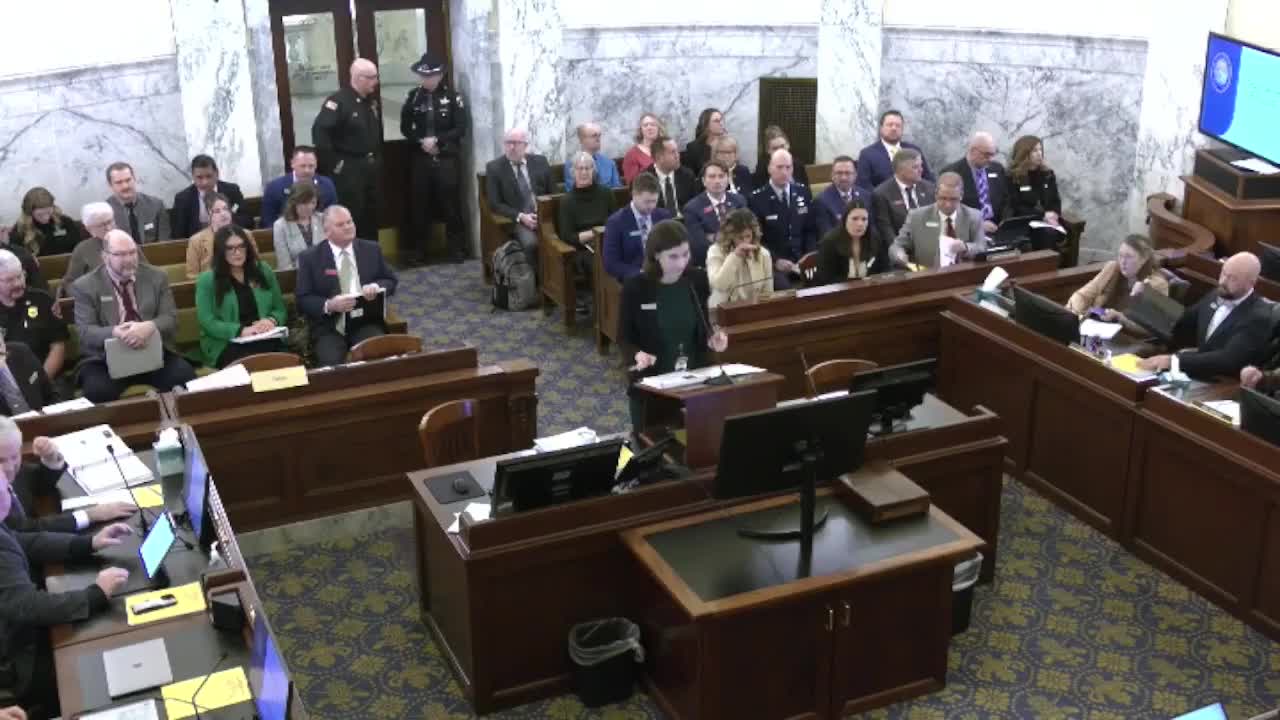
The Idaho Department of Agriculture told the Joint Finance-Appropriations Committee on Oct. 24 that its fiscal 2026 budget request centers on continued quagga-mussel response, a career-ladder pay proposal for agricultural investigators and replacement of aging vehicles and IT equipment.
The department’s budget analyst, Frances Lippett, said the agency has seen a recent spike in one-time invasive-species costs and noted funding comes from a mix of dedicated fees, federal grants and recent general-fund infusions. “During the last legislative session, the legislature approved an infusion of $5,000,000 from the general fund to the invasive species fund to ensure sufficient resources to detect and respond to quagga mussels,” Lippett said.
Why it matters: quagga mussel detection, watercraft inspections and decontamination stations require staff and equipment statewide, and Lippett said the department’s dedicated funds vary year-to-year with inspection and treatment needs. The agency also sought an ongoing $1.5 million general‑fund appropriation to support staffing and check‑station operations.
Most important facts
- The department asked for several ongoing and one‑time items for fiscal 2026 including a pay-structure proposal for agricultural investigators, change‑in‑employee‑compensation (CEC) requests for fresh fruit and vegetable inspectors, and $891,000 in one‑time replacement items that include vehicles and IT hardware. - Lippett said the agency requested a fiscal‑year 2025 deficiency warrant of $1,724,300 for exotic species response costs incurred in FY2024. - Lippett identified the invasive species fund (funded mainly by a watercraft sticker fee collected by the Department of Parks and Recreation) and noted the department received a one‑time $5 million general‑fund transfer and an ongoing $1.5 million appropriation tied to quagga mussel response.
Budget and staffing details
Lippett told the committee the Department of Agriculture is authorized for 231 full‑time equivalent positions and has historically maintained roughly a 91 percent staffing rate, spending about 76–83 percent of its total appropriations in recent years. She noted that many dedicated funds are appropriated at levels slightly above typical revenue to allow service continuity when fee revenue rises.
On investigators and retention, the department’s director, Chanel Tewell, described high turnover among agricultural investigators and the department’s effort to create a career ladder. Lippett’s slides noted 53 investigator positions; Tewell said 27 of those positions have been filled by people with less than two years’ service. To address retention, the department requested $340,400 ongoing to create a pay structure for those investigator positions.
Vehicles and equipment
Representative Mitchell asked about a roughly $750,000 vehicle request. Lippett said she would provide a list on request and estimated about 17 vehicles (mostly pickup trucks and a few SUVs) to be replaced. Tewell later described increased inspection activity and said last year Idaho doubled sampling statewide and increased watercraft inspections after an event on the Snake River.
Pest control and other funds
Lippett explained that a $1.7 million balance in the pest control fund reflected costs incurred in FY2024 that the department is requesting to pay in FY2025—treatment and monitoring for Mormon cricket were cited as drivers. The department also highlighted the newly created livestock-loss fund from House Bill 592, which provided $225,000 from the general fund to compensate livestock owners for losses from grizzly bears and wolves.
Federal and regulatory context
On meat inspection, Senator Hart asked whether the state inspects consumer meat. Director Tewell said federal law—specifically the Federal Meat Inspection Act—largely governs consumer meat inspection and that Idaho has little input over the federal inspection standard, adding that states that want their own programs must meet federal preemption and “equivalent” standards.
Committee directions and follow-ups
- Lippett agreed to provide a detailed list of vehicles proposed for replacement. - Staff agreed to follow up on several items that appeared inconsistent in submittals, including a line that referenced Department of Treasury grants and a mention of transfers to the governor’s office; Lippett said those items would be investigated and clarified.
What the department requested (high level)
- Ongoing: $340,400 to create an agricultural investigator pay structure; CEC adjustments for fruit and vegetable inspectors; a $1.5 million ongoing general‑fund appropriation for quagga mussel staffing and stations (already approved in FY2025). - One‑time: $891,000 for vehicles and IT hardware replacement; and a FY2025 deficiency warrant request for exotic species response of $1,724,300.
Looking ahead
The department faces cyclical and episodic expenses tied to invasive-species responses and pest treatments. Officials told the committee next year’s data will show whether the recent declines in some fund balances reflect cyclical pressure or a sustained trend. Lippett and Director Tewell emphasized the department’s aim to improve retention among investigators and strengthen statewide inspection capacity.
(Reporting note: statements and direct quotes are attributed to Frances Lippett, budget and policy analyst, Legislative Services; and Chanel Tewell, director, Idaho State Department of Agriculture, as recorded during the Oct. 24 Joint Finance‑Appropriations Committee hearing.)