Get Full Government Meeting Transcripts, Videos, & Alerts Forever!
Get email alerts on the Education Funding Rural Cte topic
No spam. Unsubscribe anytime.
House education chair urges continued investment in rural schools, CTE capacity
Summary
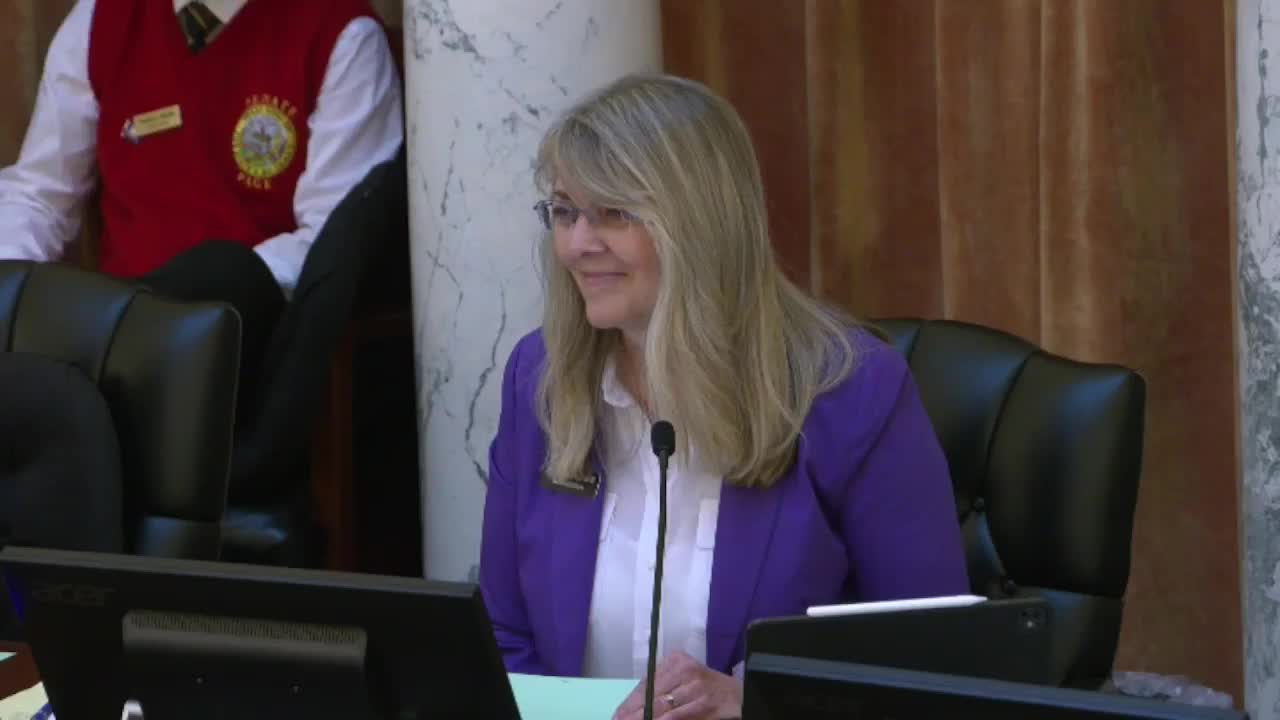
Rep. Doug Pickett told the Joint Finance-Appropriations Committee on March 7 that Idaho should protect and increase funding for rural public schools and expand career and technical education capacity, particularly at community colleges.
Doug Pickett, chairman of the Idaho House Education Committee, told the Joint Finance-Appropriations Committee on March 7 that state policymakers must preserve funding for rural public schools while expanding career and technical education capacity at the postsecondary level.
"If you always simply react to the market, you're never gonna be successful. We must be proactive and respond to in demand careers in educating our kids without them losing the opportunity to have a classical education," Pickett said in his opening remarks.
Pickett reviewed a decade of funding gains, saying Idaho's K‑12 budget has doubled over the past 10 years and teacher pay has risen to about $63,000 on average this school year, a 42% increase over the decade. He thanked the committee for approving an additional $83 million for teacher salaries this year and for allowing districts the option to enroll teachers in the state health plan, which he described as a roughly $4,000 benefit per teacher.
The lawmaker emphasized that demand for CTE (career and technical education) is strongest at the community-college level and that community colleges face capacity constraints and competition with the private sector for qualified CTE instructors. "Qualified instruction continues to be in very high competition with the private sector," he said.
Pickett pressed the committee to consider the special needs of rural districts if funding moves from unit-based formulas to per‑student measures. He quoted an Idaho Code definition for rural districts used in state discussions — districts with fewer than 20 students per square mile or counties with fewer than 25,000 residents — and warned that average per-student funding could leave rural districts short on transportation, facilities, special education and teacher recruitment resources.
He also cited rough statewide needs figures discussed by his committee: an estimated $3 billion facilities funding gap, about $83 million in unmet special‑needs funding, $5 million to retrain teachers in early literacy phonetics, and $35 million for outcome‑based funding. Pickett said the Office of Performance Evaluations will present a report later the same day on K‑12 characteristics and funding that he and his committee expect to review.
Pickett closed by noting potential federal changes to how education dollars are distributed, saying his committee wants any future federal block grants or direct payments to be used for their intended education purposes rather than repurposed at higher levels of government.