Get Full Government Meeting Transcripts, Videos, & Alerts Forever!
Get email alerts on the Cybersecurity Multifactor Authentication topic
No spam. Unsubscribe anytime.
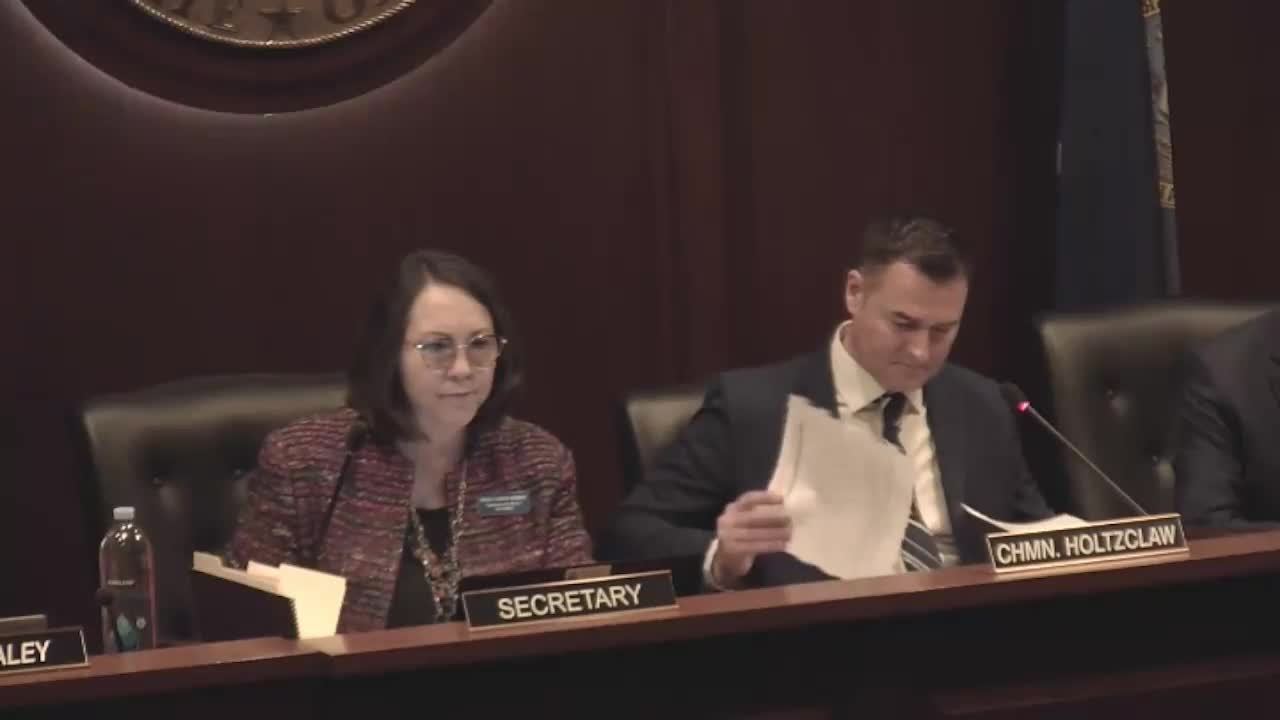
Committee holds House Bill 4; sends RS31950 to second reading after discussion of multifactor authentication
Summary
Representative Bridal Raybel explained that RS31950 corrects House Bill 4 and would require multifactor authentication for state accounts; the committee voted to hold House Bill 4 and send RS31950 to the second-reading calendar.
Representative Bridal Raybel told the Idaho House Commerce and Human Resources Committee that RS31950 corrects language in House Bill 4 and does not change the bill's intent. The measure addresses network security by promoting multifactor authentication for state accounts and clarifies the Office of Information Technology Services' (OITS) authority with respect to the executive branch.
"House bill 4 addresses what's one of the most commonly identified issues with network security and that's people. People are most often the source of weakness when it comes to having a, opportunity to go into a network to create mischief and to cause problems," Bridal Raybel said, describing multifactor authentication as a secondary confirmation beyond a password to access email, OneDrive or other state systems.
Bridal Raybel said about 88 percent of state employees have already switched to multifactor authentication and that the remaining roughly 12 percent have been harder to enroll. She asked the committee to recommend a "do pass" for the RS and noted that sending the RS rather than the house bill to the floor would ‘‘save a step in the committee process.’'
Representative Weber moved to hold House Bill 4 in committee; the motion passed by voice vote. Weber then moved to introduce RS31950 and recommend it go to the second-reading calendar; that motion also passed by voice vote. Representative Fuhrman asked whether the RS needed a committee recommendation; the clerk responded that it did not. Representative McCann asked for an explanation for newer members about why the RS was being sent forward without another public hearing; the chair and Bridal Raybel explained that the RS essentially restores language from the previously heard House Bill 4 and therefore a second public hearing was not required.
The transcript records no roll-call vote tallies or amendments attached to either motion. The committee did not set implementation dates; further action depends on scheduling in the full House.