Get Full Government Meeting Transcripts, Videos, & Alerts Forever!
Get email alerts on the Higher Education Budget topic
No spam. Unsubscribe anytime.
Lewis‑Clark State College tells JFAC enrollment formula lowers funding, highlights LAUNCH and pay gap
Summary
Lewis‑Clark State College presented its FY2026 budget briefing to the Joint Finance‑Appropriations Committee, focusing on an enrollment‑weighted funding formula that will reduce its FY2026 allocation, ongoing pay gaps with K‑12, the impact of the LAUNCH program on career‑technical enrollment, and expansion of prison education offerings.
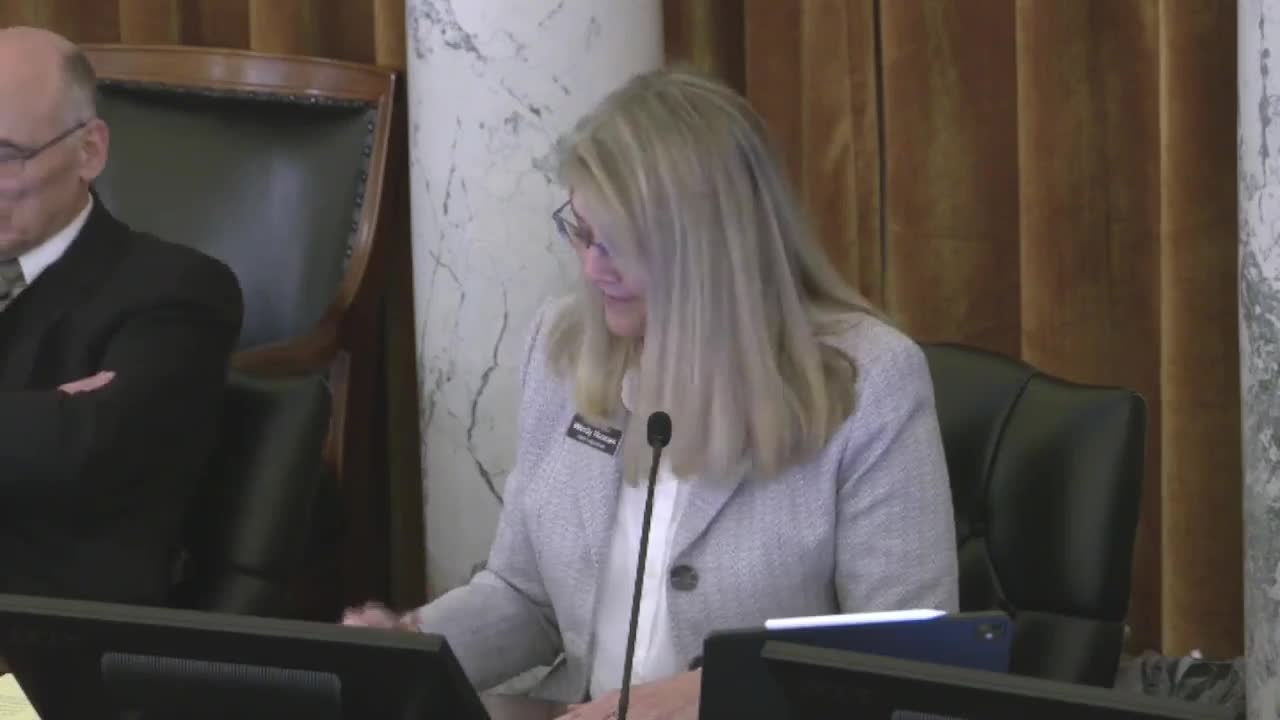
Lewis‑Clark State College President Dr. Cynthia Pemberton told the Joint Finance‑Appropriations Committee on Jan. 27 that the college will see a reduction under the state’s enrollment workload adjustment (EWA) formula and urged continued legislative support for employee compensation and operational needs.
The college, which reported enrollment of 3,881 students and a FY2025 base appropriation cited in the presentation of $41,700,000, will receive a reduction of $102,500 in FY2026 under the EWA formula, the committee was told. Analysts explained that the EWA compares a three‑year weighted average of credit‑hour production and redistributes funding among institutions.
The EWA reduction is part of a broader budget discussion that included operational capacity enhancement (OCE) dollars, endowment adjustments, and other line‑item changes. Analyst Kevin Campbell, Legislative Services Office, walked the committee through revenues and reappropriations, including the treatment of tuition and fees in the institutions’ budgets.
"EWA, as was explained, you are exactly correct, it is a weighted credit hour formula that was determined about 3 decades ago," Dr. Pemberton said. "It is a net 0, you are correct, there's a bucket of money, and it's shuffled around based on a 3 year rolling average of credit hour production that is, as I said, weighted." She added that Lewis‑Clark’s average credit‑hour weighting (1.85) is lower than other institutions (about 2.51), and that has long reduced the college’s share of formula funding.
Why it matters
The EWA change, combined with the college’s small‑school enrollment profile, affects Lewis‑Clark’s ability to compete on employee pay and cover occupancy and operating costs. Dr. Pemberton told the committee that faculty and supporting staff account for about 82.6% of the college’s budget, with operating expenses at roughly 16.5% and less than 1% in capital outlay.
Pay equity and staffing
Dr. Pemberton highlighted a salary gap between Lewis‑Clark and K‑12. "At LC State, based upon most recent data ... an LC State instructor, on average, makes $9,000 less per year than the new average of the K‑12," she said, and noted that assistant professors also lag. The college has requested OCE funds in the current cycle to make incremental progress on the gap; Dr. Pemberton told the committee the institution needs about $1.2 million to make broader strides toward median market pay.
Operational capacity, enhancements and endowments
Campbell and college staff reviewed recent enhancements: Lewis‑Clark’s portion of a governor’s combined enhancement was shown as $370,100 in one year; the college received $440,200 in operational capacity enhancement in FY2025, and smaller items such as a $9,600 consolidation adjustment for human resources were noted. The presentation also described the Normal School Endowment Fund, a legacy account whose distributions are governed by Idaho code and managed by the Endowment Fund Investment Board.
LAUNCH and program impacts
Dr. Pemberton described the state’s LAUNCH program as having immediate effects at Lewis‑Clark, particularly in career‑technical education. "About 240 different individual students were recipients of LAUNCH funds this fall," she said, and career‑technical enrollment in the fall was up 19% with another 10% increase in spring. She told the committee 10 of 11 industrial programs (auto, CNC machining, diesel, HVAC, welding and similar) had LAUNCH recipients.
Prison education and workforce pathways
Lewis‑Clark has also expanded prison education: Dr. Pemberton said the college is the first in Idaho to complete full transition approval from the federal experimental Pell program to a full prison‑education program, and is serving nearly 200 incarcerated students at sites including Orofino, Pocatello and Boise. She said that prison education required coordination with the Idaho Department of Correction, the State Board of Education, the school’s accreditor and the U.S. Department of Education.
Committee questions and context
Committee members asked about the mechanics of the EWA, enrollment trends, and financial ratios. Dr. Pemberton said the college is concentrating on strategic, modest enrollment growth—"We are not going to be 10,000 students. That's not our place"—and emphasized the institution’s role as Idaho’s small, public four‑year college serving many Pell‑eligible and first‑generation students.
Ending
Dr. Pemberton closed by framing Lewis‑Clark as a workforce driver for North Idaho and reaffirmed the college’s requests for modest salary improvements and operational capacity funding. No formal committee action or vote was recorded during the presentation.