Get Full Government Meeting Transcripts, Videos, & Alerts Forever!
Get email alerts on the Juvenile Corrections Budget topic
No spam. Unsubscribe anytime.
Idaho juvenile corrections seeks $380,000 radio upgrade and $300,000 to sustain residential substance-use treatment
Summary
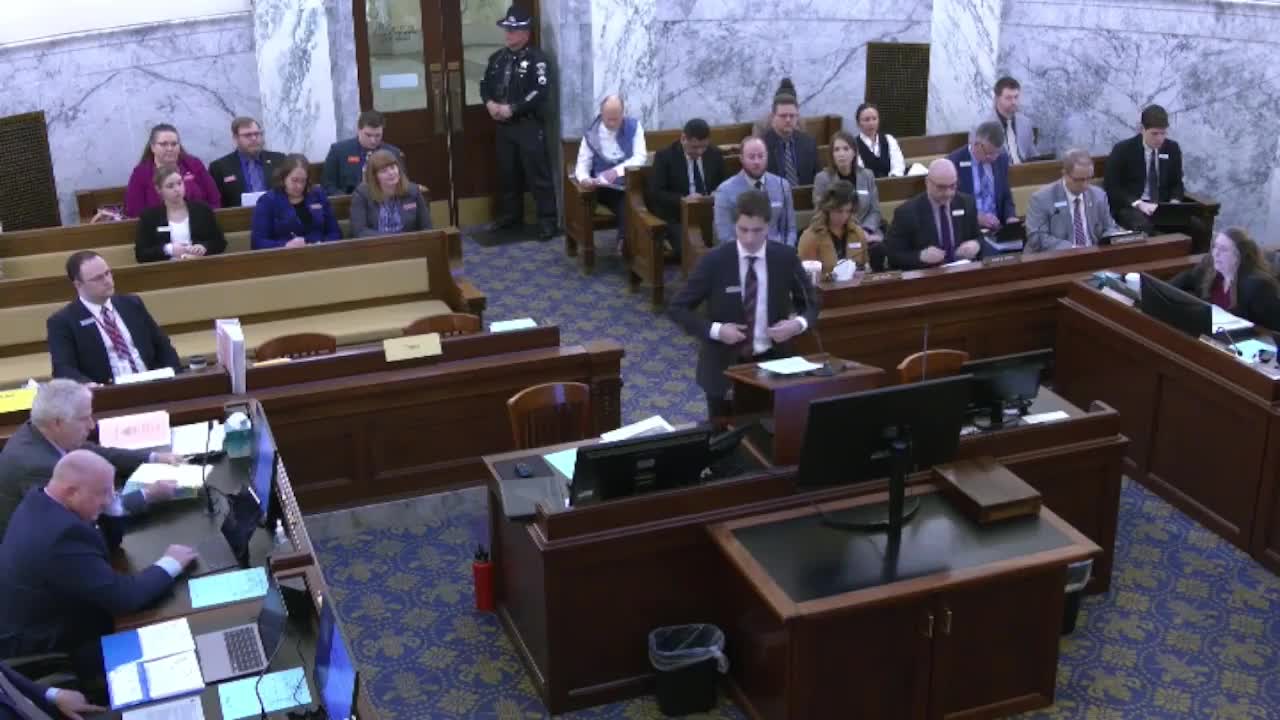
The Idaho Department of Juvenile Corrections told the Joint Finance‑Appropriations Committee on Feb. 18 that it is seeking several budget changes to address staff safety, rising treatment costs and IT needs.
The Idaho Department of Juvenile Corrections told the Joint Finance‑Appropriations Committee on Feb. 18 that it is seeking several budget changes to address staff safety, rising treatment costs and IT needs.
Noah Peterson, a legislative budget policy analyst, said the department’s fiscal 2026 requests include a $380,000 one‑time purchase from the Juvenile Corrections Endowment Income Fund to replace and program radios at the Lewiston, Nampa and St. Anthony facilities. Peterson said a key feature is a "man down" capability to alert staff to an employee in need of assistance and that St. Anthony currently lacks any radios with that functionality.
The department also requested a $300,000 ongoing general fund appropriation to cover an increase in the cost of daily residential treatment. Peterson said the per‑day cost rose from about $198 in 2021 to $399 in August 2021 and the average length of stay increased from 31 days to 67 days, pushing annual program costs from approximately $1,260,000 in fiscal 2021 to about $2,700,000 in fiscal 2024. He said the Department of Health and Welfare used ARPA funds to temporarily offset part of that increase but is no longer able to do so.
Director Ashley Dowell, who appeared with agency staff, described operational priorities and rising clinical needs. "We are seeing an increase in criminality as well and . . . increases in suicidal ideation and self‑harming behavior," Dowell told the committee, and said the agency is working to ensure youth receive appropriate treatment and diversion when possible.
Lawmakers asked for more data. Representative Tanner said he wanted population and flow figures over time to determine whether the department should scale back capacity added during prior peaks. Dowell said the department’s census reached an all‑time low of 137 in May 2024 and stood at 176 the day of the hearing, a roughly 19% increase from the low; Peterson said he could provide historical population data to the committee.
Committee members pressed about the department’s youth crisis centers and whether they have reduced custodial admissions. Dowell said she had anecdotal examples of crisis centers diverting children — including some under age 10 — from detention but did not have statewide counts at the hearing and offered to provide data to the committee.
On policy questions, Dowell explained Idaho’s statutory age boundaries: the department provides services for youth ages 10 to 21 in IDJC facilities, and while counties can detain younger children, IDJC cannot incarcerate a child in an IDJC facility under age 10. She said a diversion subcommittee of the Idaho Behavioral Health Council is working on recommendations and that the department would continue to coordinate with counties on minimum‑age policy options.
Other requests in the budget book included $145,100 from dedicated funds for replacement items, a net‑zero $675,100 conversion shifting personnel dollars to operating (and a reduction of seven FTP tied to consolidating IT positions with the Office of Information Technology Services), and a $232,500 IT hardware package recommended by OITS. Peterson said most enhancement items were recommended by the governor.
Committee members flagged several oversight questions they asked the department and LSO to follow up on, including: documentation of the youth crisis centers’ diversion impact, details on ARPA funds previously used by Health and Welfare to cover the treatment gap, and a request for time‑series data on facility census and lengths of stay. The department agreed to provide additional detail to the committee.
The hearing record did not include any formal committee votes on the requests. The department’s staff volunteered to return data and the committee directed analysts to follow up with fiscal impact analysis where appropriate.