Get Full Government Meeting Transcripts, Videos, & Alerts Forever!
Get email alerts on the Wildfire Budget Fire Suppression topic
No spam. Unsubscribe anytime.
Department of Lands requests staff, one-time funds as governor recommends major transfers to fire-suppression fund
Summary
The Idaho Department of Lands told the Joint Finance-Appropriations Committee it needs added staff and one-time spending for wildfire response and forest management; the governor recommended large transfers to the state's fire suppression deficiency fund and a $1 million firefighter bonus pool.
The Idaho Department of Lands told the Joint Finance-Appropriations Committee that it needs additional staff and one-time spending for wildfire response and forest management, while the governor recommended large transfers into the state's fire suppression deficiency fund and a $1 million firefighter bonus pool.
Janet Jessup, budget and policy analyst for the Legislative Services Office, reviewed the department's budget package and told the committee the Department of Lands' requests include multiple ongoing and one-time enhancements focused on fire and forest programs, plus funding tied to the Timber Protective Associations (TPAs). "The department is requesting approximately $5,700,000 in budget enhancements and 79% of those budget enhancements are 1 time in nature," Jessup said.
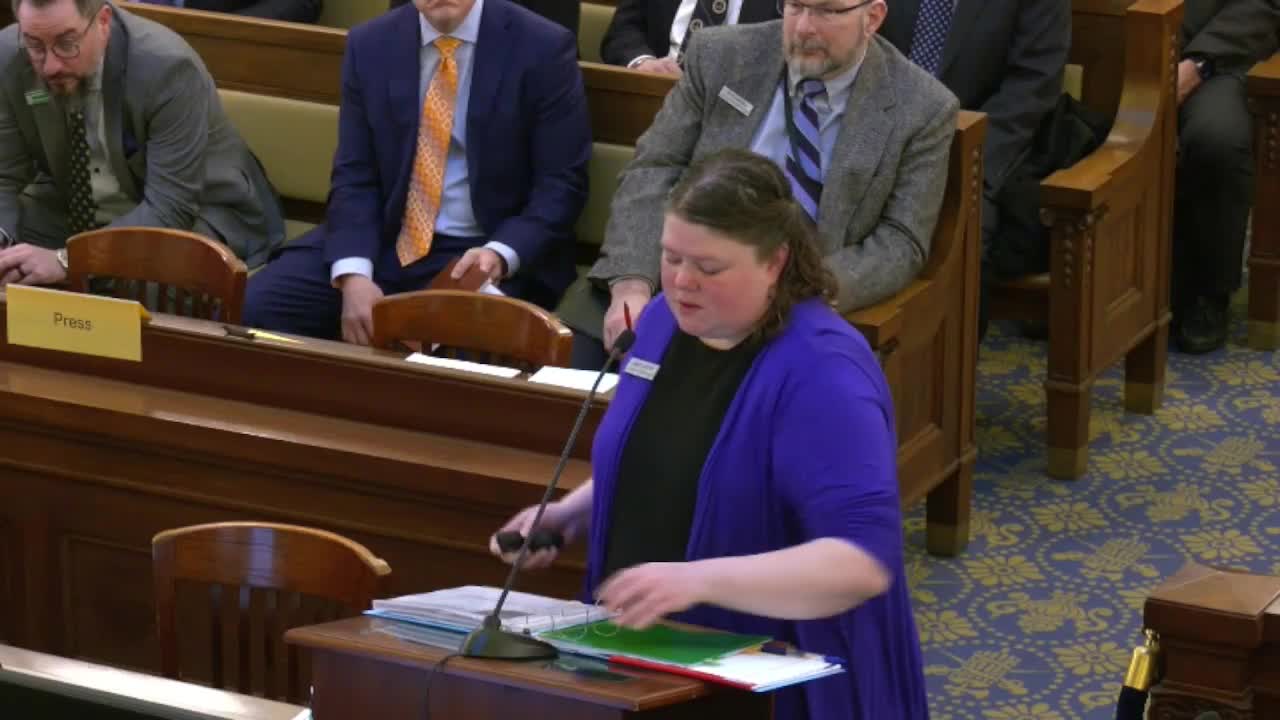
Dustin Miller, director of the Idaho Department of Lands, said the department's priorities reflect a multi-year modernization of its fire program and growing workload. He described three requested positions in the FY2026 packet: a fire emergency support program manager, a fire aviation section manager, and a statewide forest assessment program manager; the package also includes district-level fire positions and program specialists. "These recommendations . . . are in alignment with our long term planning efforts for the fire program," Miller said.
The governor's FY2026 recommendation includes large transfers to the state fire suppression deficiency fund: a $40 million transfer from the general fund and a $60 million supplemental transfer for the current year were proposed in the presentation. The recommendation also includes a $1,000,000 pool of firefighter bonuses for Idaho Department of Lands employees. The Timber Protective Associations — the Southern Idaho Timber Protective Association (McCall) and the Clearwater-Potlatch Timber Protective Association (Orofino) — are not state employees; the committee was told the compensation-equivalent CEC for TPA employees would need to be added separately because they do not receive the state CEC applied to state employees.
Jessup explained the TPAs’ funding mechanism is tied to assessments, liens and fines from private forest land where TPAs provide protection. "Those assessments and liens and fines are derived from lands ... where the TPAs are responsible for fire protection," she said. The governor’s recommended package increased the CEC-equivalent amount for TPAs relative to the agency’s submission, and the TPAs later asked to add $250,000 for bonuses specifically for TPA firefighters.
Director Miller described the Good Neighbor Authority (GNA) program, which the department said has generated timber sale receipts used to fund program operations and restoration work. Miller said the GNA has generated about $40 million to date and that roughly $18 million has flowed from GNA timber sales into departmental receipts. He provided a program-level breakdown: about $5 million of GNA receipts have covered personnel costs, roughly $5 million for operating expenses, about $1 million returned to the U.S. Forest Service, and approximately $6 million used for restoration contracts. "The Good Neighbor Authority is our work on federal lands to help the Forest Service increase the pace and scale of active management and restoration of those lands," Miller said.
Miller warned the committee that the department's fire suppression account balance could fall dramatically if additional transfers are not approved. "That fund could drop down to about 13,000,000 is what we're projecting, 13,000,000 for FY 26," he said, noting the current balance and outstanding invoices tied to multi-year reimbursement processes with federal partners.
The presentation also described the fire suppression deficiency fund as continuously appropriated — the agency can expend from it without separate appropriation — and noted the legislature has increasingly prefunded that account in recent years because catastrophic wildfire costs are variable and often large.
Questions from committee members covered the timing of federal reimbursements, trends in wildfire costs, abandoned mine funding pressures and how GNA receipts are used. Miller said Idaho has placed about 24% of the Forest Service's timber sale volume in Idaho into GNA sales last year and that agreements are in place with six of seven national forests.
Ending: Committee members asked for follow-up materials including historic fire suppression expenditure data and additional detail on deferred reimbursements and the status of the abandoned mines fund. No formal vote was taken at the hearing; agency requests and the governor's recommendations will be considered in the upcoming budget process.