Get Full Government Meeting Transcripts, Videos, & Alerts Forever!
Get email alerts on the Historic Preservation topic
No spam. Unsubscribe anytime.
Historic resources commission approves OSU Dixon Recreation Center generator screening
Summary
The Corvallis Historic Resource Commission approved HPP2025-01, allowing Oregon State University to build a brick enclosure to screen a backup generator east of the Dixon Recreation Center, finding the design compatible with the OSU Historic District subject to two staff conditions.
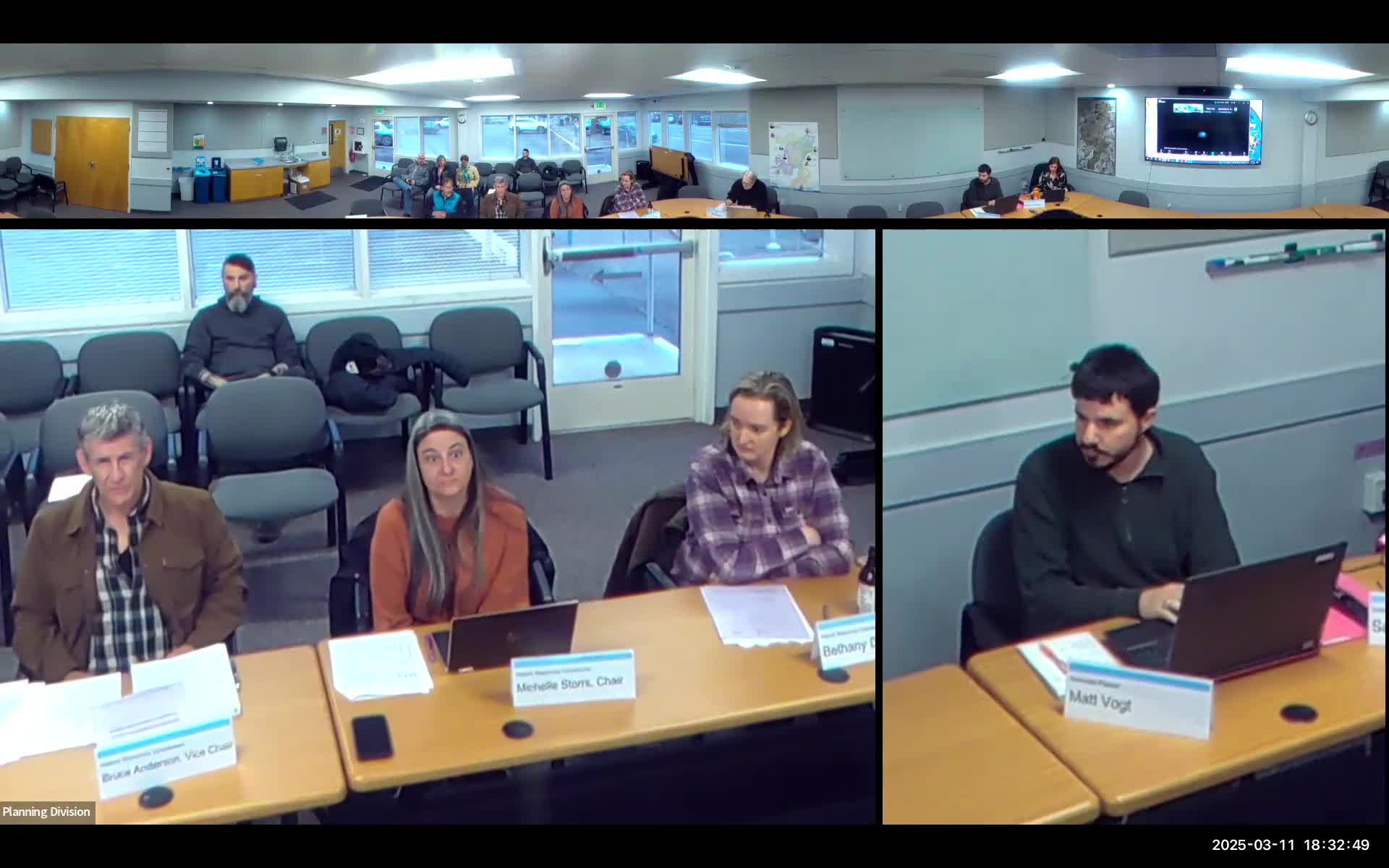
The Corvallis Historic Resource Commission on March 11 approved an historic preservation permit (HPP2025-01) for Oregon State University to build a brick enclosure to screen a backup generator east of the Dixon Recreation Center at 425 Southwest 20 Sixth Street.
Commissioners approved the application as conditioned in the city staff report dated March 11, 2025. The motion to approve carried with unanimous voice vote; three commissioners responded “aye” when the chair called for the vote. The approval is subject to the two conditions listed in the staff report; appeal instructions were read at the meeting.
The applicant, Becca Houdeling, identified herself as a senior planner for Oregon State University and said the generator and enclosure are needed because “Generators are common on OSU’s campus and necessary for emergency operations for building systems.” She told the commission Dixon Recreation Center has been designated as an emergency response site and that the building does not currently have a generator.
Houdeling said the proposed, freestanding enclosure would be constructed of red brick compatible in size and color with the existing building and would include a metal parapet cap and an opaque metal door. She provided the commission with the applicant’s site plan and renderings and gave the enclosure’s dimensions: approximately 21 by 43 feet in plan and about 13 feet tall, placed on the east (northeast) corner of the building to minimize visibility from public streets and entrances.
City staff reviewed the proposal under the Corvallis Land Development Code, identifying the applicable historic review criteria in Section 2.970 and the more specific elements in Section 2.971(b)(3). Staff concluded the Dixon Recreation Center is a non‑contributing resource within the OSU Historic District (period of significance 1888–1957) and recommended approval with two conditions. Staff noted the enclosure is on a relatively plain, non‑ornamented wall and that the proposal would not affect significant features of the district.
Commissioners asked one question about noise and whether the land development code regulates generator sound. Staff said the code typically regulates noise impacts on surrounding properties but that the generator would be used only during power outages and that the land development code does not include a specific provision that would prohibit a generator or require a muffler in this instance. No members of the public testified for, against, or neutrally at the hearing; the applicant waived the 7‑day period to submit additional written materials.
During deliberations commissioners described the change as minor and focused on compatibility with the district and the building. The commission voted to approve the permit based on the findings in the March 11, 2025 staff report and the findings they made during deliberation. The record was closed at the end of the hearing. The written decision may be appealed to the Corvallis City Council within 12 days of the date the written decision is signed.
The approval includes the two conditions recommended by staff; the staff report lists those conditions but they were not read verbatim on the record during deliberations. The staff report is part of the administrative record and contains the full findings and conditions that formed the basis for approval.
The commission proceeded after the public hearing to routine business items including minutes and an update on historic preservation month activities.
The commission’s action summary: HPP2025-01 — approval, outcome: approved; appeal period and conditions as noted. This hearing was conducted under the Historic Preservation Permit procedures and the Land Development Code historic review criteria specified in the staff report.