Get Full Government Meeting Transcripts, Videos, & Alerts Forever!
Get email alerts on the Public Defense topic
No spam. Unsubscribe anytime.
State Public Defender asks Legislature to authorize spending from new dedicated fund and approves startup enhancements
Summary
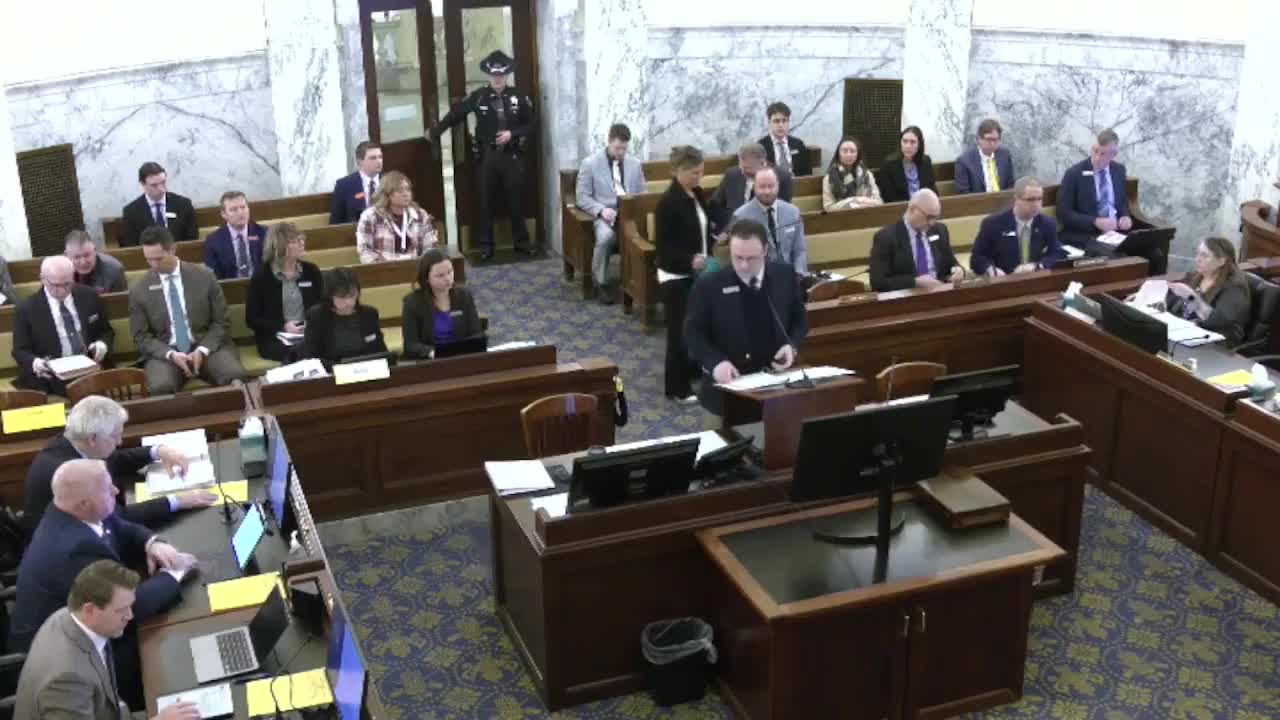
At a Joint Finance–Appropriations Committee hearing, the Idaho State Public Defender requested supplemental and ongoing appropriations to fully use a $39 million cash transfer into a newly created public defense fund and to staff and operate newly onboarded county offices under the statewide agency.
At a Joint Finance–Appropriations Committee hearing, the Idaho State Public Defender requested supplemental and ongoing appropriations to fully use a $39 million cash transfer to a newly created state public defense fund and to support startup operations as counties transition into the statewide system.
The agency, created in "title 19 chapter 60 section 3 of Idaho Code," requested a one‑time supplemental appropriation of $2,500,000 to make the transferred cash available for spending in the current fiscal year; additional one‑time and ongoing requests for transcripts and personnel; and authorization for new full‑time positions to onboard several counties into the statewide system. The governor recommended supplemental and ongoing amounts for some items and proposed a larger one‑time cash transfer from the general fund to the dedicated fund.
Christopher Lahoset, budget and policy analyst with the Legislative Services Office, told the committee the dedicated fund was established in statute and that the state controller was directed to transfer $39,000,000 from the tax relief fund into the state public defense fund. Lahoset said the agency requested the $2.5 million supplemental because "agencies need both cash and appropriation from the legislature to spend it" and that the appropriation to utilize the $39,000,000 had been omitted last year.
Eric Frederickson, the state public defender, told the committee the office is five months into operating as a state agency and described rapid, changing caseload pressures since the agency began operations on Oct. 1. Frederickson said the office has faced significant withdrawals and transfers of cases and that previously used flat‑fee county contracts were frequently insufficient. "We walked into 1,300 withdrawals and cases," he said, describing why the new agency needed more resources and higher contract rates to meet uniform representation standards statewide.
Key items and amounts presented to the committee (as stated by the budget analyst and agency): - Supplemental, FY (current year): $2,500,000 one‑time appropriation to allow the agency to spend the $39,000,000 cash transfer; Lahoset said this amount is earmarked "to provide representation for children and parents who qualify under the Child Protective Act." - Governor supplemental, FY (current year): $390,200 one‑time for transcript costs following the Idaho Supreme Court ruling in State v. Blasick that the state is responsible for transcript costs. - Governor supplemental, FY (current year): $5,427,600 one‑time for additional personnel and contract costs, described as recruiting and retention and increasing contract rates for attorneys and investigators. - FY 2026 agency request: $2,500,000 ongoing to fully utilize the $39,000,000 transfer; a separate request totaled $16,000,380 (and $80,800 as presented) from the general fund for operating increases covering primary and conflict contract attorneys, contract investigators, experts, capital litigation costs, technology training, transcripts and miscellaneous expenditures. - Positions: authorization requested for roughly 17.96 FTEs (presentation showed 17.96) and $226,700 ongoing to staff and onboard institutional offices in several counties (presentation listed Benewah, Elmore, Jerome and Shoshone counties for the current onboarding plan). - Governor recommendation: a one‑time general fund cash transfer of $16,867,400 to the state public defense fund for recruiting and retention and to increase contract rates.
Frederickson also described operational issues the committee pressed on. He said counties are required by current law to provide facilities for the agency until 2029 and that counties and the agency continue to clarify how facility use or cost sharing will work during the transition. He said the office has been appointed to some matters that are outside the usual criminal defense scope and that his attorneys sometimes must litigate to limit appointments to matters the statute envisions. "We're the shiny new toy. So everything gets pushed onto the state public defender," Frederickson said, adding that the office has had to litigate appointments for matters that were not within the statute's intended scope.
Committee members asked for additional detail on line items described as "experts" and as "training, transcripts and miscellaneous expenditures." Frederickson said some expert costs reflect increasing capital litigation and evaluations; he cited psychosexual evaluations as an example of an item that counties previously paid and that the agency now anticipates covering (he said those are about $2,500 each). He acknowledged some categories still require statutory clarification and additional reporting and the agency offered to provide more detailed breakdowns in follow‑up materials.
On onboarding, Lahoset and Frederickson said the agency will bring counties into the statewide structure in a phased approach rather than absorbing every county; some rural counties will continue to rely on contracted attorneys because an institutional office would not be practical. Frederickson said uniformizing rates and adding benefits should help recruiting in rural areas.
The committee did not take final action at the hearing; members requested more granular documentation for several line items, and several members emphasized that the committee needs clearer definitions of which types of cases the state office should be appointed to versus those that remain county responsibilities.
Looking ahead, the agency and the Legislative Services Office committed to follow up with detailed breakdowns of the funds proposed for experts, transcript costs, and the planned uses for the $39,000,000 transfer. The governor's recommended fund shift and some ongoing portions are contingent on legislation to amend the statutory cash transfer language described in the presentation.