Get Full Government Meeting Transcripts, Videos, & Alerts Forever!
Get email alerts on the Education Budget topic
No spam. Unsubscribe anytime.
Idaho education officials outline budget requests, highlight special-education workload increases and Career Ready grant spending
Summary
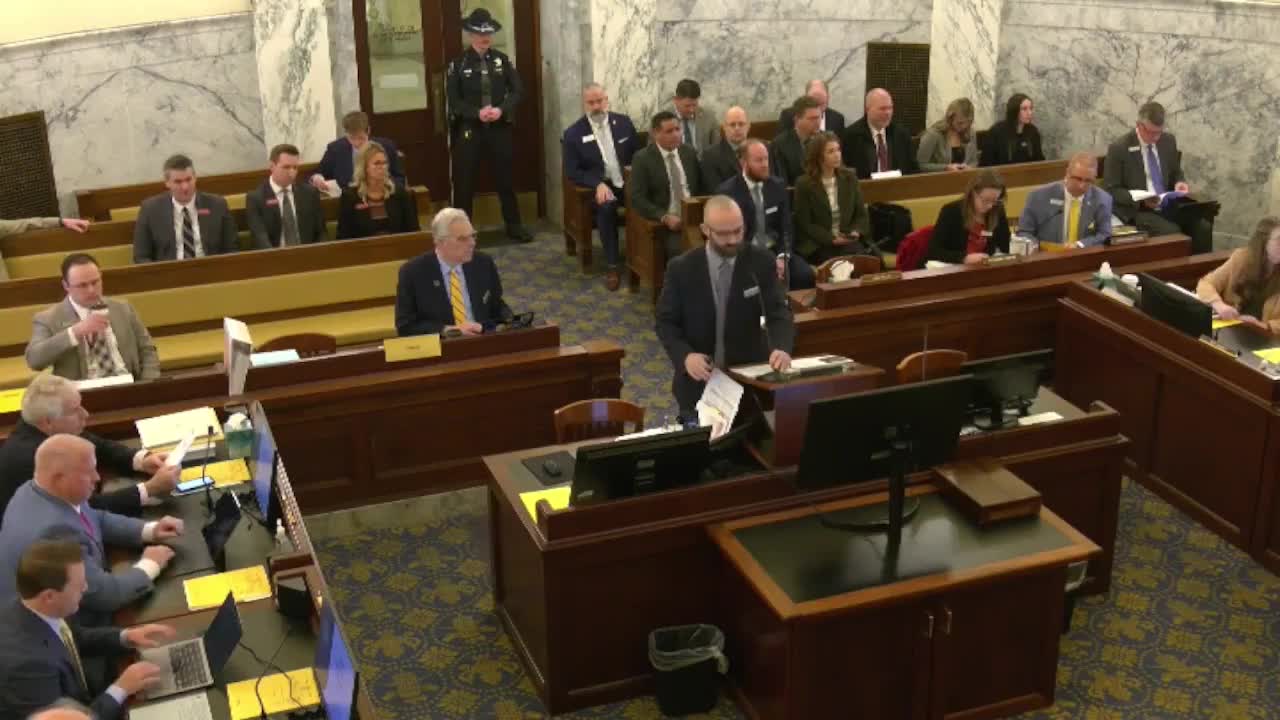
Jared Tetro, deputy division manager with the Legislative Services Office Budget and Policy Analysis Division, opened the State Department of Education budget hearing Wednesday, saying: "For the record Jared Tetro, Deputy Division Manager, Budget and Policy Analysis Division with Legislative Services Office. Today I will be starting with the budget hearing for the State Department of Education."
Jared Tetro, deputy division manager with the Legislative Services Office Budget and Policy Analysis Division, opened the State Department of Education budget hearing Wednesday, saying: "For the record Jared Tetro, Deputy Division Manager, Budget and Policy Analysis Division with Legislative Services Office. Today I will be starting with the budget hearing for the State Department of Education."
The department presented a package of ongoing and one-time requests tied to personnel, assessments, grants and technology. State Superintendent Debbie Critchfield and department staff described rising special-education workload that the department said is driving a request for new dispute-resolution capacity and other staff additions.
Why it matters: the requests would change department staffing and spending on programs used statewide — including special education, charter oversight, career-technical grants and the statewide student assessment — and some items would depend on future legislation or federal funding.
Tetro told the committee the department is organized into two programs (administration and program services) and noted several funds the department manages, including the driver’s-training fund and a large Career Ready Students grant program. He flagged that the career-ready program has seen large appropriations in recent years and that some dollars remain obligated but unspent until districts move to implement projects.
Critchfield told legislators the department is seeking seven ongoing enhancements for 2026 and several one-time requests. Among the ongoing personnel requests, the department asked for: a dispute-resolution specialist to support special-education customer service; a charter-school special-education specialist to meet IDEA and Section 504 requirements for new charters; and a second Indian-education coordinator to support tribal relations and travel. Tetro described the dispute-resolution request as 1 FTP with $84,400 in ongoing costs.
Critchfield attributed the dispute-resolution request to a sharp rise in demand for state-level intervention: "Do we have an increase? Yes, we do," she said. She gave three measures the department is tracking: a 65% increase in requests for mediation, a 77% increase in general complaints and a "1200% increase in hearings." She said some of that increase comes from more parents requesting evaluations and from local shortages of personnel to complete assessments.
The department also requested a $2.7 million one-time federal spending authority to transition to a new statewide student assessment platform for the ISAT (the statewide assessment given to students in grades 3–8 and one high-school grade). Gideon Tolman, the department’s chief financial officer, described that $2.7 million as federal funds carried forward and said: "This... would be a one time federal fund spending authority to... help transition to a new platform." He added the department believes base funding would cover ongoing vendor costs but said he would provide additional details on how much of the transition and ongoing testing costs the one-time amount would cover.
On the Career Ready Students program, Critchfield described the appropriation and grant process: $65 million had been appropriated across recent cycles; 152 grant applications arrived and 72 grants were awarded, representing $62.7 million obligated; reimbursements to date were still being processed and the department said it has issued about $16 million in reimbursements since the materials were prepared. She urged careful oversight because many awards were capital projects that take time to reach reimbursement stage.
Other enhancement and supplemental items discussed: - Driver’s-education reimbursement: the department proposed legislation to increase reimbursement from $150 to $300 per student and requested spending authority to draw down more of a growing driver-training fund. Tetro said the fund’s free balance was about $3.8 million in 2022 and estimated at $7.4 million in 2026; department staff said increases to spending authority would draw down the fund rather than require new revenue. - School bus camera fund: staff noted House Bill 610 changed fines and fees and that the fund can be used for stop-arm cameras, software and training. The committee was told approximately $35,000 is currently in the fund and the department proposed a one-time supplemental and a separate ongoing request tied to the fund. - Private-school COVID support and Idaho Reading Indicator: the department requested a one-time supplemental to cover a new performance report card update if federal funds do not arrive; it also said it would provide a list of private schools and ARPA amounts on request. Tetro agreed to provide the committee a detailed accounting of ARPA/private‑school reimbursements. - Child Nutrition Technology Grant and Farm to School grants: a multi‑year $746,300 grant and $264,100 in ARPA funding for Farm to School vertical gardens were described as one-time or multi-year awards already in the department portfolio. - Support for underperforming charter schools: the governor recommended $300,000 from the public charter school authorizer fund for technical support under statutory authority the department cited; staff said they would provide a breakdown of prior-year payments and asked the committee to ensure authorization and cash balances align.
Committee members pressed for additional detail and reporting. Senator Ziderfeld and Representative Furness asked for lists and breakdowns of ARPA/private‑school awards, the charter-authorizer fund payouts and the status of Career Ready grant obligations; Tetro and Critchfield agreed to provide those reports. Members also asked for clarification on vacancies and auditing: Critchfield said the department currently had six vacancies it was actively filling and that an auditor position recently hired will help verify district payments and student-count data.
What the department did not finalize at the hearing: no formal appropriations were adopted during this meeting. Several proposals would require separate legislation (for example the drivers‑education reimbursement increase) or further committee action, and some one-time items were described as dependent on available federal funds.
Looking ahead, department staff committed to returning requested detail on ARPA/ESSER spending and specific grant statuses, as well as clarification of how the $2.7 million transition request relates to ongoing assessment contract costs.
The hearing continued with other agency presentations after the department concluded; lawmakers scheduled follow-up requests and told staff they would review the submitted budget documents and vendor quotes posted to SharePoint and the department’s submission.