Get Full Government Meeting Transcripts, Videos, & Alerts Forever!
Get email alerts on the Transportation Funding topic
No spam. Unsubscribe anytime.
Tennessee transportation leaders say new recurring revenue needed to sustain TDOT
Summary
Members of the Tennessee House Transportation Committee opened the session by flagging the state Department of Transportation’s long‑term funding shortfall and discussing possible new, recurring revenue streams to sustain roads, bridges and broader transportation needs.
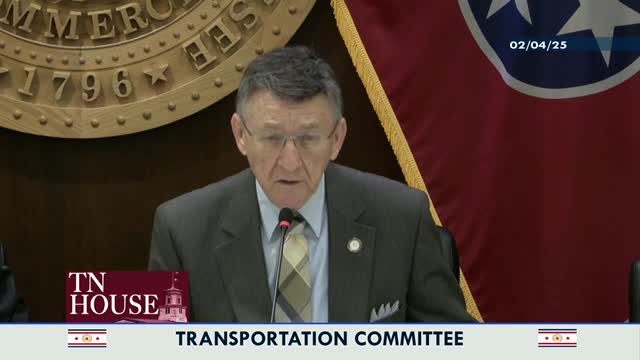
The chair of the House Transportation Committee opened the Feb. 4 meeting by telling members the Tennessee Department of Transportation (TDOT) will need new recurring revenue within a decade to avoid falling into a posture of maintenance‑only spending.
The chair (name not specified in the transcript), speaking during the committee’s organizational remarks, said the state’s gasoline tax has not kept pace with inflation since its origin in the 1920s and described that gap as a core reason the state must identify other revenue sources. “We have to find — I’m not talking about raising taxes — I’m talking about finding an additional revenue stream,” the chair said.
Why it matters: TDOT oversees roads, bridges and other transport infrastructure across Tennessee. Committee members said existing funding and one‑time infusions will not sustain long‑term construction and replacement needs, particularly given recent storm damage in parts of the state.
Representative Ronnie Glenn asked the chair what his goals for the committee would be this year. The chair replied that finding additional revenue streams for TDOT was his top priority, adding that without new revenue TDOT could be limited to maintaining current assets in the next five to 10 years. David Hawk, identified in the meeting as the transportation subcommittee chair and a long‑serving member, agreed on the need for more “consistent revenue” and said the committee has discussed shifting recurring general‑fund dollars into transportation.
Members cited previous legislation and current one‑time infusions as partial solutions. The chair and other members referenced a recent “modernization act” that directed some general‑fund dollars to transportation and also mentioned the state’s IMPROVE Act as prior major investments in roads and bridges. Representative Townes said the IMPROVE Act may provide some future funds but warned the committee should plan for the moment when those dollars have been spent.
Committee members emphasized that transportation funding supports more than highways: they noted rail, airports and other modes as parts of the broader portfolio needing stable funding. The chair pointed to recent flood damage in northeast Tennessee, saying TDOT has been replacing bridges and an interstate there with investments made possible in part by legislative funding over the last two years.
Ending note: Committee leaders said discussions over revenue options will continue in subcommittee, and members should expect robust debate before any specific revenue proposal is filed.