Get Full Government Meeting Transcripts, Videos, & Alerts Forever!
Get email alerts on the Legislative Audits topic
No spam. Unsubscribe anytime.
Legislative auditors tell JFAC many findings remain open; statewide financial audit delayed by late statements
Summary
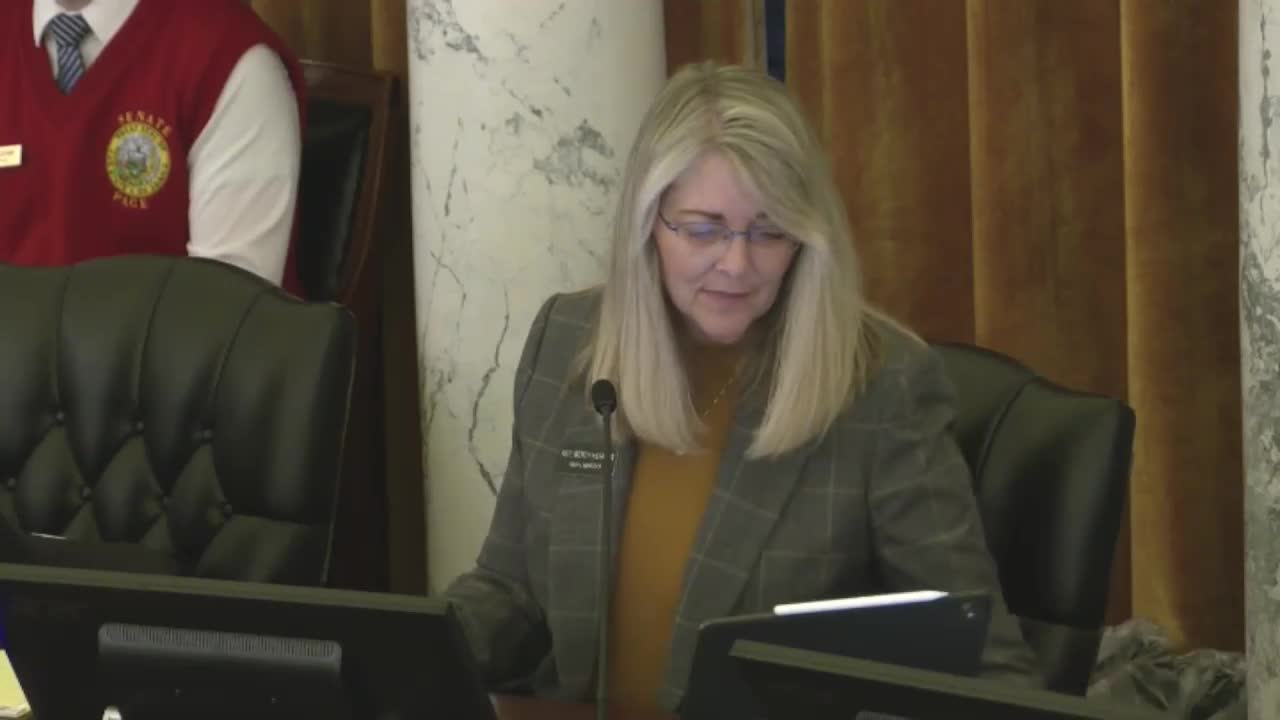
April Renfro, director of Legislative Audits in the Legislative Services Office, told the Joint Finance and Appropriations Committee on Jan. 7 that many audit findings remain open, that 70% of currently listed uncorrected findings are from the current reporting period, and that a late delivery of statewide financial statements has delayed the ACFR and threatens the March single audit deadline.
April Renfro, director of Legislative Audits in the Legislative Services Office, told the Joint Finance and Appropriations Committee on Jan. 7 that auditors are issuing fewer multi‑year uncorrected findings than in recent years but still face follow‑up challenges and a delayed statewide financial statement submission that will push back scheduled audits.
Renfro said the audits division has 30 financial and IT auditor positions and that the division plans roughly 28 accountability reports each year and performs the audit of the state’s annual Comprehensive Financial Report (ACFR) and the statewide single audit of federal awards. “We complete the audit of the annual comprehensive financial report each year,” she said, adding that the ACFR work typically follows a schedule tied to agencies’ year‑end reporting.
The audit office is required to present an annual report of uncorrected findings to the Legislature. Renfro said the current open findings cover four years’ worth of reports (the division only lists open findings for the most recent four reporting years) and that roughly 70% of the uncorrected findings are from the current reporting period because they have not yet had follow‑up procedures. “So we really only have 30% that the entities have not been able to get their findings corrected in a reasonable amount of time,” she said.
Renfro identified three common drivers of uncorrected or significant findings: missing or weak internal controls, noncompliance with statutes or rules, and substantive or systemic errors tied to information systems. She gave two examples from recent accountability and single audit work.
Department of Fish and Game: an older accountability finding cited noncompliance with state travel policy and insufficient documentation for travel vouchers and receipts. Renfro said follow‑up showed partial corrective work but, in some cases, documentation could not be tested because of changes in processes (she referenced a transition to a system identified as “LUMA”), which delayed verification.
Department of Health and Welfare: in the 2023 accountability report the auditors found problems in documentation and oversight of Qualified Residential Treatment Program (QRTP) placements for youth in foster care (findings numbered 9 and 10 in the report). Auditors tested 19 QRTP placements and reported that 10 lacked a completed placement assessment or equivalent documentation, 5% of sampled cases lacked required detail, 21% lacked a court order on file, 5% were not placed within 60 days of an initial placement date, 84% did not retain a required notice of placement that documents placement date and recommended level of care, and 42% lacked required case consultations every 30 days. Renfro said the issues reflected inconsistent application of internal controls, gaps in record retention, and insufficient supervisory review.
Renfro also described a single‑audit finding (No. 211) about the Low Income Home Energy Assistance Program benefits matrix: the agency did not document review and approval of annual updates. Auditors did not identify financial errors in testing, she said, but the absence of documented review increases the risk of undetected errors.
Audit timetable and LUMA delays
Renfro told the committee that ACFR and single audit timing depends on receiving agency financial statements and the state controller’s compilation. The usual statutory expectation is that agency financial statements and the ACFR process align around year‑end deadlines (she cited agency practice that the ACFR work is tied to a December 31 calendar). This year, Renfro said audit staff expected financial statements in November but did not receive them until Dec. 30, one day before the statutory December 31 ACFR deadline. As a result the audit office estimated it will complete the ACFR audit in March and that the single audit due March 31 is likely to be delayed as well.
Renfro said the late delivery was tied to the controller’s transition to the new system (referred to in testimony as LUMA) and the extra time required to reconcile and validate population totals across agencies: “We got them December 30. So we are just now working through the audit of those financial statements.” She said the office will contact the federal cognizant agency (HHS) to notify them and to coordinate about the single‑audit schedule because federal grantors have been particularly attentive to timely single audits since pandemic‑era extensions ended.
Follow‑up and enforcement
Committee members raised enforcement options: the co‑chair noted that, in the past, the Legislature has used withholding of funding or statute changes when agencies repeatedly failed to correct deficiencies. Renfro said auditors follow professional standards for opinion audits (ACFR and single audit) that require agencies to prepare follow‑up documentation; for accountability reports the auditors perform 90‑day, first‑annual and second‑annual follow‑up visits and issue reports that document whether corrective actions worked. She emphasized auditors do not simply accept an agency’s assertion that a problem is fixed without testing.
The auditors said they will distribute the uncorrected findings report to committee members the same day as the presentation and that a small number of accountability reports remain to be issued for the 2023 cycle.
Questions from committee members focused on why findings persist (technical reasons, staffing, legislation or systemic fixes may be needed), the risk of federal grantor responses to late single audits, and the distinction between findings agencies dispute with auditors versus findings the feds could resolve. Renfro described rare instances where an agency disputes an audit finding; in single‑audit circumstances the federal grantor can decide which position to accept and the finding may be rescinded if the grantor sides with the agency.
Evidence spans: the committee heard this material in an initial audit briefing that began with April Renfro’s opening remarks and continued through questions about LUMA and audit timing; the auditors said the uncorrected findings report will be circulated to committee members after the hearing.
Ending
Renfro told the committee she would stand for questions and that the audit office has been tracking and prioritizing follow‑up work to reduce the volume of long‑standing uncorrected findings. Co‑chairs and members urged work‑group managers and individual members to review the open findings for agencies in their portfolios and to consider audit follow‑up as part of budget deliberations.